Uncategorized

Day 9

Weather: Rain (again)

I was under the impression that the best time to visit Japan was March and April because the weather is nice. The one good thing I can say about the rain is that it isn’t too hot and actually make the temperature pleasant for walking.

Today I got to sleep in a bit and didn’t get up until 6:00am. Usually, I’m up at 5:00am or 5:30am in order to have breakfast do last minute repackaging and out the door by 7:00am. This morning though, Ito-san from the Inn gave me and a German woman who was staying at the same inn a ride to the station. So we set out a bit later. The train had a balcony on the side, but it was too cold and too wet to enjoy.
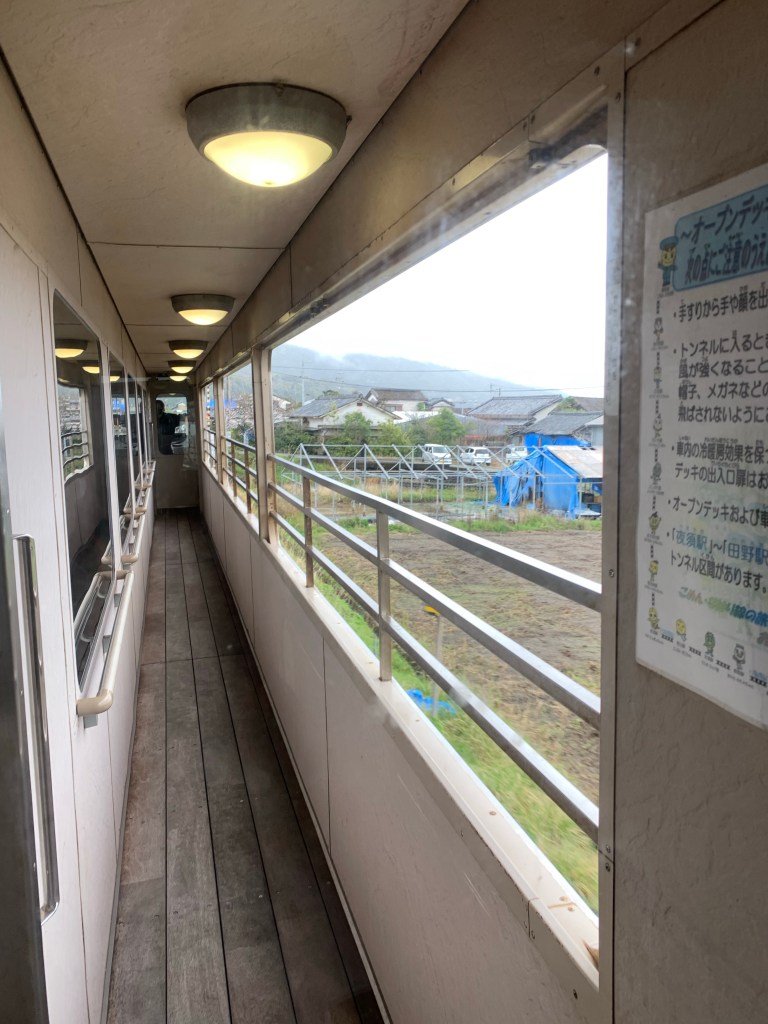
Observation balcony on train
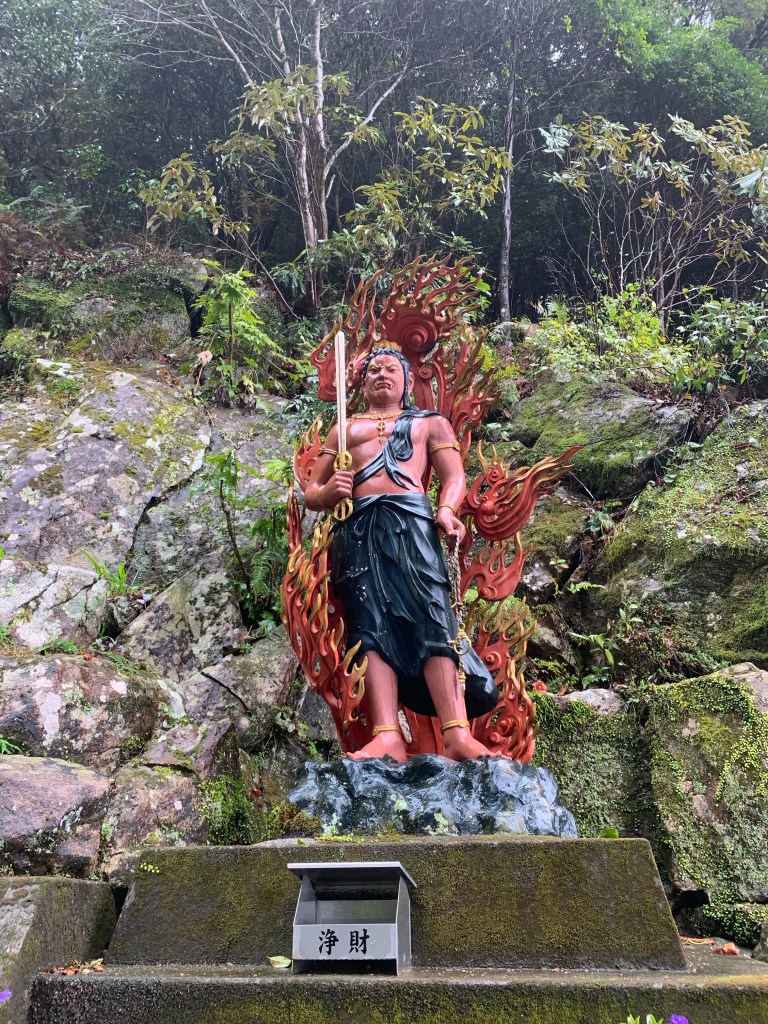
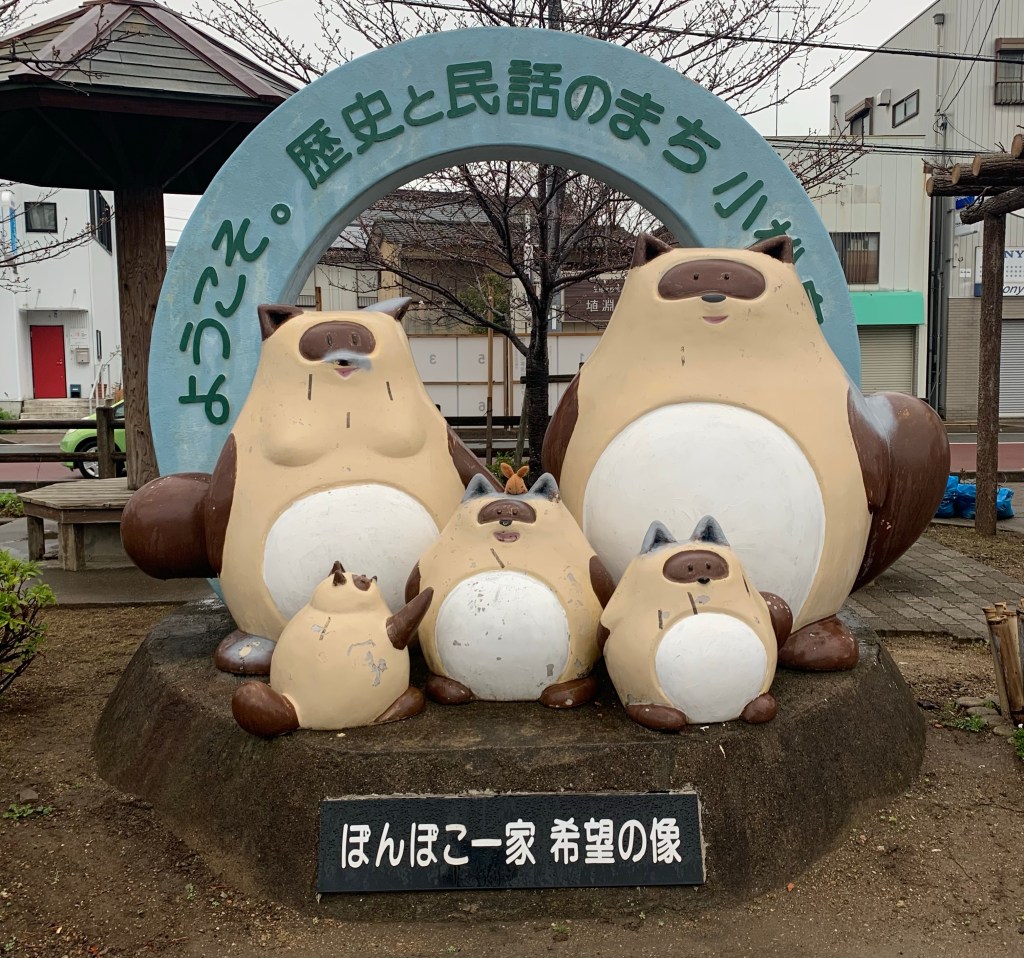
Tonohama Station mascot

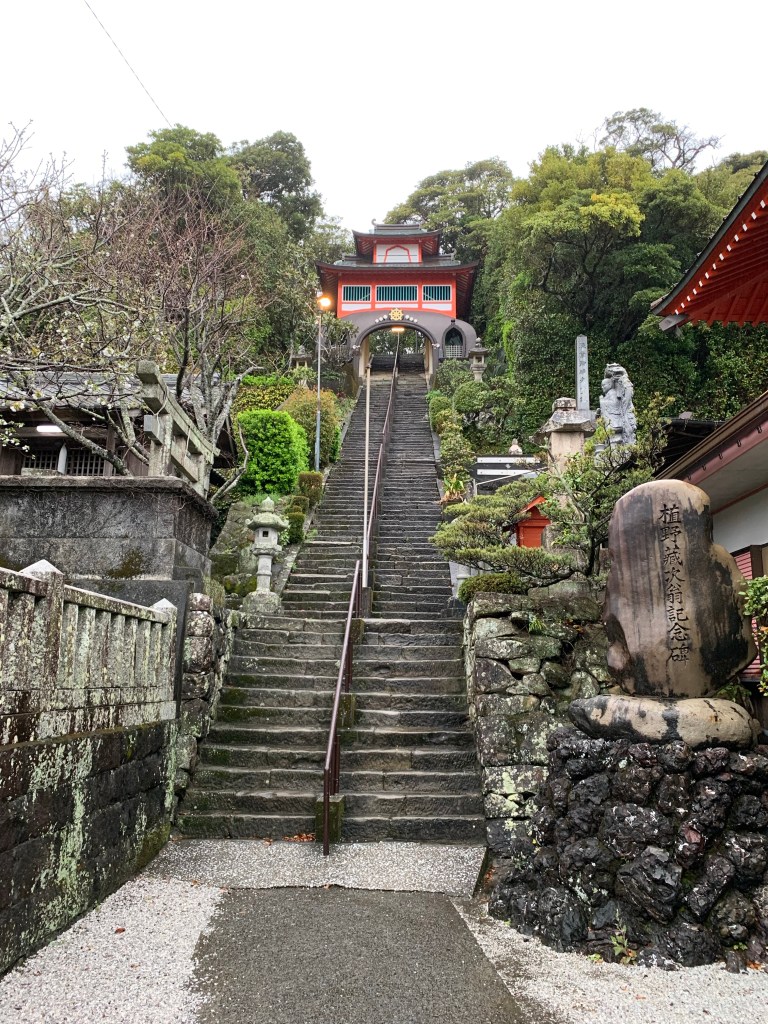
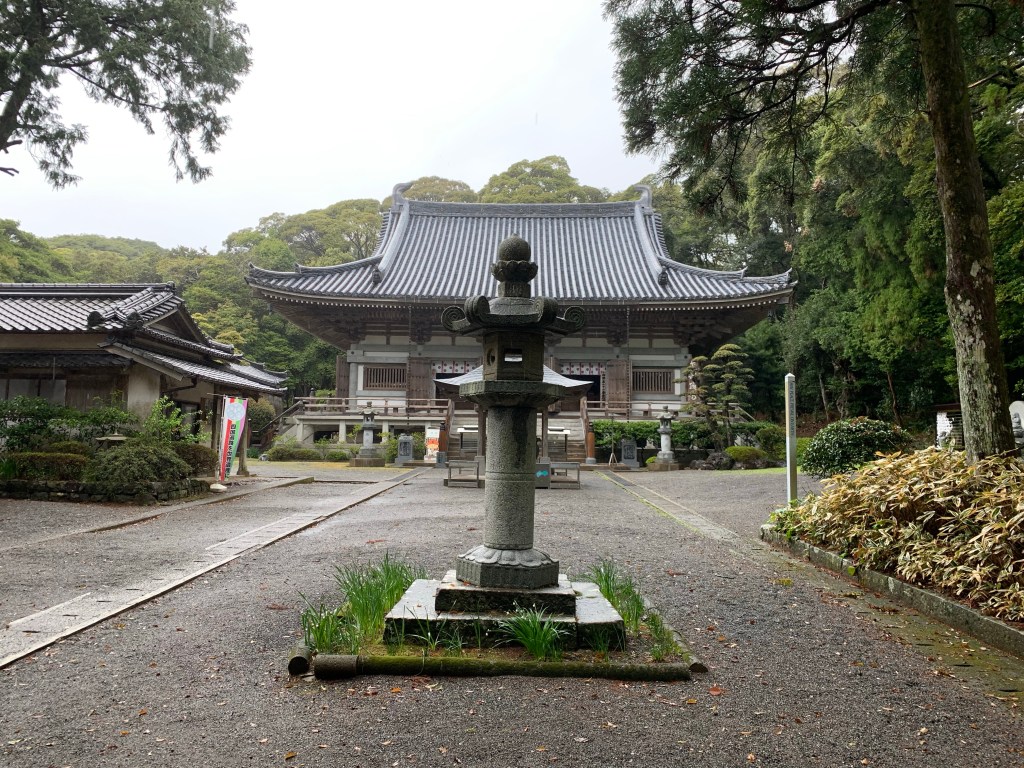
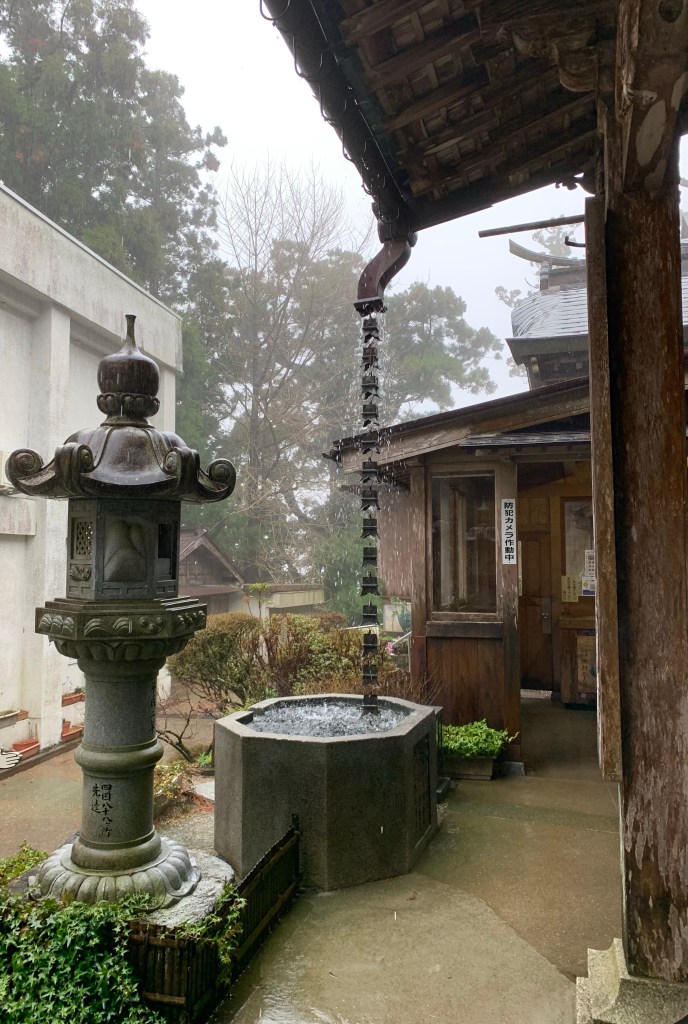
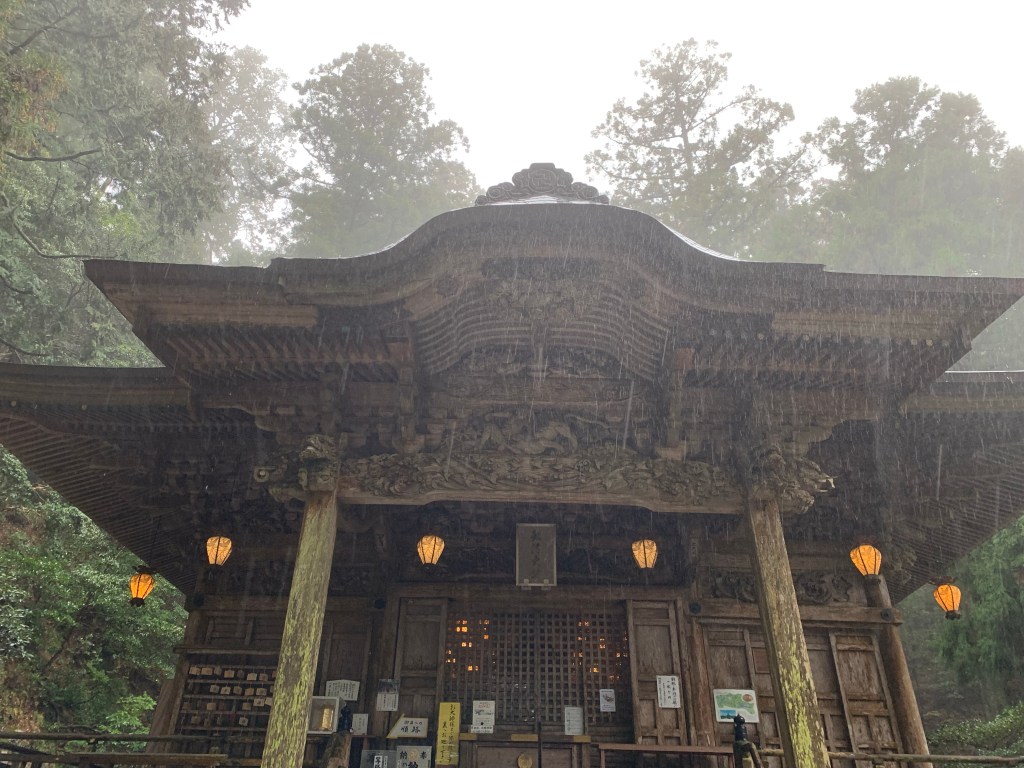
I got off at Tonohama station and made my way up to Temple 27 (Konomineji.) It is only 4.2km but starting at the station at sea level the temple is near the top of the mountain at 424.6m.
I have put everything in a plastic bags. Because of all the rain the last couple of days everything is soaking wet! Luckily the place I’m staying tonight in Konan city has a dryer. Yay for warm dry clothes!

When I got to the top my faithful Henro bag fell apart. It got soaked by all the rain, bits of the inside plastic was coming off in flakes, but the biggest injury to the bag was the rip where the strap meets the bag. I would’ve taken a picture, but I’ll give the bag a bit of dignity. May it rest in pieces. 😉 I now have a new handy dandy henro bag.
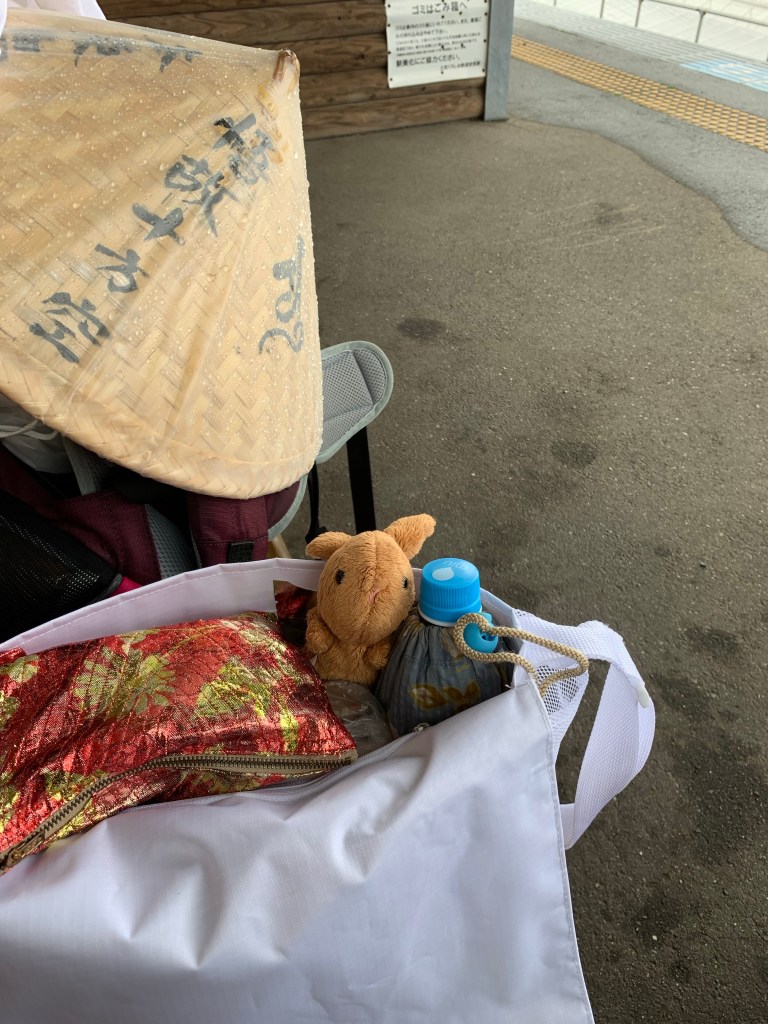
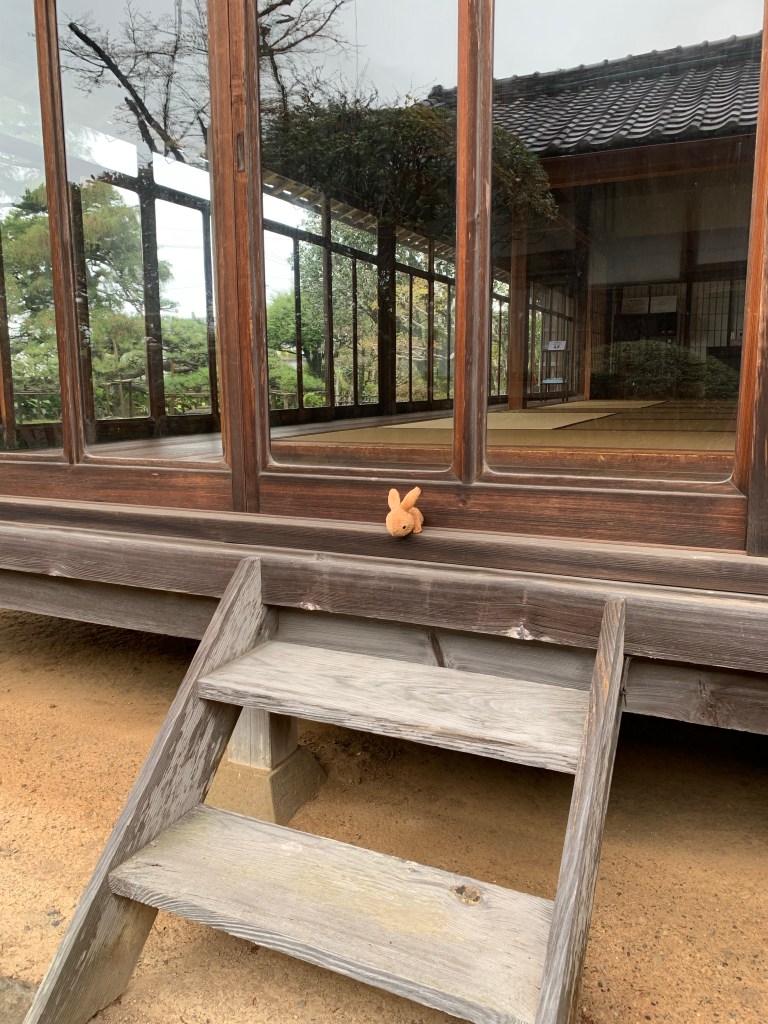
Usagi-chan in new henro bag

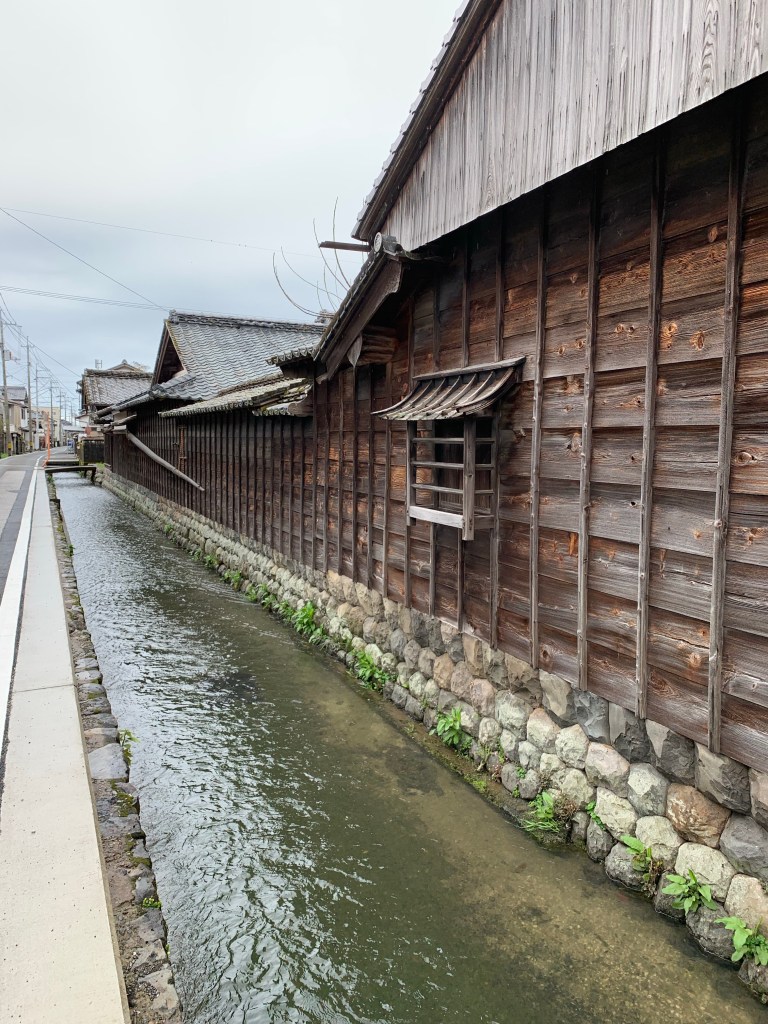
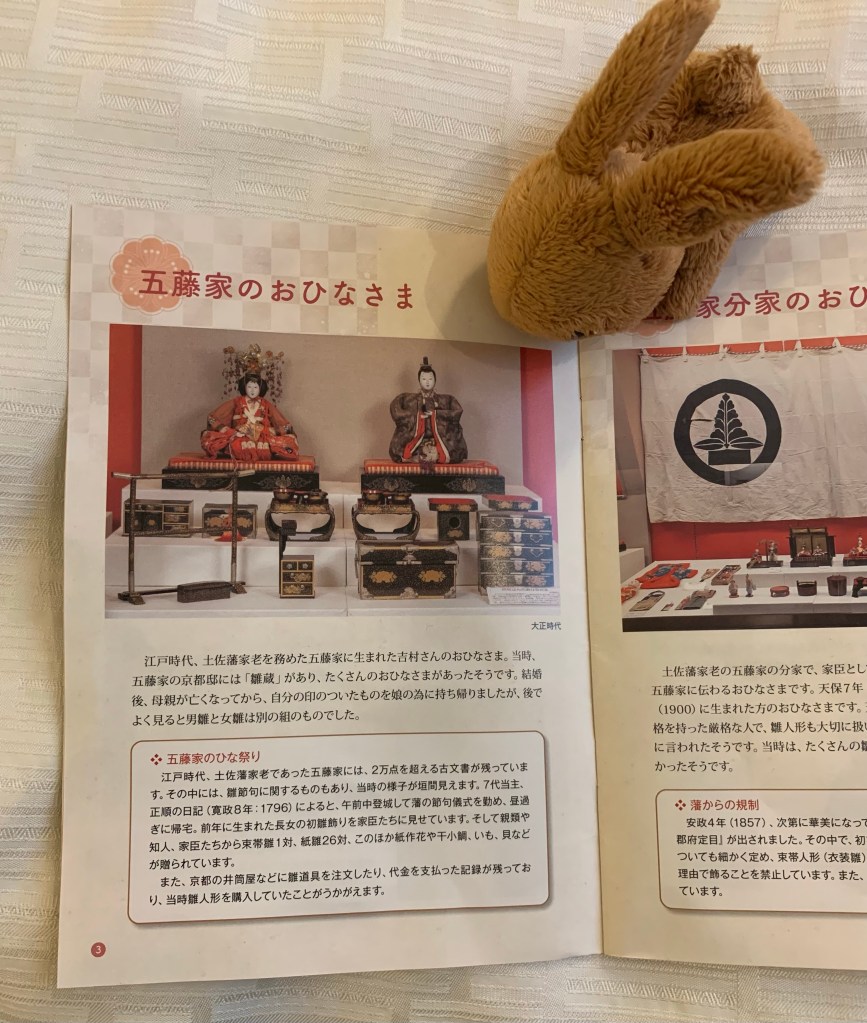
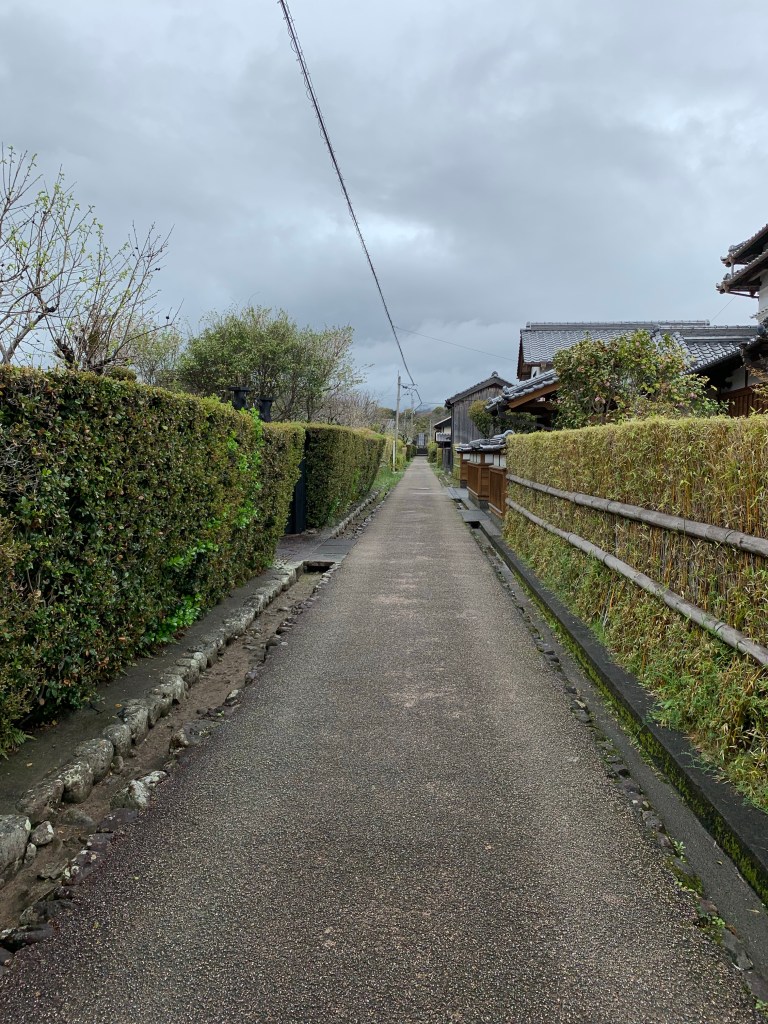
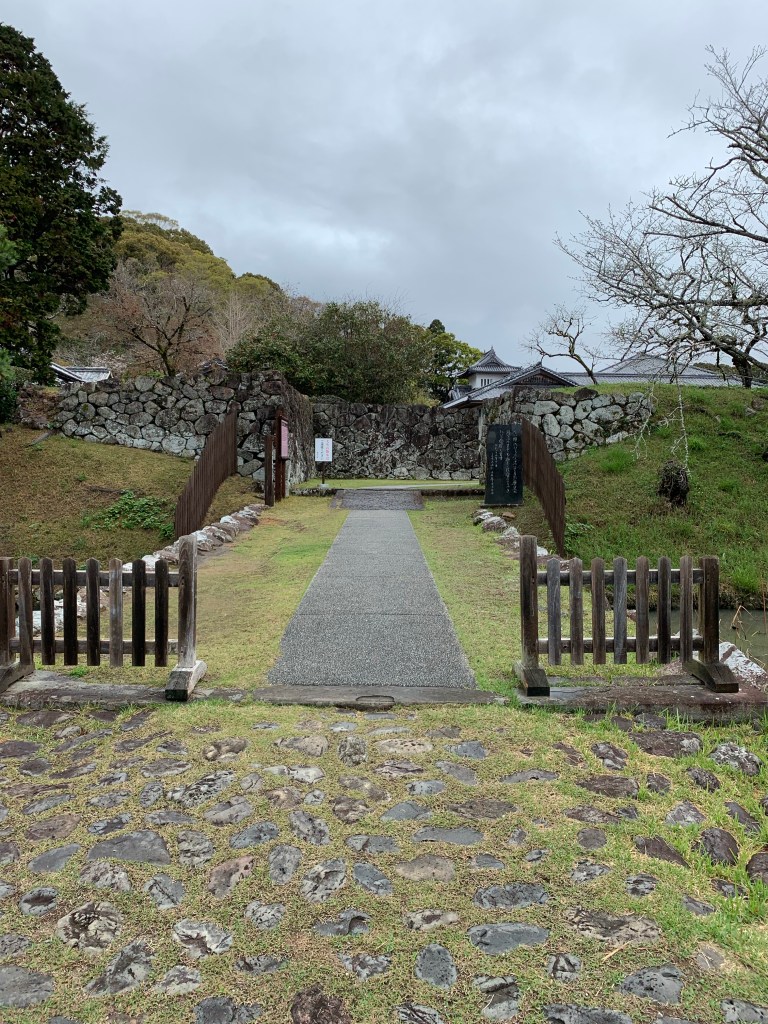
On my way to Konan I stopped off at Aki. The town has an old Samurai Residence Street and an area that was once a castle but is now a Museum of local folk traditions (I was not allowed to take any pictures – they had Girls’ Day Festival dolls on display and I was given a pamphlet). Aki is also the birthplace of Yataro Iwasaki (the founder of Mitsubishi company)… I did not go to his childhood home.
Uncategorized

Day 8

Weather: Rain

Started out at 6:30am and got to Temple 25 (Shinshoji) in Muroto a little before 7am. The temple office does not open until 7:00am so I made my way to the main temple and then the Daishi temple. I have gotten really quick at doing the chants and have one memorized.

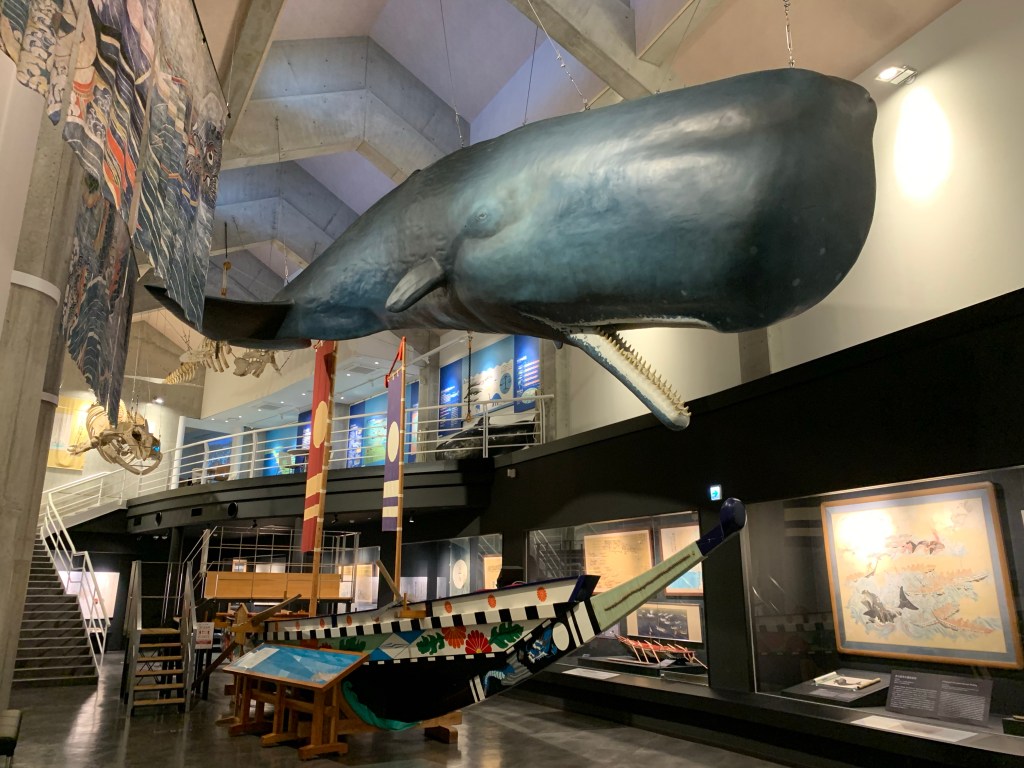
Walked to Temple 26 (Kongochoji). Went up by forest path and went down by different forest path. (It was really slippery and I was glad I had my walking poles for support). At the bottom of the hill there was a Whale Museum, so I went in and paid ¥500 to see this place. The best thing about it was the Virtual Reality film when one is under water “swimming” with whales.

Whale Museum

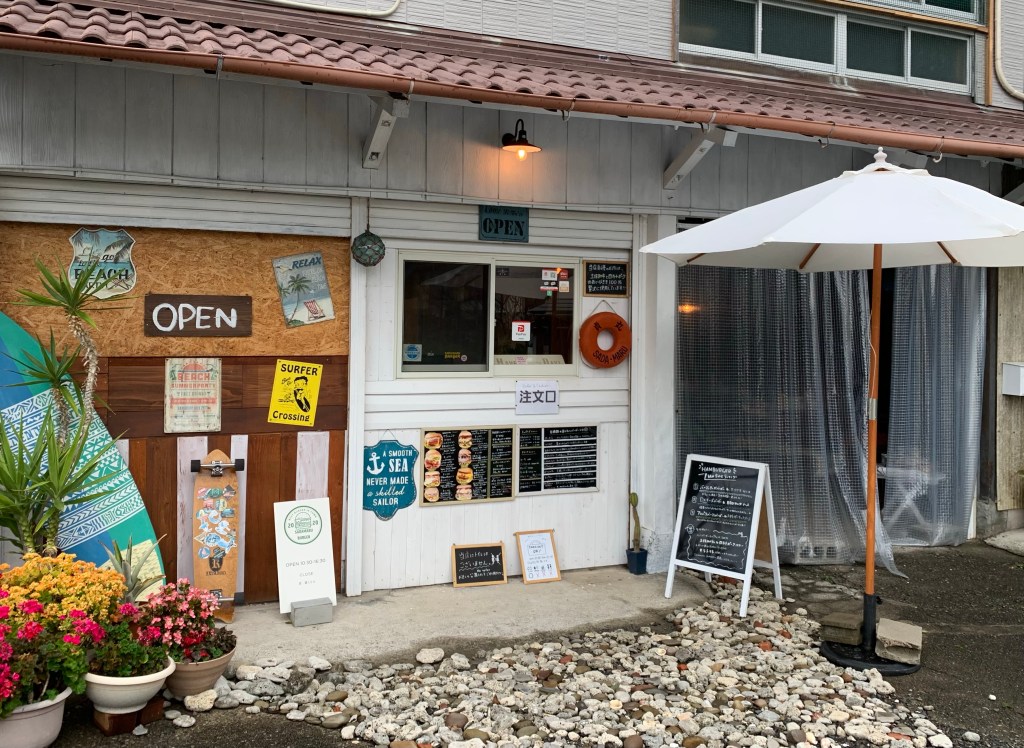
I had lunch at a burger place run by a guy who likes to surf. Apparently, that area is good for short board surfing.

Burger place

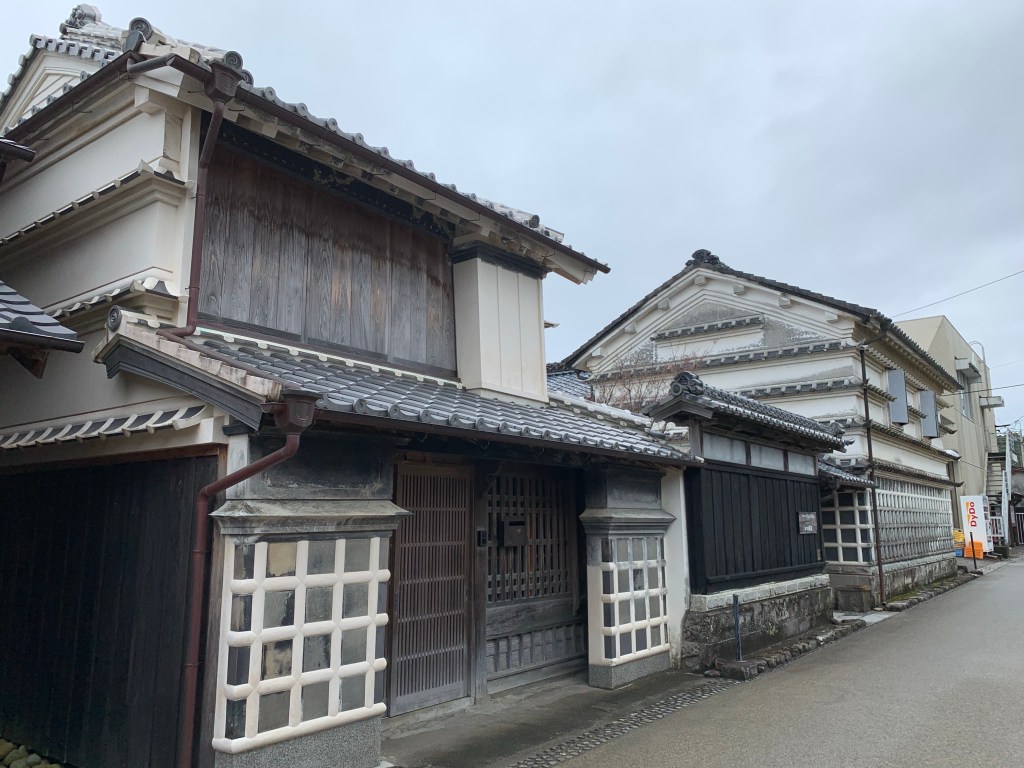
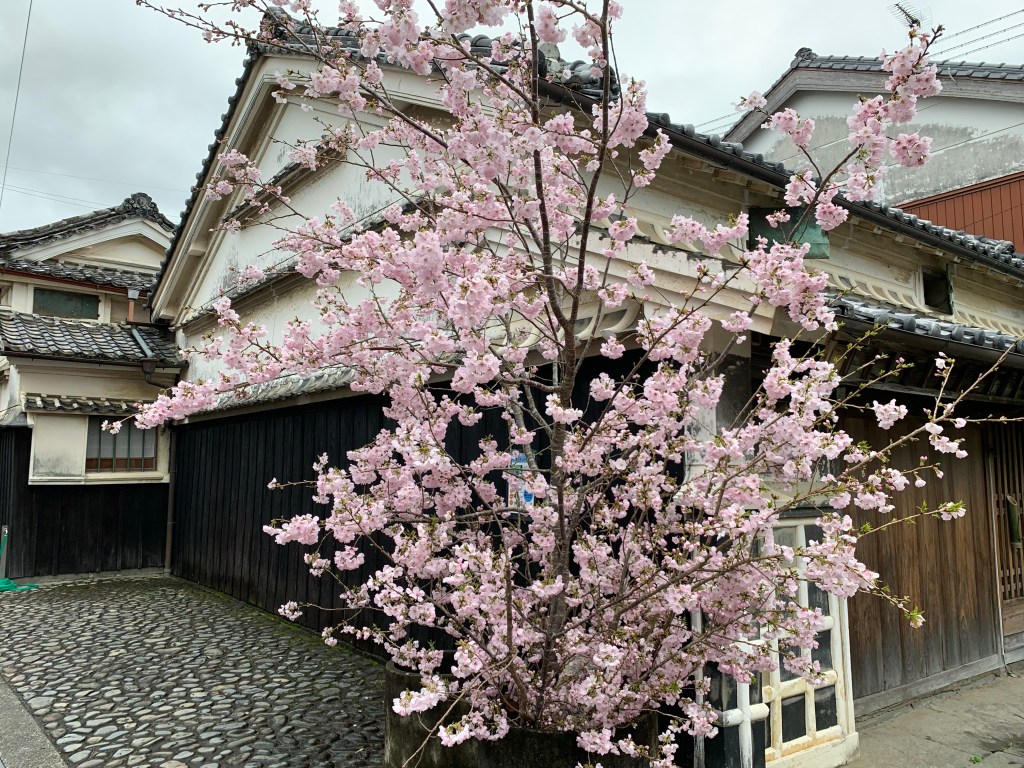
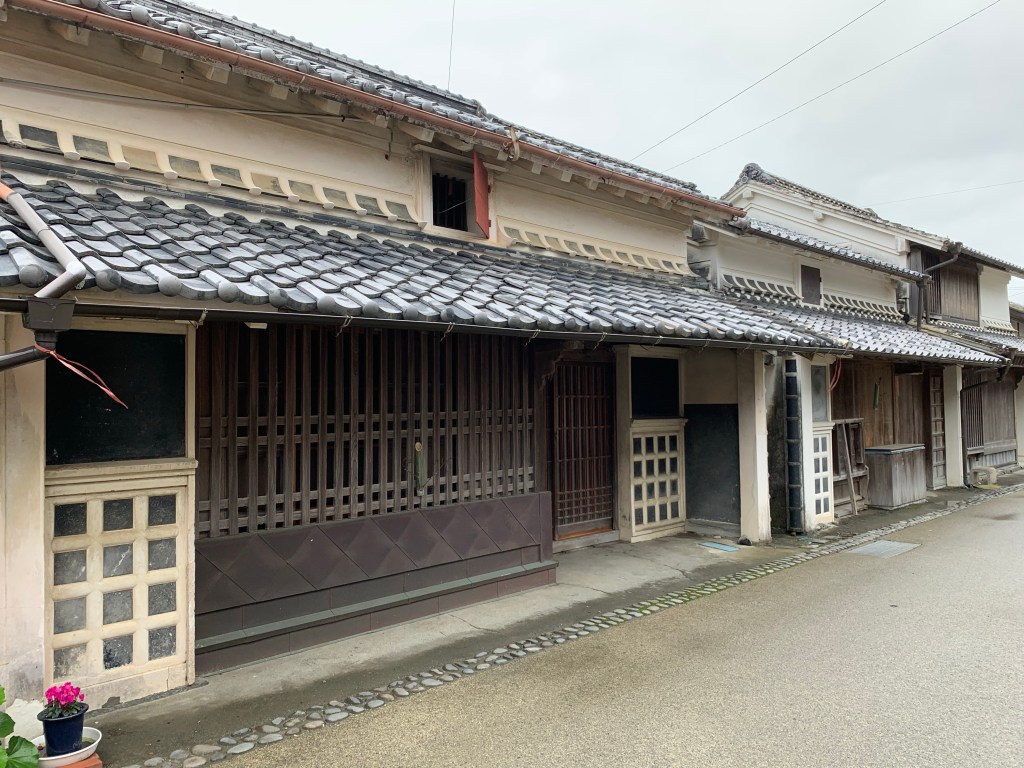
I then stated walking toward the place I booked for tonight in Nahari about a 21km distance. On the way I passed through Kiragawa (a town which as preserved the buildings from the late 19th and early 20th century.)

I got about 14 k from Kongochoji, when my feet got the better of me and I took a bus.

It was not the sprain – that rarely bothers me now. It is not blisters – I only have one from the wrap I had around my ankle for the sprain. In fact, I have to thank Rachel for suggesting wearing 2 layers of socks. A pair of smartwool and another thick sock on top of that.

I believe it is Plantar Fasciitis. The pain is in both heels and first thing in the morning my first steps are painful. It started after Temple 10. Last night and this morning I did some stretches that help relieve the symptoms. It felt better this morning, but after over 31,000 steps I am feeling it again. (Tomorrow might be a lighter walking day)

Today was also the first time I visited an onsen (hot spring) on this trip. It had a ryotenburo (outside hot spring). I was the only person in there so I got to relax and spend a long time in the Ryotenburo.

Uncategorized

Day 6

I’m on the road again. The day started out with a light drizzle turning into a torrential downpour. (Cars don’t slow down when they past you, so every time a car approaches one has to turn slightly away as it will inevitably go through a puddle as it passes.)

Usagi-chan with some new friends

I got to the bottom of mountain where Temple 20 (Kakuriji) is situated and luckily there was a FamilyMart. I got a hot coffee and called a cab. There is uncomfortable and then there is UNCOMFORTABLE. I am choosing the Buddhist middle way and going for uNcOmFoRtAbLe.

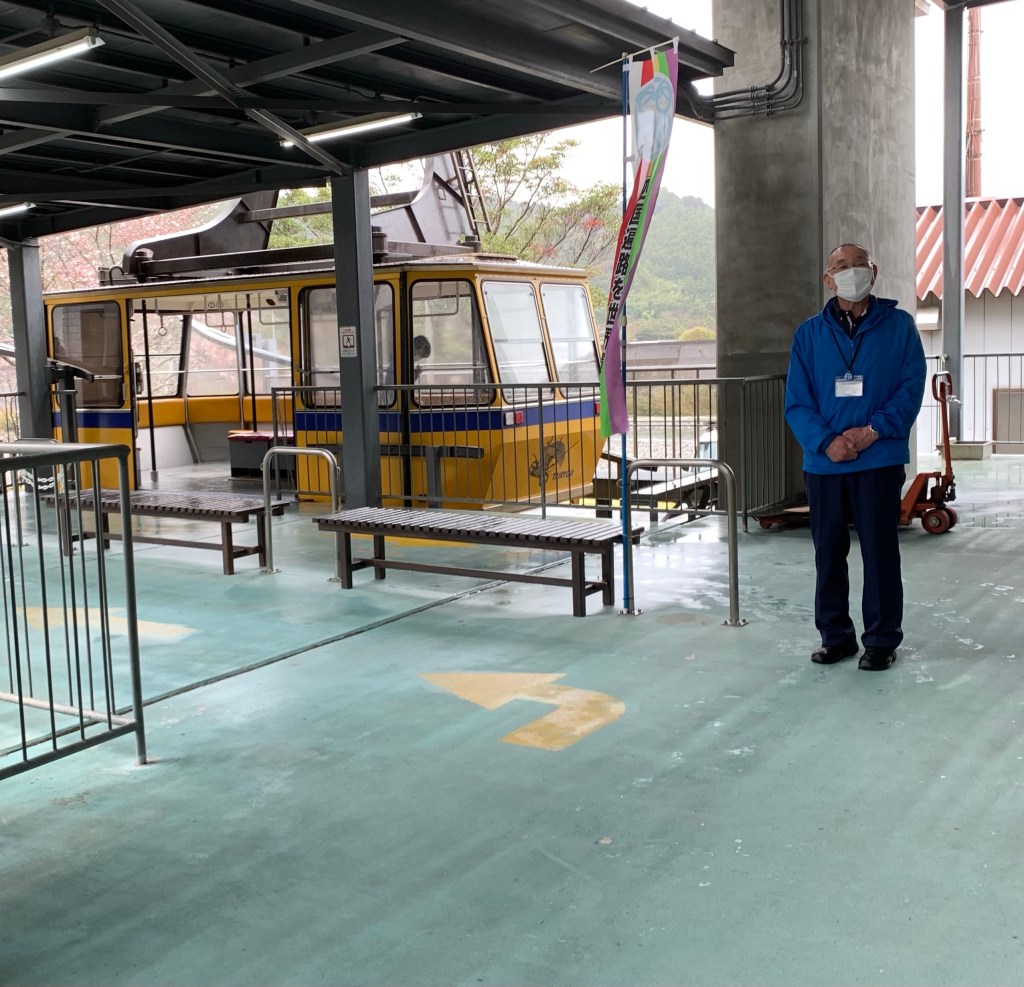
I kept the cab waiting while at Kakuriji, and had it take me to the bottom of the cable car at Temple 21 (Tairyuji). It was still raining pretty hard when I got on the cable car to go back down… but it stopped raining and the sun came out once I was at the bottom of the mountain. Go figure!

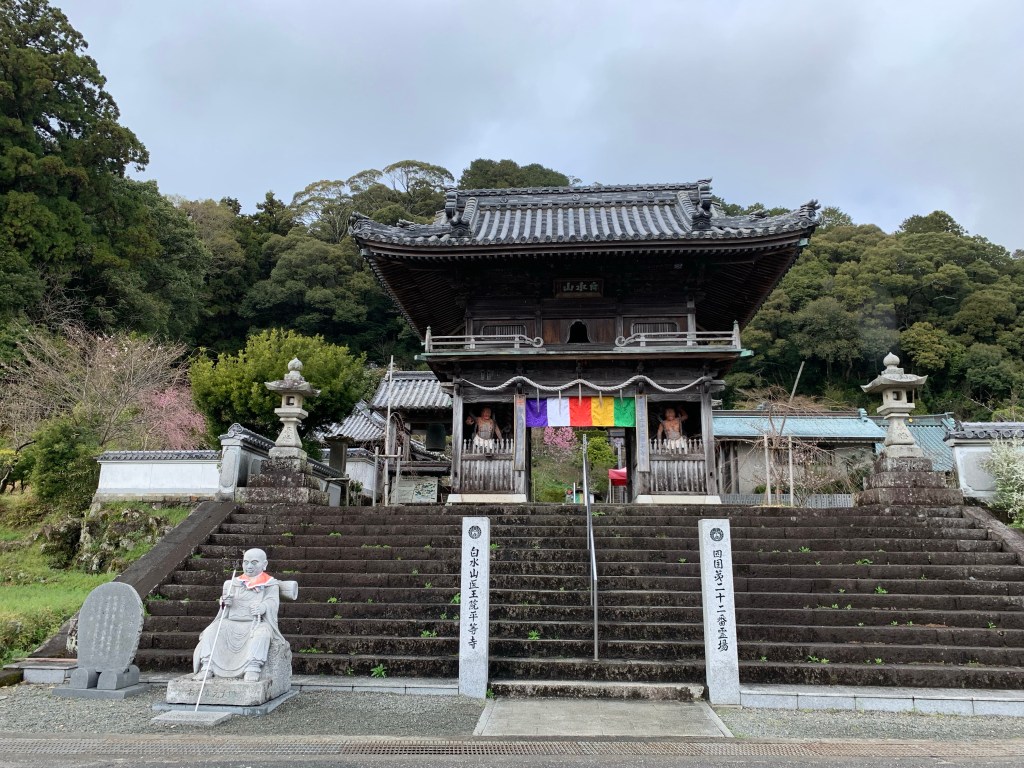
I ended the day visiting Temple 22 (Byodoji) which is known for curing all sorts of sickness. This is where the charm I bought at Temple 9 (Horinji) – known for curing leg ailments – broke and I got a new charm for good mind and body.

Temple 22 (Byodoji)

On my walk today, I met a man named March from Taiwan who told me that there used to be 88 temples in Taiwan dedicated to Kobo Daishi, but now there are only 3. He also told me there is a Temple in Fukuoka dedicated to Kobo Daishi – I had no idea! Fukuoka is the point Daishi returned to Japan from China.

If you have been following me from the beginning of this Pilgrimage, you might have noticed I had mislabeled one of my posts… apparently I skipped Day 3… it is now numbered correctly…I hope.

Uncategorized

Day 5

Last night, I was the only person staying at this temple. Apparently, if one doesn’t book one’s temple stay the day before, one is S.O.L. (Or maybe it is just this temple)

As I’m not travelling between temples, this might be a good time to introduce Kobo Daishi and the Shikoku Henro.

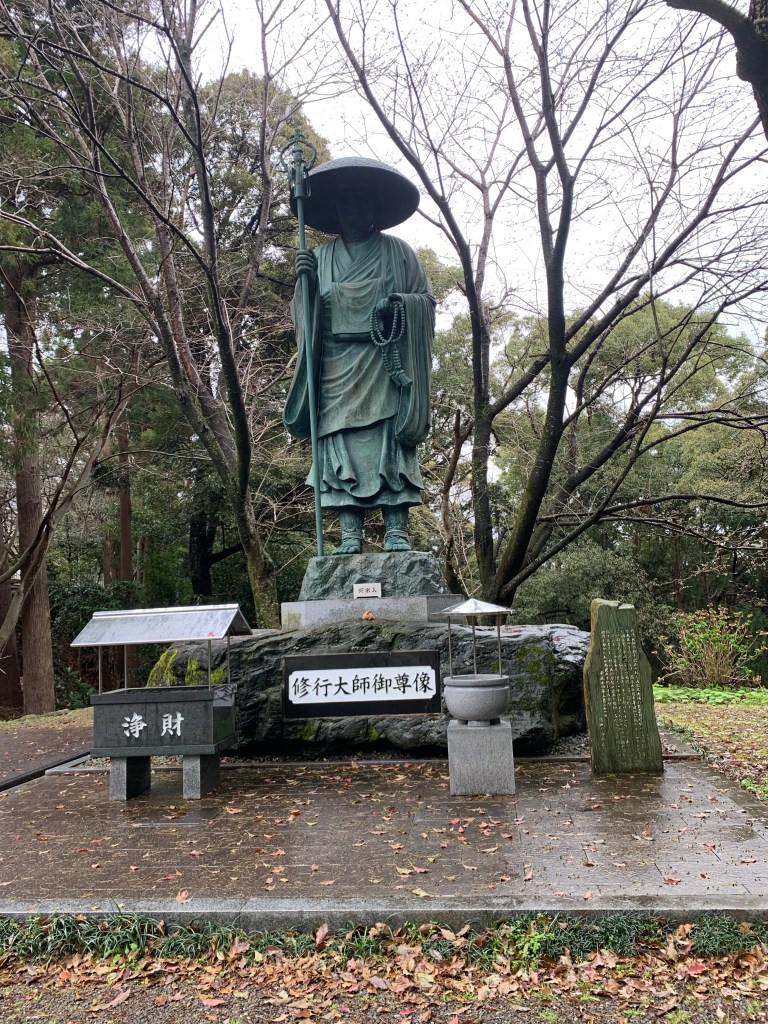
Kobo Daishi is the honorary name of Kukai (a Buddhist Patriarch of Shingon Buddhism). His is accredited to have done many great deeds around Shikoku and opened up a School of Arts and Sciences (Shugei shui-in) in Kyoto.

There isn’t much in terms of actual historical evidence that Kukai did all the things he is accredited for – not sure where one would find evidence of confining a large pyromaniac serpent in a dragon’s cave – how do you know it is a dragon’s cave? (Obviously the pyromaniac serpent is real).

However, today, people travel the Henro (usually in a clockwise direction) around the island. One does not have to start from Temple 1, however, most people do. One does not have to walk the Henro, either. Kobo Daishi walked it, but that is because he lived from 774 – 835 and the only way for a travelling ascetic to get around at the time was on foot (if trains and automobiles were around back then, I’m pretty sure he would have used them). Nowadays, most people travel by car/microbus. If one does the henro, and is buried with the Nokyocho (pilgrimage book) with the stamps, one can go straight to the pure land without having to be reborn.

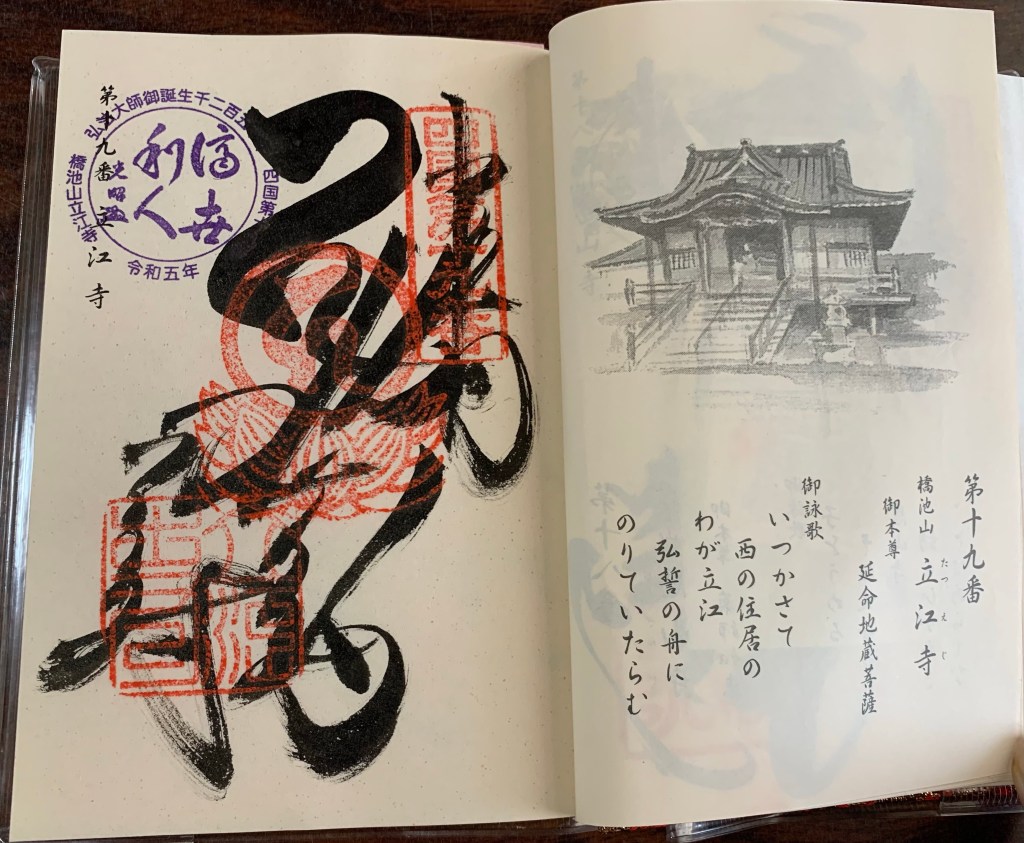
Nokyosho (Pilgrim’s book).

There used to be large highway buses full of pilgrims (usually over the age of 60), but as I understand there are less pilgrims at the moment as people are still weary of COVID. March and April are usually the busiest months of the year. Luckily for me, but not the businesses that rely on the pilgrims, I have been able to find places to stay (This would not be the case in years before COVID.) The only time I struggled to find a reasonable place was the first night… which I found out was because Tokushima had a marathon race set for the that weekend. I have, however, seen a number of micro buses (7 passengers and a driver) on route and a handful of cars in the parking lots of the temples.

Hopefully, I have attached a link to an interactive Henro map here.

Uncategorized

Day 4

I am glad I did one of the mountain routes yesterday as it was a rainy day today.

On this journey, so far, I have met or have seen some of the same people at the different temples (regardless if they are walking or driving the route). It is really nice to see a familiar face when you reach a temple (especially since I have been walking most of this pilgrimage alone, well except for Kobodaishi, who is said to walk with you on this journey)

Today, however, I walked with Kiyoko-San. She started her Henro at the temple closest to her house in Ehime. I first met her at Temple 12 (Shosanji), and saw her again at Temple 14 (Jorakuji) where we started to walk together. She is very kind and energetic which made today’s journey a lot more enjoyable.

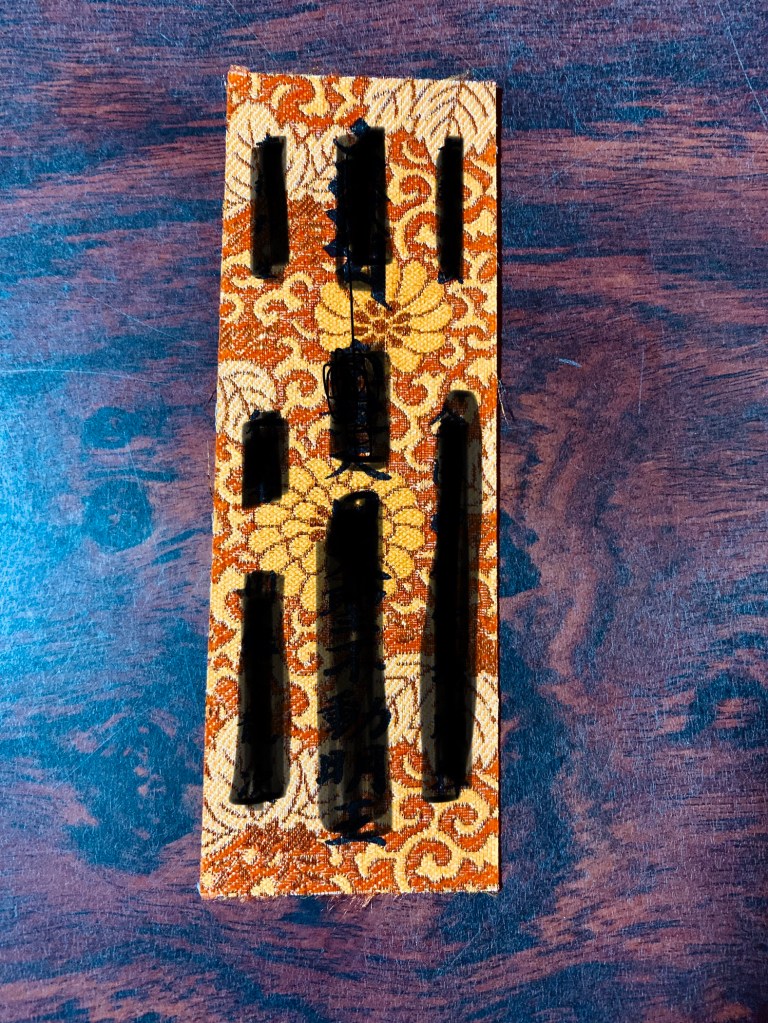
When Kiyoko-san heard about my ankle she gave me one of the four special osamu-fude (name slips one leaves at a temple) she received from a person who has done the Henro more than 100 times. Kiyoko-san told me that it is like a person and has special powers to heal if place it on the injured area. As it is like a person it should not be bent and special care should be taken with it.

Special brocade Osame-fuda for someone who has done the Henro 100+ times (I blacked out the details for privacy)

In return I gave her my Japanese prayer booklet (she was using a photocopied page of the main prayer)

Temple 14 (Jorakuji)
Temple 18 (Onzanji)
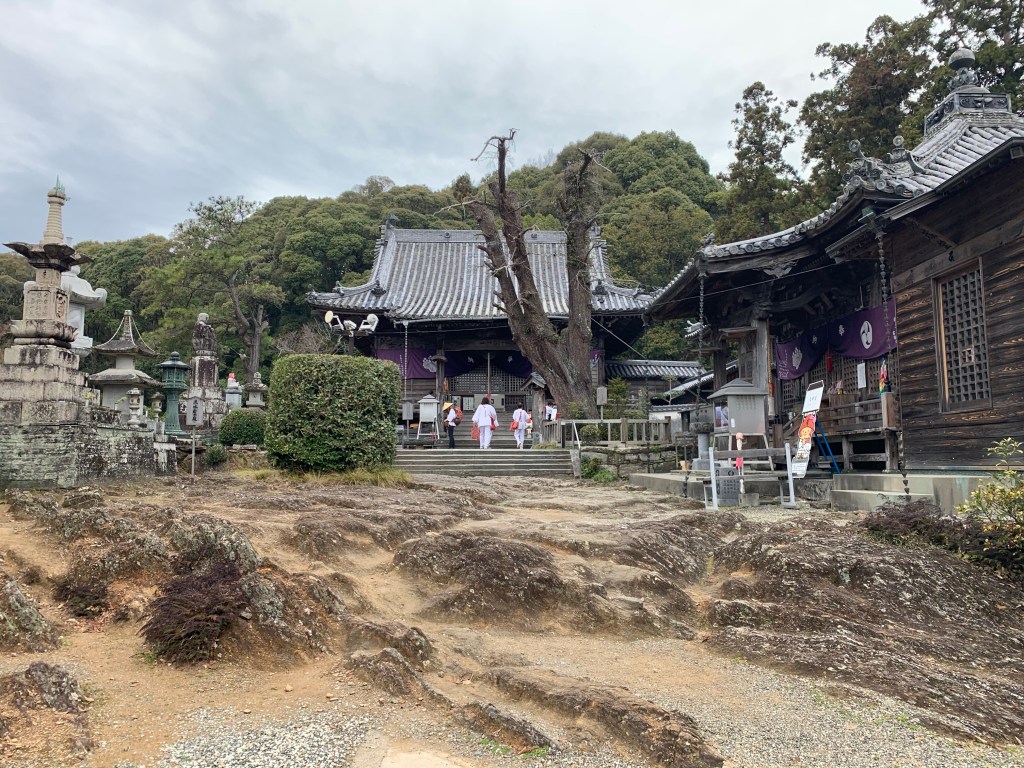
Temple 19 (Tatsueji) – where I am staying

Today we got as far as Temple 19 (Tatsueji). I’m staying at the temple for 2 nights, not so much because of my ankle, but rather because my heels feel bruised and I think I should give them a bit of a rest before tackling Temple 20 – a 5km walk from the bus stop – all uphill. My guidebook says it would take 80 minutes (whoever wrote the times is a MUCH faster walker than I am). I would also tackle Temple 21 (Tairyuji) on the same day.

Why the two you ask? Good question. There aren’t any places to stay near Temple 20 or 21 – unless I stay in a mountain hut. Kiyoko-san advised against it as a woman traveling alone.