Got up at stupid o’clock in the morning to catch a bus, to catch a train to catch a cable car to catch another bus to pay my respects to Kobo Daishi (Kukai).
All it said in my guidebook was to go to Mount Koya. It did not say that Mt. Koya is like a Temple village and that one needs a bus to get around. Luckily, the guy at the ticket counter at Namba Station told me about a discount ticket where it not only gets you to Mt Koya, but also includes a all you can ride two day bus pass.
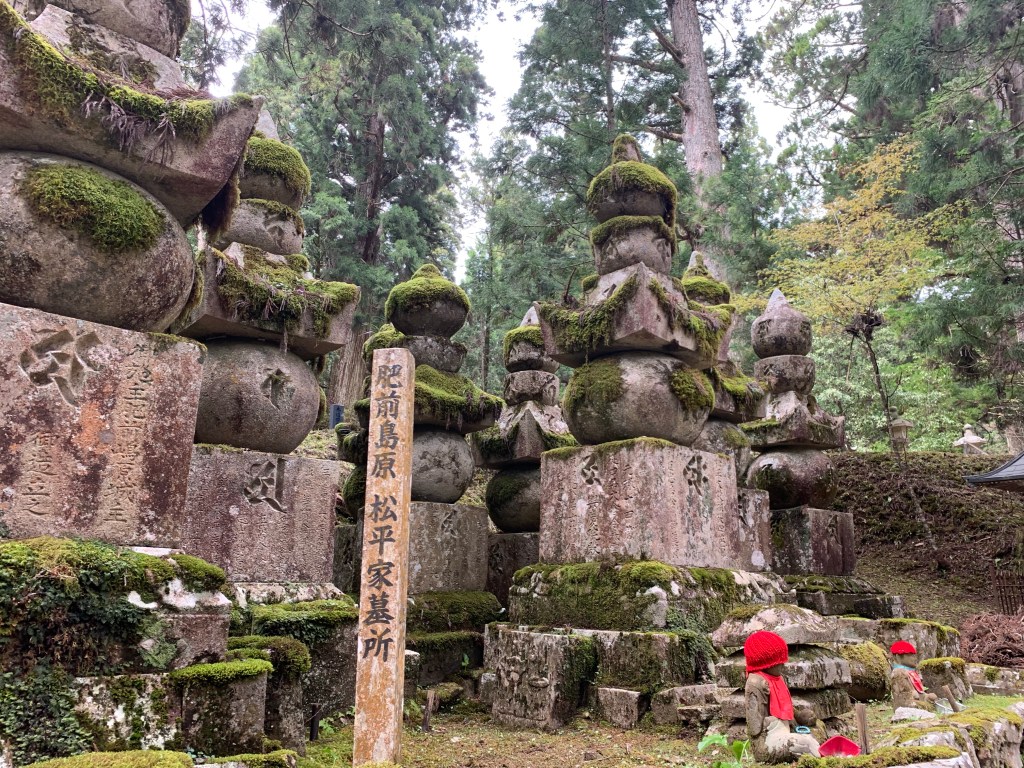
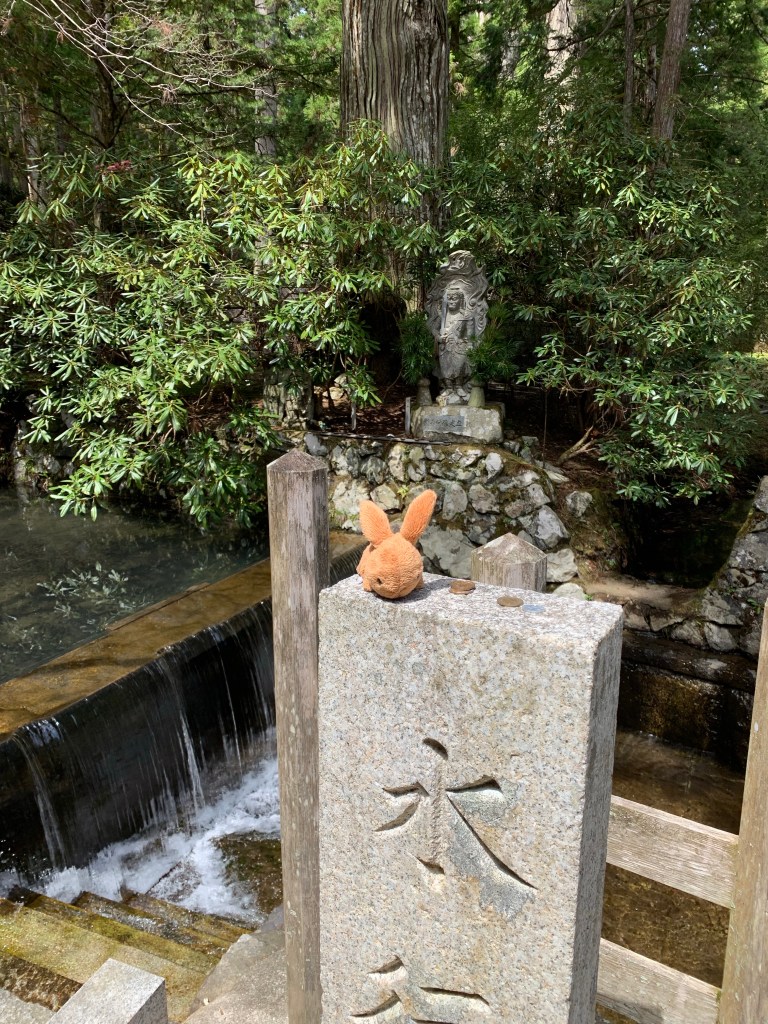
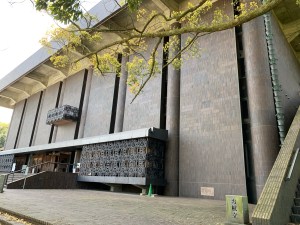
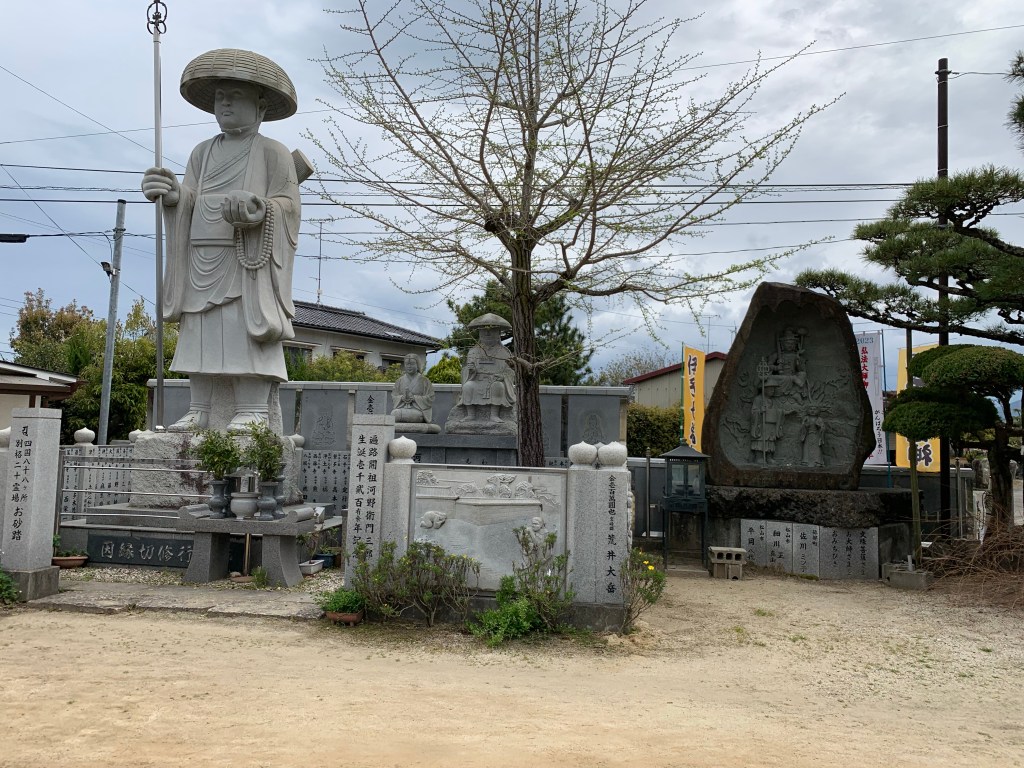
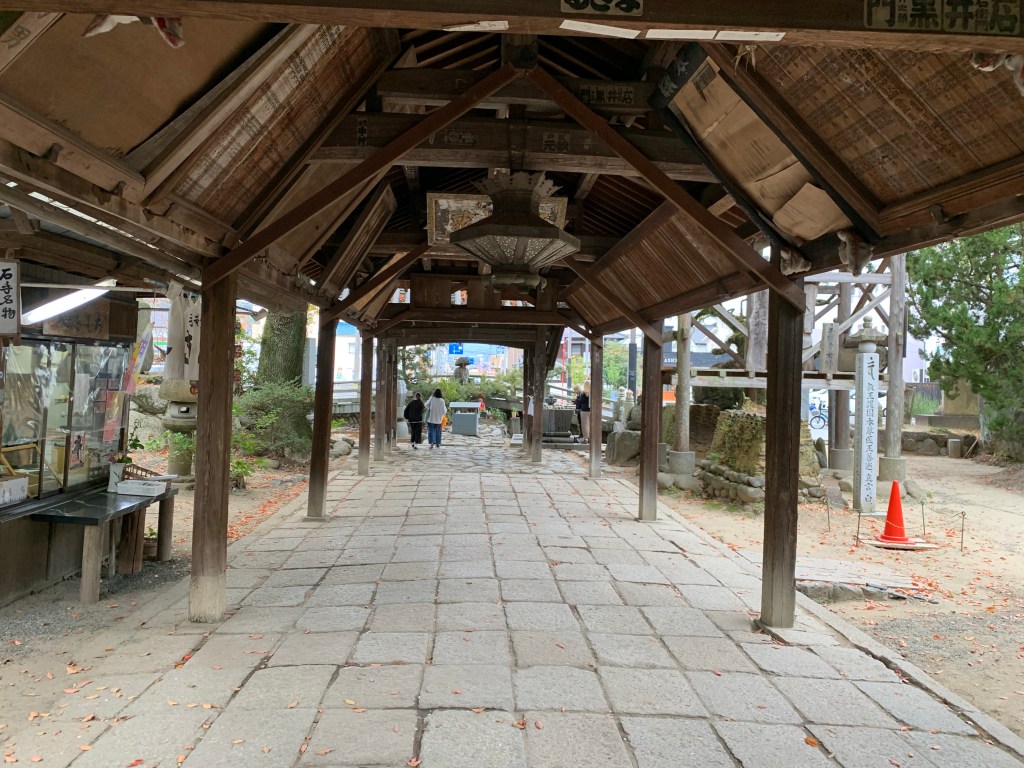
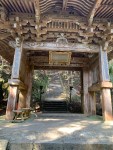
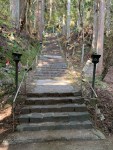
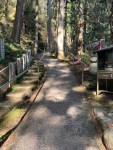
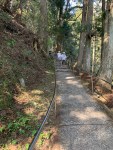
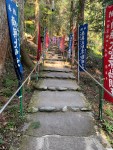
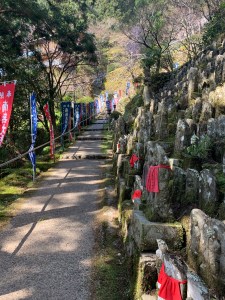
Images around the Kobodaishi Gobyo Mausoleum
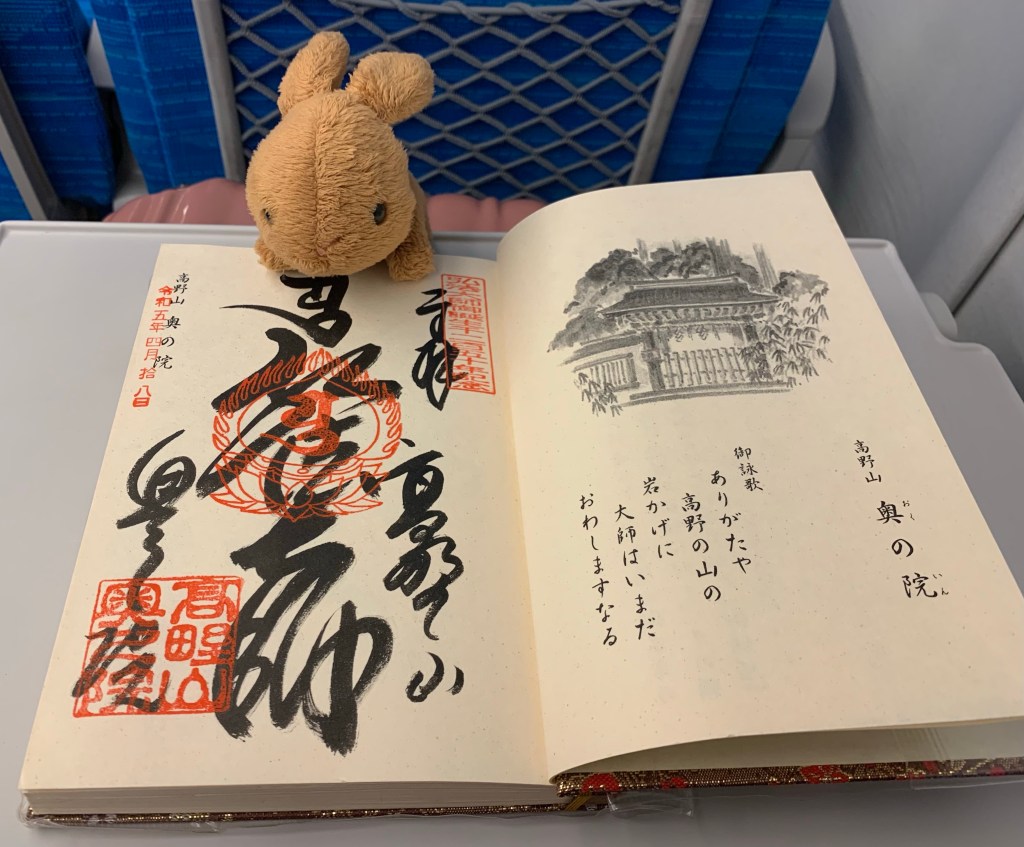
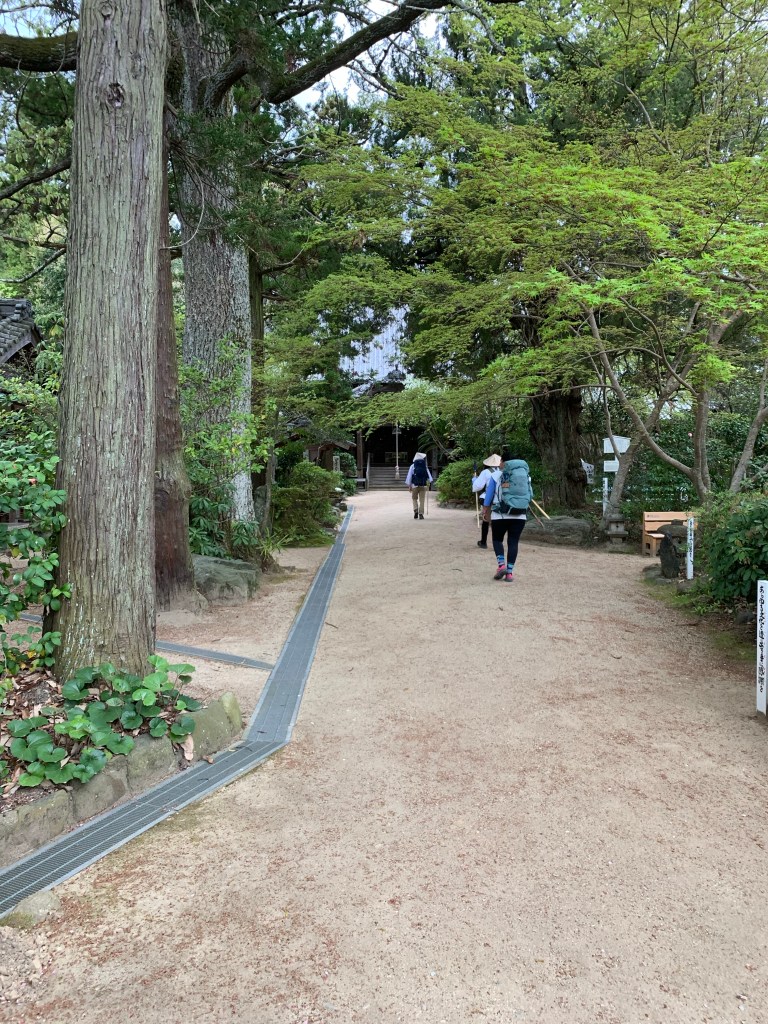
I got to the Kobodaishi Gobyo Mausoleum ( no photos allowed) which was through a giant cemetery with gigantic trees. After which I got my final Nokyocho stamp.
Last Nokyocho stamp
I am now on a bullet train heading back towards Tokyo. It’ll be nice to stay in one place for a while and not have to worry about accommodations, transportation and weather!
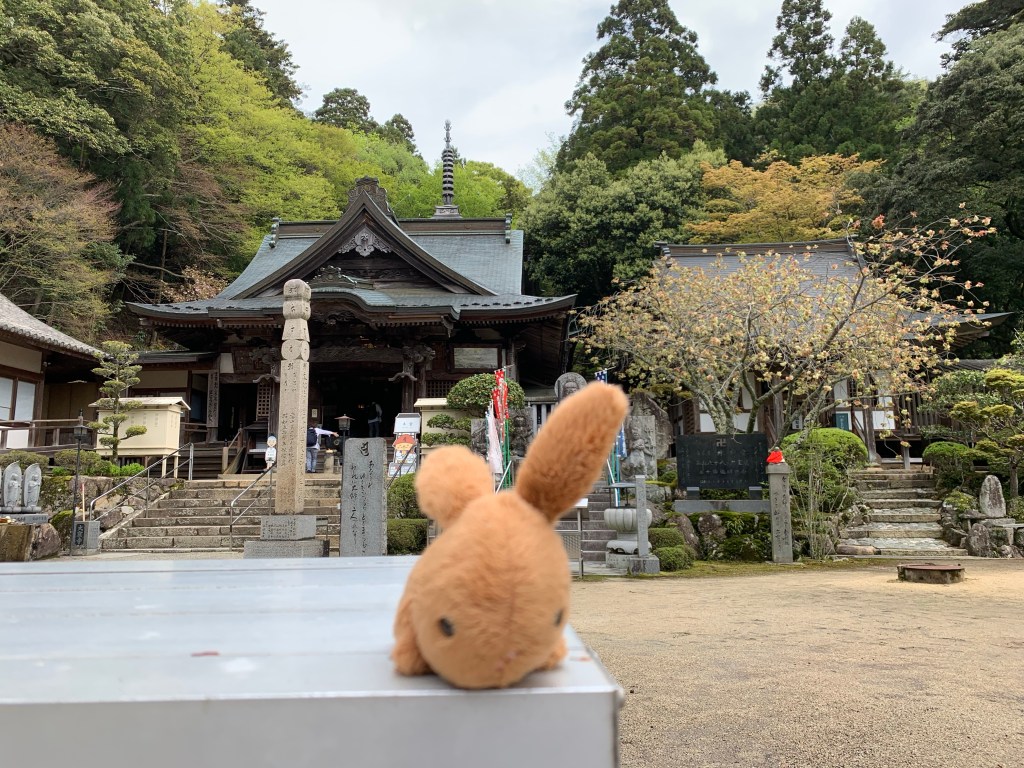
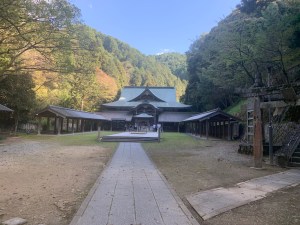
Last Shikoku Temple day. In the morning I went to Temple 88 (Okuboji). I was a bit emotional, as it was the last of the 88 temples. Not sure if the Temple itself is larger than the other temples, but it sure felt majestic.
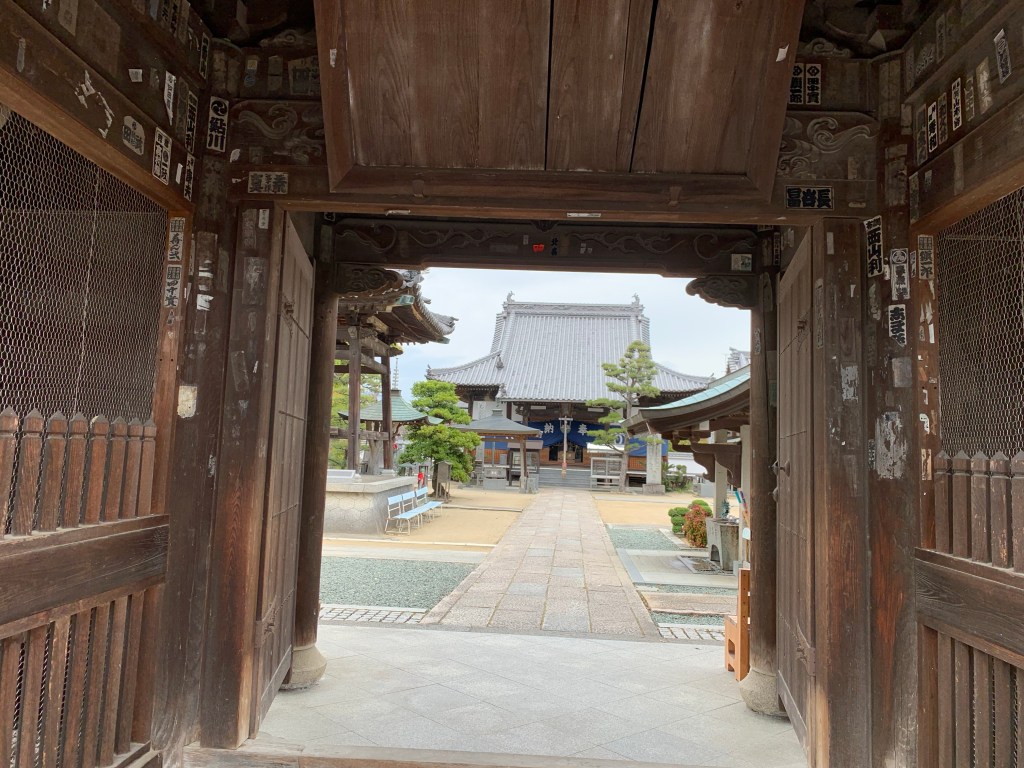
Temple 88 (Okuboji)
Visiting all 88 temples is called “kechigan” (the fulfillment of one’s wish). However, some believe that one needs to complete the circle by returning to the temple one started with to achieve Kechigan. So I went back to Temple 1 (Ryozenji) where my journey began 30 days ago.
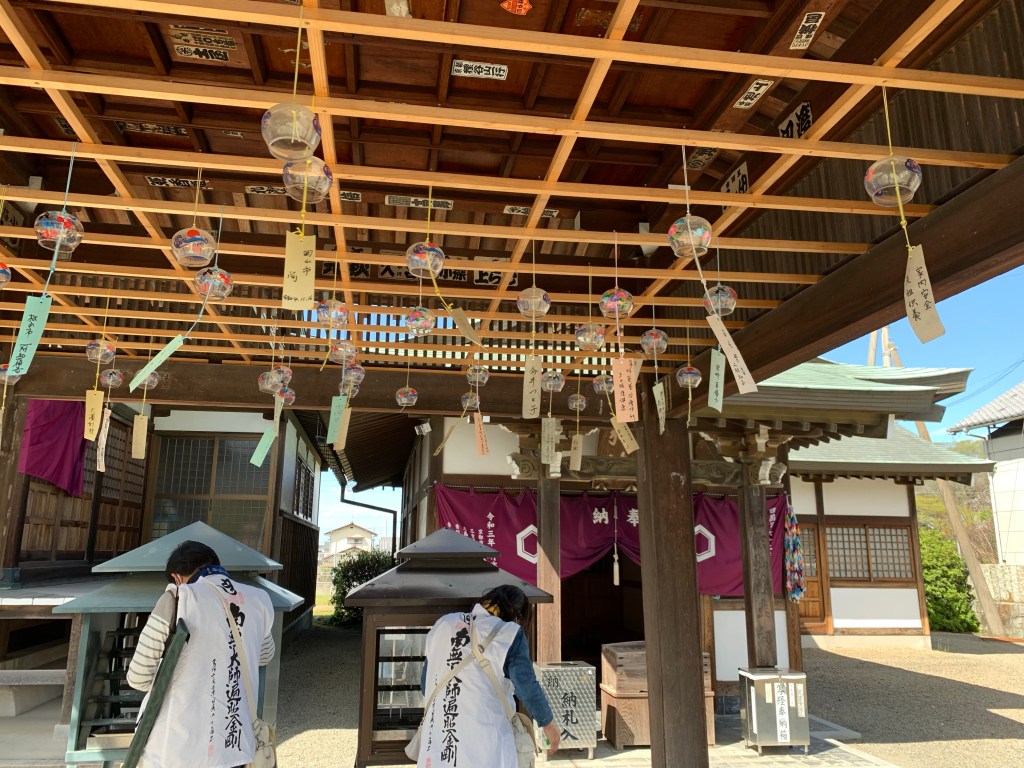
Main Temple at RyozenjiCertificate saying I completed the henro
Do I feel any different from when I started 30 days ago? Yes, my feet hurt. Will have to see a doctor when I get home regarding plantar fasciitis. But besides that? I leant a lot about myself, which at this point I’m not ready to share on a public blog. And then there are other things/rules that I learnt:
1) there is no right or wrong way of doing something, only the way that works best for you.
2) (following point 1) don’t let someone make you feel bad about the way you do things. That is their insecurity NOT yours.
2) you are only allowed to feel sorry for yourself or frustrated about a situation for a maximum of 3 minutes – anything longer than that and you might miss the bus.
Tomorrow I’m doing some sightseeing in Tokushima. I was excited about starting the pilgrimage when I first got here I didn’t do any sightseeing.
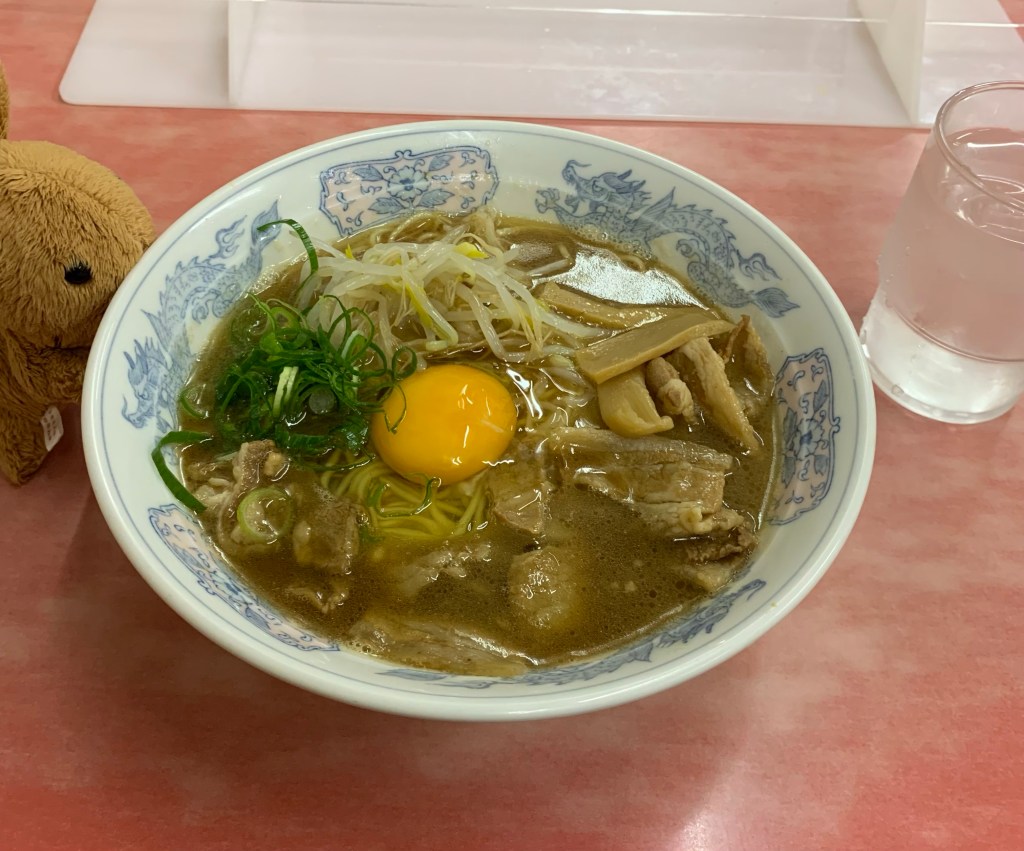
For dinner I ate Tokushima Ramen. It is a rich Shoyu based ramen with a raw egg. It was kind of like Sukiyaki met Ramen and had a baby and called it Tokushima Ramen.
Tokushima Ramen
I am still trying to figure out the logistics of visiting Mt. Koya and paying my respects to Kobo Daishi.
Started the day with Temple 68(Jinnein) and 69 (Kannonji). They are literally right next to each other. I only had to go to one temple office to get the stamps in my book.
Telomeres 68 (Jinnein) and Temple 69 (Kannonji)
Then went to Temple 70 (Motoyamaji) which Ahmad an impressive pagoda and cut frogs under the rain water basin. The woman monk at the Nokyocho office gave me a scone as osettai. It was much appreciated. Motoyamaji’s main statue is of Bato Kannonji Bosatsu (a being with a horse head that eats worldly desires as a horse eats fodder). As per usual, the main deity cannot be seen and when one can see them, photos are not allowed.
Pagoda at Temple 70 (Motoyamaji)Frogs under the rain basin
From Motoyamaji I took a bus, but the bus driver said that the place I wanted to get off does not have a connecting bus…so I ended up at the last stop of the line in Niocho Nio. There is a beach there that has total ponds that people like taking sunset photo at called Chichibugahama. I wasn’t there at sunset nor did I have time as I caught another bus that brought me closer to Temple 71 (Iyadaniji).
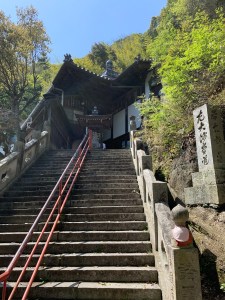
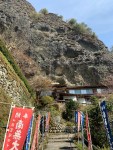
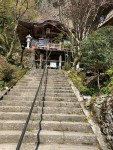
Iyadanijiis a crazy stair temple. One has to climb stairs to get to the landing where you turn right to go up more stairs to get to the main temple. Then one had to go back down to the landing area to go up another set of stairs to get to the Daishi temple and Nokyocho office. One woman forgot her walking stick at the main temple and had to do those sets of stairs again!! I felt sorry for her. -you even have to take a separate set of stairs to go to the toilet! NOT a temple for people with mobility issues.
StairsStairsAnd more stairsI don’t think the monks like taking the stairs that much either (that big brown thing in the top right corner is the remains of a bee/wasp? nest. It was huge!)Temple 71 (Iyadaniji)
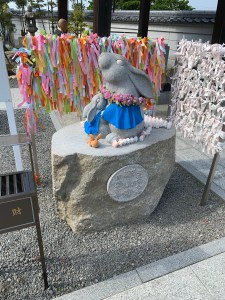
I then went to Temple 73 (Shusshakaji) where Usagi-chan got stuck in a tree. The female monk at this Temple gave me ¥200 yen to buy a cold drink from the vending machine… I guess my face must have been red from the heat?
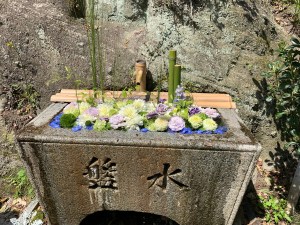
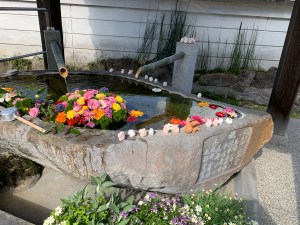
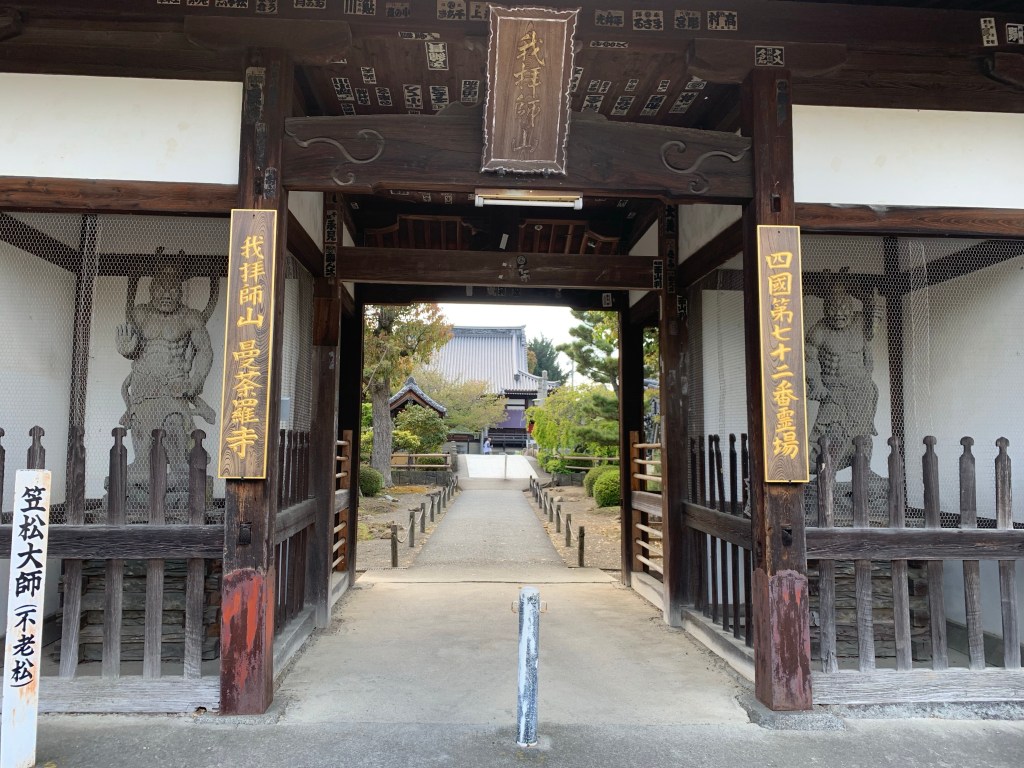
There is some kind of campaign where Temples 71 – 77 put flowers in the water fountain area and display rabbits around the temple… I don’t think Temple 72 (Mandalaji) got the message.
Flowers in water area temple 71Rabbits at Temple 74Rabbits and flowers at Temple 73Temple 72 (Mandalaji)
I nearly walked past Temple 74 (Koyamaji) it was so close. It had many rabbits.
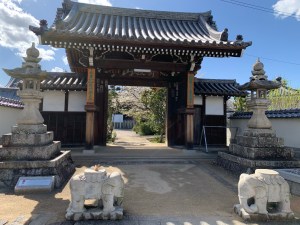
Temple 75 (Zentsuji), the birthplace of Kukai, was impossible to miss. The pagoda at this location is even bigger than the one at Temple 70! And the compound is so large one cannot take a photo of the whole grounds unless it is an aerial shot.
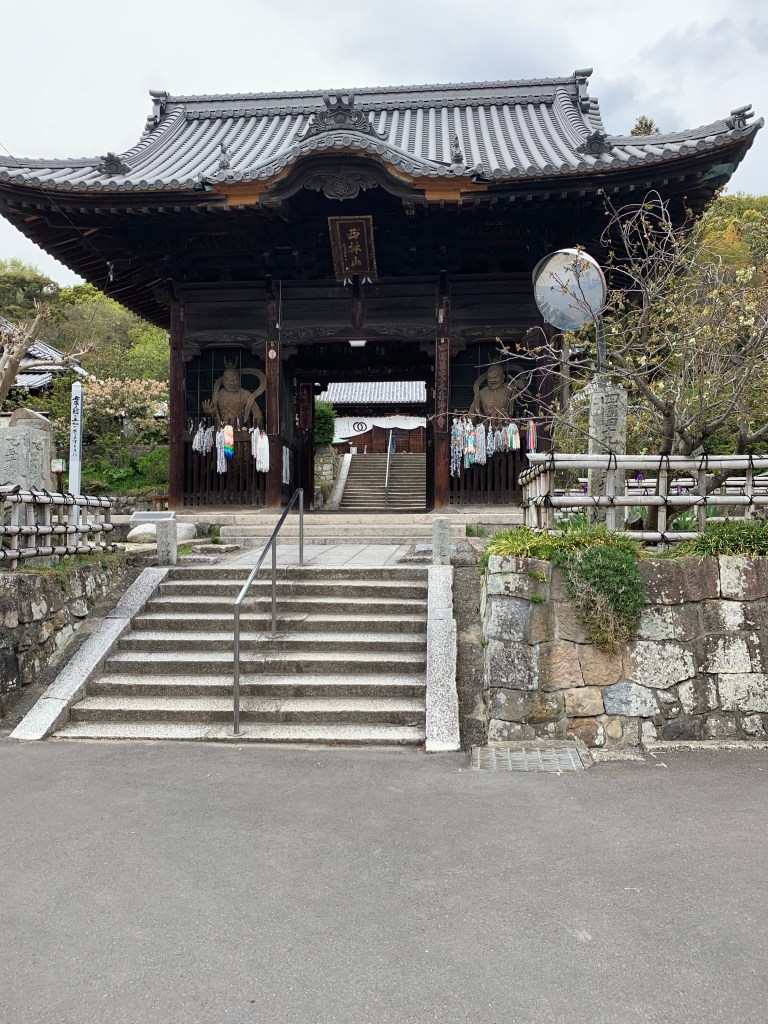
PagodaMain templeLooking at Daishi templeLooking from the entrance of Daishi Temple complex toward the main templeMain entrance to Temple 75 (Zentsuji)
Zentsuji was one of the few temples where one can visit if one has mobility issues.
This morning was a bit more expensive than I was planning for. I decided to take a bus that would stop close to Temple 57 (Eifukuji). When the bus arrived it wasn’t an ordinary city bus, but rather a highway coach used as a city bus! I was so surprised I left my walking poles by the bus stop. Instead of waiting an hour for a bus to go back to the station I called a cab and returned to the station, picked up my walking poles and had the cab drive me to Eifukuji. I didn’t want to waste time as I was trying to get to Temple 64 (skipping temple 60) today.
After I paid the cab fare, the driver gave me bottled tea, osembei, and some kind of puffed treats as osettai. (Osettai is a gift or help that someone gives a pilgrim to bring the giver good luck and lets the giver participate in the pilgrimage.)
I gave one puffed treat as an offering to Kobo Daishi to say “Thank you” and another to a fellow pilgrim who looked like they needed it more than me.
There was construction between Eifukuji and Temple 58 (Senyuji) so pilgrims who are walking have to take a detour. In all the excitement I only remembered to take a picture after I left Eifukuji.
Temple 57 (Eifukuji)
On my way up to Senyuji, I was offered a ride as another osettai. The driver turned out to be a ceramist and there was a group of them setting up their goods before the Opera concert was to take place at Senyuji. It would have been nice to have stayed and take in the opera but it started at 2 pm and I was there at 8:45 am.
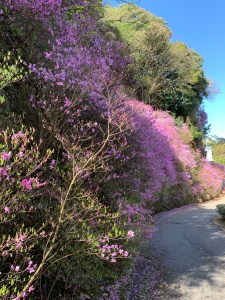
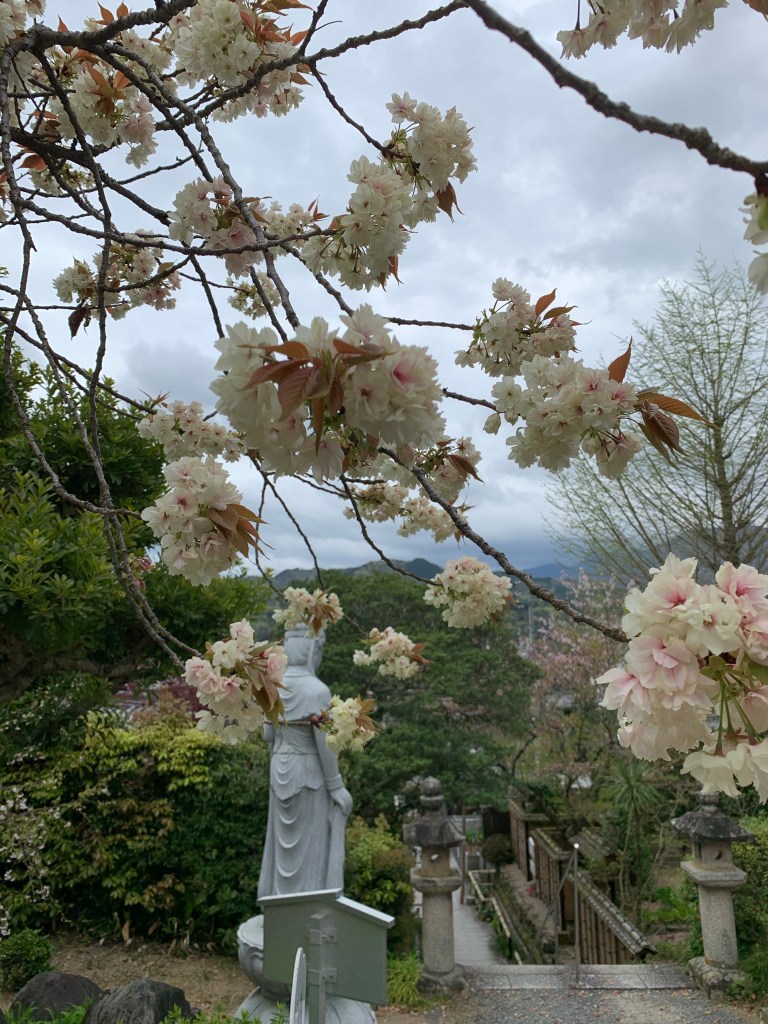
Senyuji always has some kind of flower in bloom throughout the year. The cherry trees are now mostly in leaf and the flowers in bloom are the mountain azaleas.
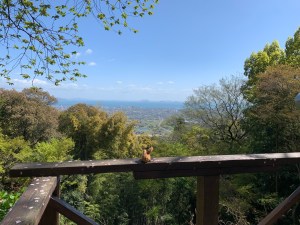
View from SenyujiTemple 58 (Senyuji)
After Senyuji, it is a 6.2km walk to Temple 59 (Kokubunji).
There are 3 men I keep bumping into. One is a guy from the Netherlands, who likes to travel by himself and walks really quickly, and the other two are a Japanese man travelling with a Canadian guy from British Columbia. I have no idea what their names are. It is a bit weird, the first question people ask is, “Where are you from?” And they rarely ask after the person’s name. I have fallen into doing the same.
The reason I bring this up is because from Temple 57 to 59 I was kind of walking with Netherland man, but he would walk really fast and then wait for me at a sign he couldn’t understand and then take off again until the next sign. Definitely felt like the tortoise and the hare kinda situation.
At Kokubunji, Netherland man and I bumped into the Japanese guy and the Canadian guy. Kokubunji was the last temple for them today (even though it was only 12pm). They are going in order and Temple 60 is a hard one to get to.
Kokubunji had a life size Kobo Daishi where if one makes a wish and shake his hand, the wish is said to come true. But of course I didn’t take a photo of that…instead I took a picture of this guy:
Temple 59 (Kokubunji)
I left the international guys and hopped on a train to Temple 61 (Koonji); walked to Temple 62 (Hojuji); and continued walking to Temple 63 (Kichijoji). By the time I left Kichijoji my feet were sore from walking on paved roads. I took a bus to Temple 64 (Maegamiji) and got my nyokasho stamped by 4pm (temples close at 5pm). As I was leaving I bumped into a guy I hadn’t seen since Temple 19. (Again no idea of his name only that he is from Israel). He told me that it is next to impossible to get a place to stay between temple 65 and 68… so now I’m going to have to try and figure out where to stay and how to get to these temples.
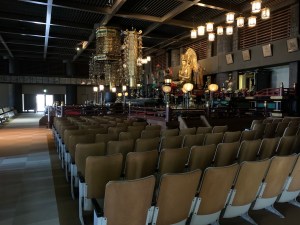
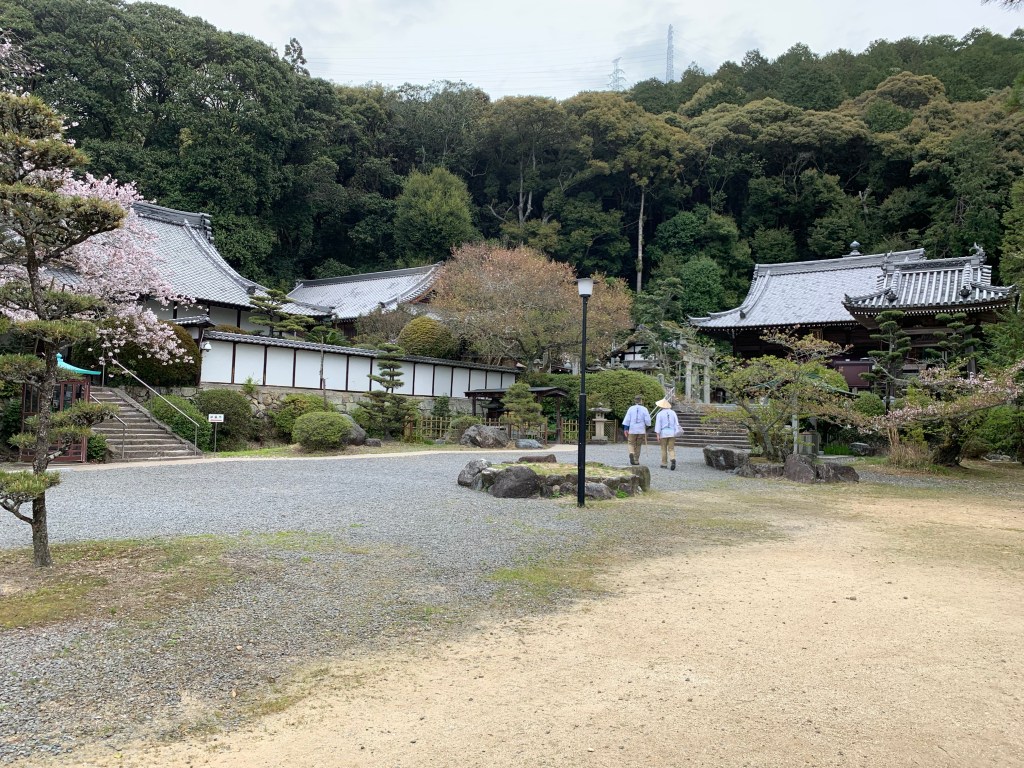
Temple 61(Koonji) at first I thought I was at the wrong place. Inside Koonji (It was like a concert hall)Temple 62 (Hojuji)Temple 63 (Kichijoji)Temple 64 (Maegamiji)
Weather: cloudy turning into rain in the afternoon.
We (the motley crew aka Makio’s dog pack) met in the lobby at 7:30am to start off on our 6 temple day. Makino is the lone Japanese guy (from Fukuoka) who is kind of like our lead dog.
The first temple was easy: it was across the way from where we were staying. Temple 46 (Joruriji). The temple looked amazing with the light from the threatening rain clouds. Everything had a beautiful green lushness to the garden.
Temple 46 (Joruriji)
Next was Temple 47 (Yasakaji). It was 1 km away so easy walk. Again the light made the garden and flowers stand out.
Temple 47 (Yasakaji)
After Temple 47 we went to Monjuin (one of the “extra” temples.) I was in a good conversation with Lari (an Aussie and her partner Hedley where the ones I met yesterday) and nearly walked by the temple (which had a giant, hard to miss Kobo Daishi). This is the place that the first pilgrim left from trying to find Kobo Daishi to ask for forgiveness.
Monjuin (Extra temple)
Temple 48 (Sairinji) was a temple where there is a Jizo in a middle of a pond where it will grant each person one wish.
Temple 48 (Sairinji)
Temple 49 (Jodoji)… by this time I was hungry… so kind of rushed through this temple.
Temple 49 (Jodoji)
After Jodoji we stopped for ramen and Aly (American from California) and I shared a plate of gyoza. Although, it was quite heavy and kind of felt tired after lunch it hit the spot. We soldiered on to Temple 50 (Hantaji). The grounds there were spacious and seemed to have plants and trees that would bloom and make the place beautiful regardless of the season.
Temple 50 (Hantaji)
After Hantaji, we walked a bit faster to try and get to Temple 51 (Ishiteji) before the heavens opened up. Ishiteji was more like a temple in Kyoto. It was huge! We managed to get our prayers done at the two temples and I explored a cave/ tunnel with Allan and Sam (American professor of Japanese history and son who just graduated high school) before it started to rain.
Temple 51 (Ishiteji)
Ishiteji is where I said goodbye to my travelling companions. They are staying closer to Matsuyama Station and I am staying closer to Dogo Onsen. I was sad to see them go as they were a nice group to walk with and it was nice to talk with and relate to their travel stories. I hope I might be able to see them again.
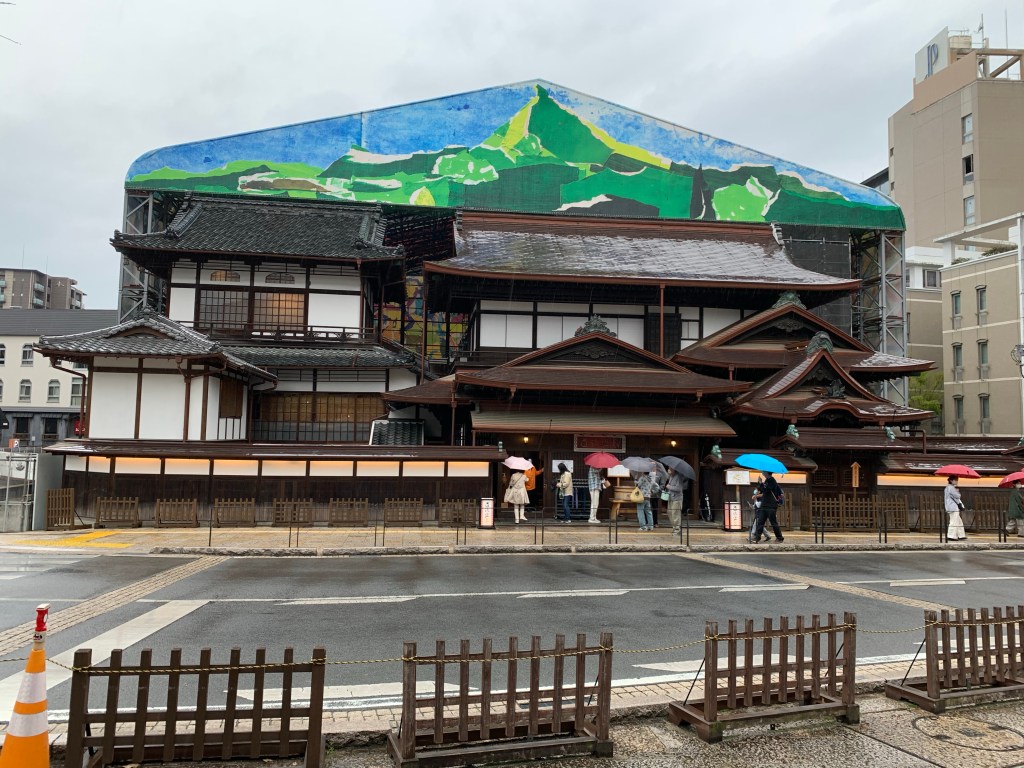
I went to Dogo Onsen after checking in ( got some kind of coupon from the hotel to let me into the Onsen for free.)
Dogo Onsen (It’s under construction at the moment – should be completed in 2 years!)
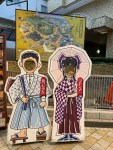
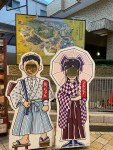
And I did a bit of sightseeing with Usagi-chan. More sightseeing tomorrow.
Botchan trainBotchan character clock (animated clock on the hour)Usagi-chan wanted to pose as both the male and female.
Weather: sunny (a bit misty and cool in the mountain morning)
The guest house let me keep my rucksack with them while I went to Temple 45 (Iwayaji). Which was nice of them and I took the first bus to the base of the temple.
Buses and trains in Japan are extremely reliable. If it says there’s going to be at a bus at 8:11am there will be a bus at 8:11am. The only thing about buses in rural areas (read: most of Shikoku) is that if you miss the bus, you might have to wait an hour to two hours until the next bus.
The bus stop for the temple, as per norm, is at the bottom of the hill/mountain. And it says it is only 0.7 km. Great! Except it is up a hill and many steps.
In the end it wasn’t too bad. And I bumped into an Australian couple who were travelling in a skirt and kilt, respectively.
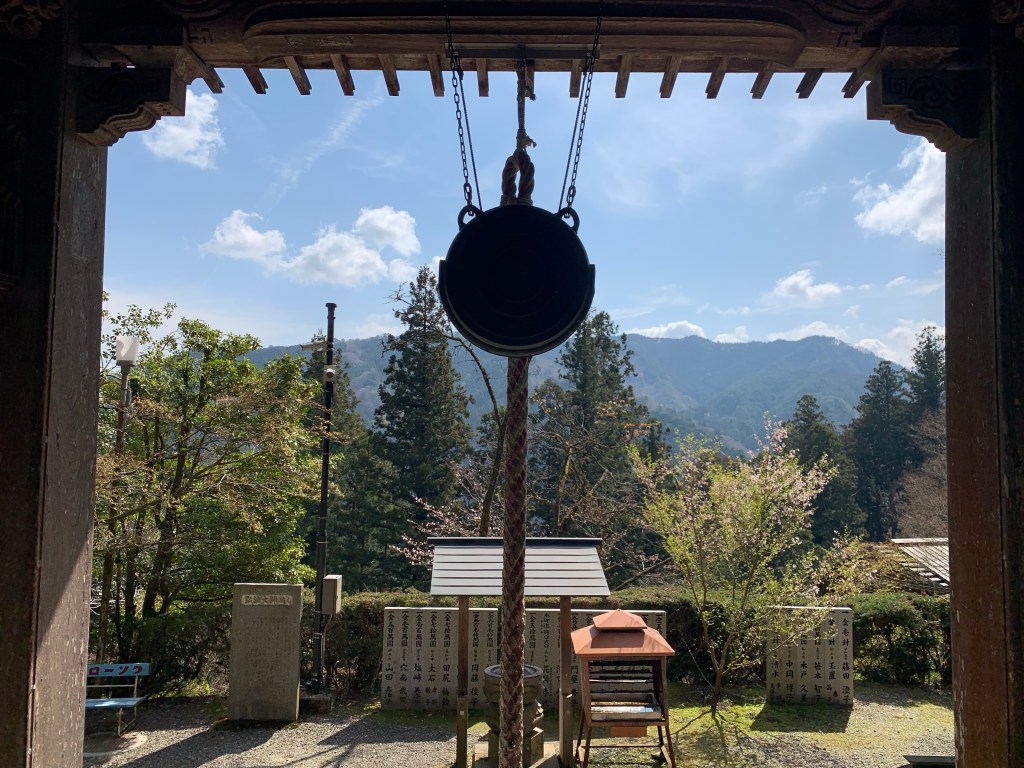
Temple 45 (Iwayaji)
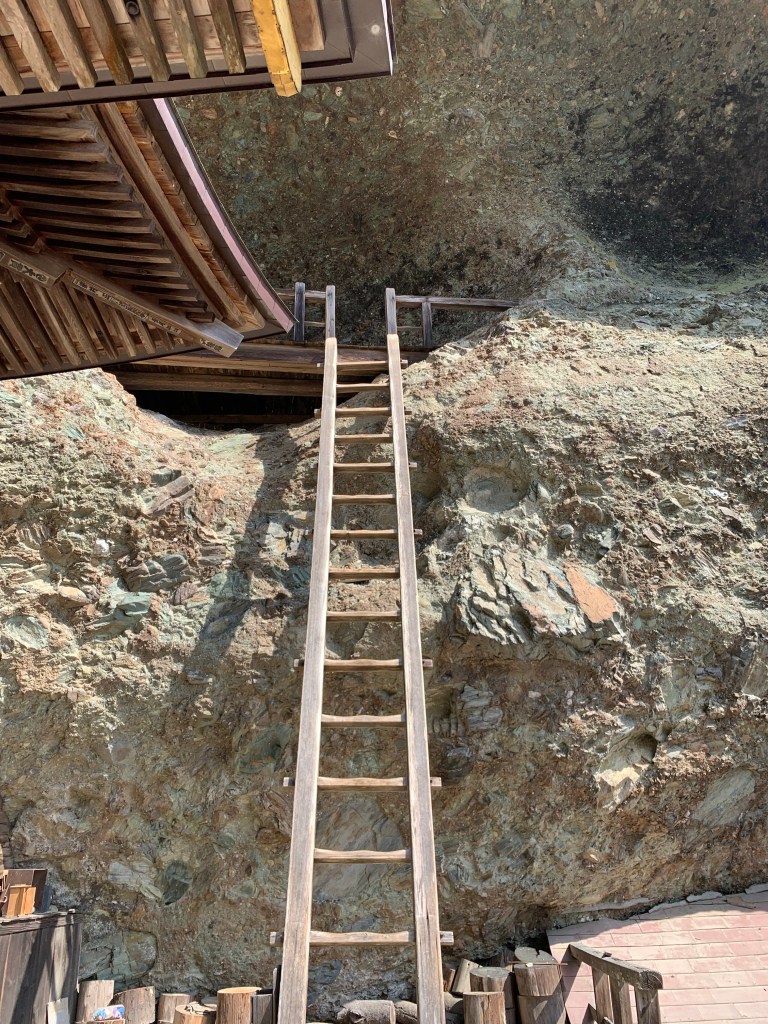
At the top and beside one of the temples there was a ladder to go to a cave above the temple. Some people might think it stupid to go all that way and not climb it – in my case – given I’m accident prone… it would have been stupid for me to climb it. And just as stupid, if not more so, for me to do a circular route that puts one on a cliff face to see where Kukai did his training. One needs a key from the monk in the office to do this trip. Needless to say, I did not ask for the key.
Cave above temple
I started to walk back to Temple 44 (Daihoji) and my rucksack at the guest house and got as far as an onsen hotel, where I saw the bus schedule – and if I waited 15 minutes I could catch it most of the way back.
Waiting for the bus.
I got on the bus and we travelled a little ways when we stopped and picked up the Aussies, an American, and a Japanese. Apparently, they have been travelling together since around Temple 13. (There were 2 other Americans travelling with them, but they were doing the crazy cliff side circular route).
I ended up travelling with them back to Temple 44 where we parted ways only to meet up again on a bus that brings us to a pass where we walk to a Ryokan in front of Temple 46 (Joruriji). It was too late to visit Joruriji, but it turns out we are all staying at the same Ryokan.
Tomorrow I will be travelling with this self proclaimed motley crew.
Started the day with a bus ride to the bottom of Temple 35 (Kiyotakiji). And then another bus to a stop near Temple 36 (Shoryuji).
Temple 35(Kiyotakiji)
It was about noon when I got to the start of Shoryuji, so I decided to stop in a restaurant where one barbecues one’s own (mostly) seafood lunch. The only seafood that wasn’t fresh were the frozen prawns.
Mostly seafood barbecue
I met up with Kiyoko-san again today! It was weird, I was thinking about her earlier in the day and was wondering how she was getting on with her Henro and then she appeared just as I was leaving Shoryuji. I told her where I was staying tonight and she managed to get a room at the same cute business hotel.
Temple 36 (Shoryuji).The Main Temple and the Daishi Temple are at the top of the stairs.
It was nice to catch up with her and hear about her travels over dinner at a ramen place. (This area is famous for their Nabeyaki Ramen). She will be finishing her Henro at Temple 65 (that is where she started from), but tomorrow we will set off together. She has already done Temple 37 (Iwamotoji) today, so she will continue on by foot to Temple 38 (Kongofukuji) while I go to Temple 37.
Last night, I was the only person staying at this temple. Apparently, if one doesn’t book one’s temple stay the day before, one is S.O.L. (Or maybe it is just this temple)
As I’m not travelling between temples, this might be a good time to introduce Kobo Daishi and the Shikoku Henro.
Kobo Daishi is the honorary name of Kukai (a Buddhist Patriarch of Shingon Buddhism). His is accredited to have done many great deeds around Shikoku and opened up a School of Arts and Sciences (Shugei shui-in) in Kyoto.
There isn’t much in terms of actual historical evidence that Kukai did all the things he is accredited for – not sure where one would find evidence of confining a large pyromaniac serpent in a dragon’s cave – how do you know it is a dragon’s cave? (Obviously the pyromaniac serpent is real).
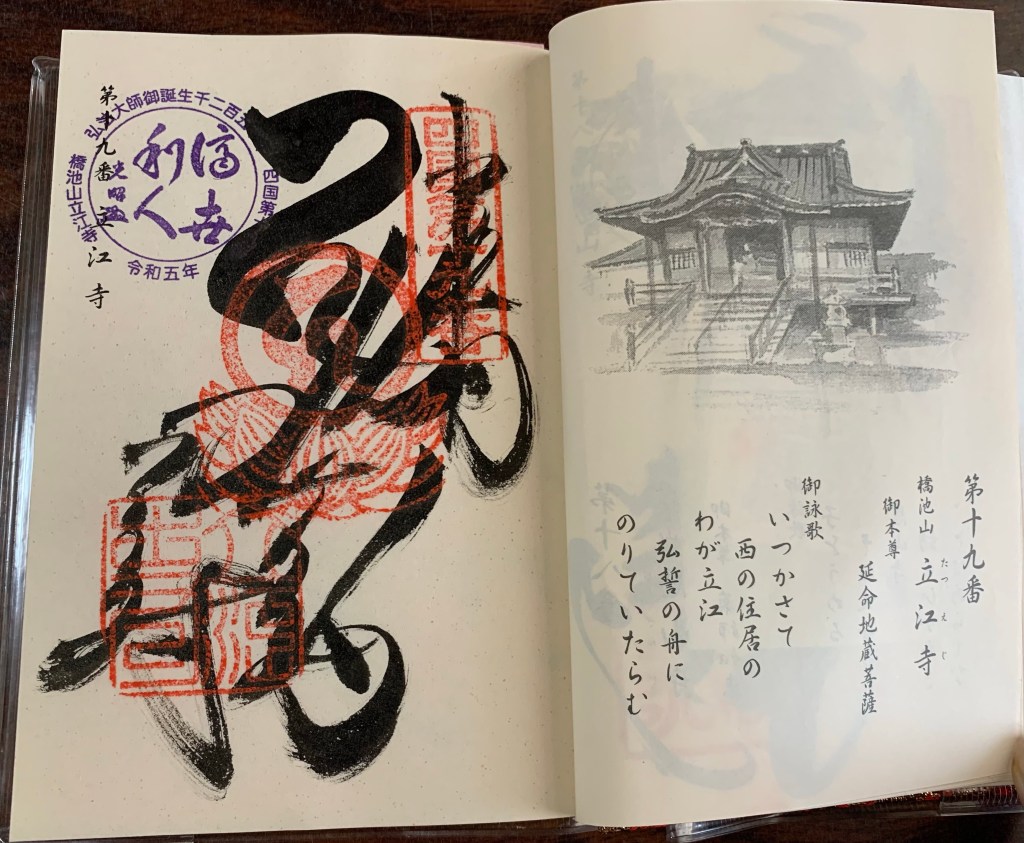
However, today, people travel the Henro (usually in a clockwise direction) around the island. One does not have to start from Temple 1, however, most people do. One does not have to walk the Henro, either. Kobo Daishi walked it, but that is because he lived from 774 – 835 and the only way for a travelling ascetic to get around at the time was on foot (if trains and automobiles were around back then, I’m pretty sure he would have used them). Nowadays, most people travel by car/microbus. If one does the henro, and is buried with the Nokyocho (pilgrimage book) with the stamps, one can go straight to the pure land without having to be reborn.
Nokyosho (Pilgrim’s book).
There used to be large highway buses full of pilgrims (usually over the age of 60), but as I understand there are less pilgrims at the moment as people are still weary of COVID. March and April are usually the busiest months of the year. Luckily for me, but not the businesses that rely on the pilgrims, I have been able to find places to stay (This would not be the case in years before COVID.) The only time I struggled to find a reasonable place was the first night… which I found out was because Tokushima had a marathon race set for the that weekend. I have, however, seen a number of micro buses (7 passengers and a driver) on route and a handful of cars in the parking lots of the temples.
Hopefully, I have attached a link to an interactive Henro map here.














 KotsuKotsuLife