Started out later today. I went to the JR train station and got in line at the JR ticket counter to get my JR pass activated, only to find out that it was to be done at a travel agent office a couple of doors down and they don’t open until 10 am… so I had to wait around for 2 hours.
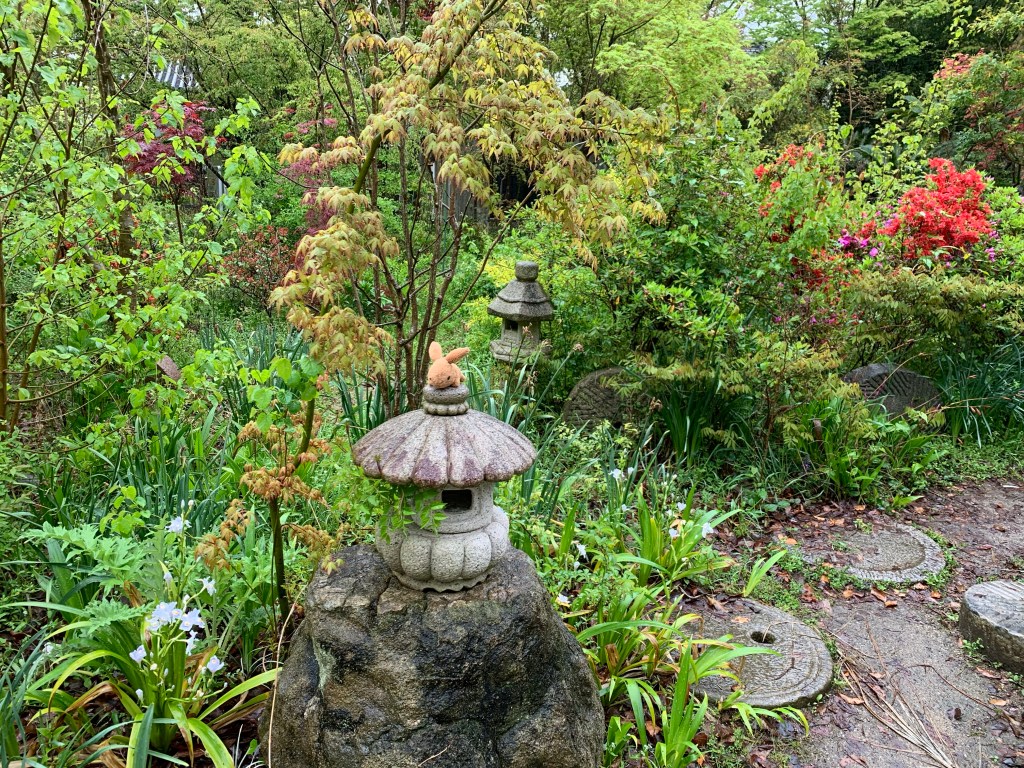
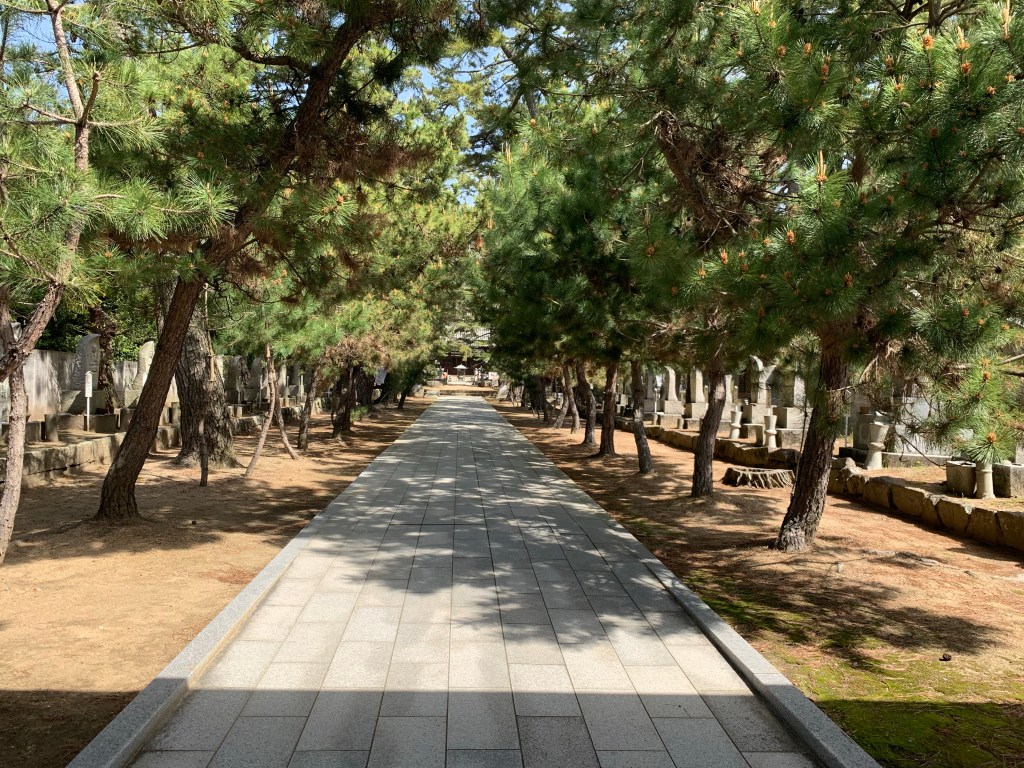
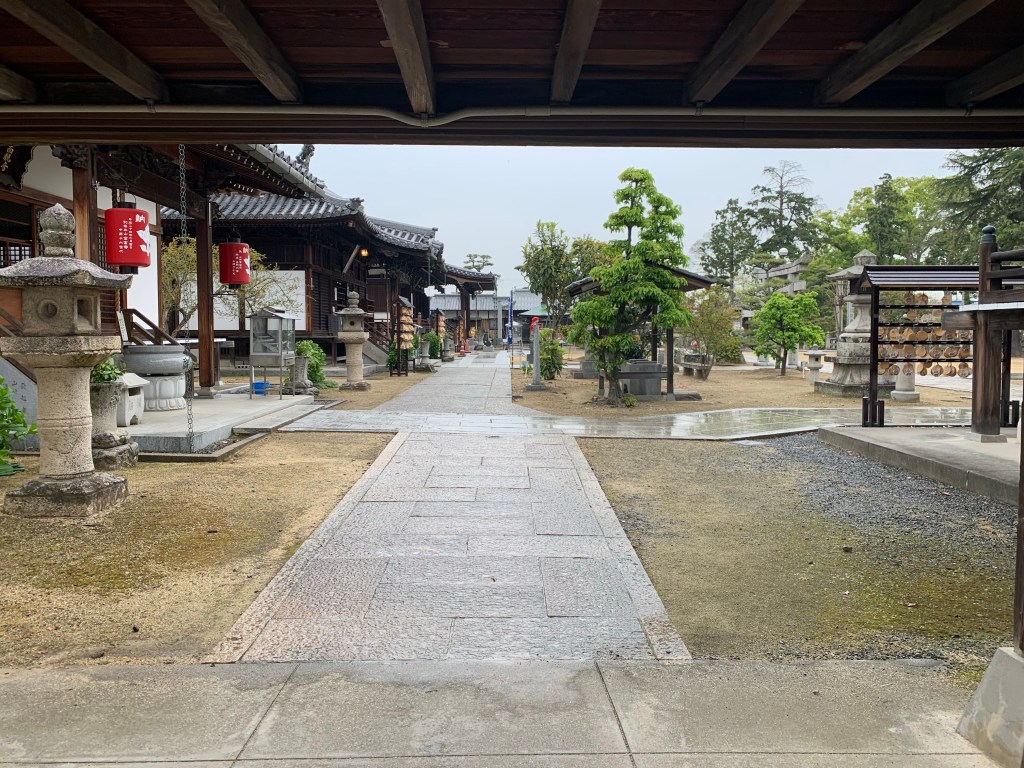
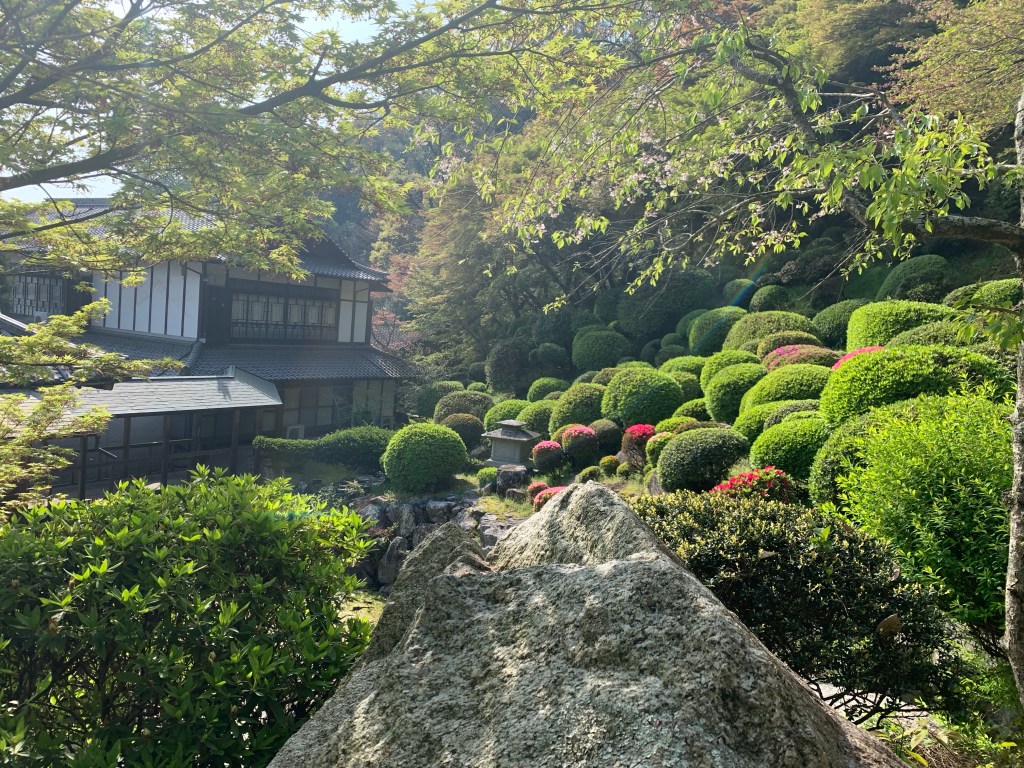
Finally got the tickets and headed to Temple 86 (Shidoji). It has a beautiful garden.
Temple 86 (Shidoji)
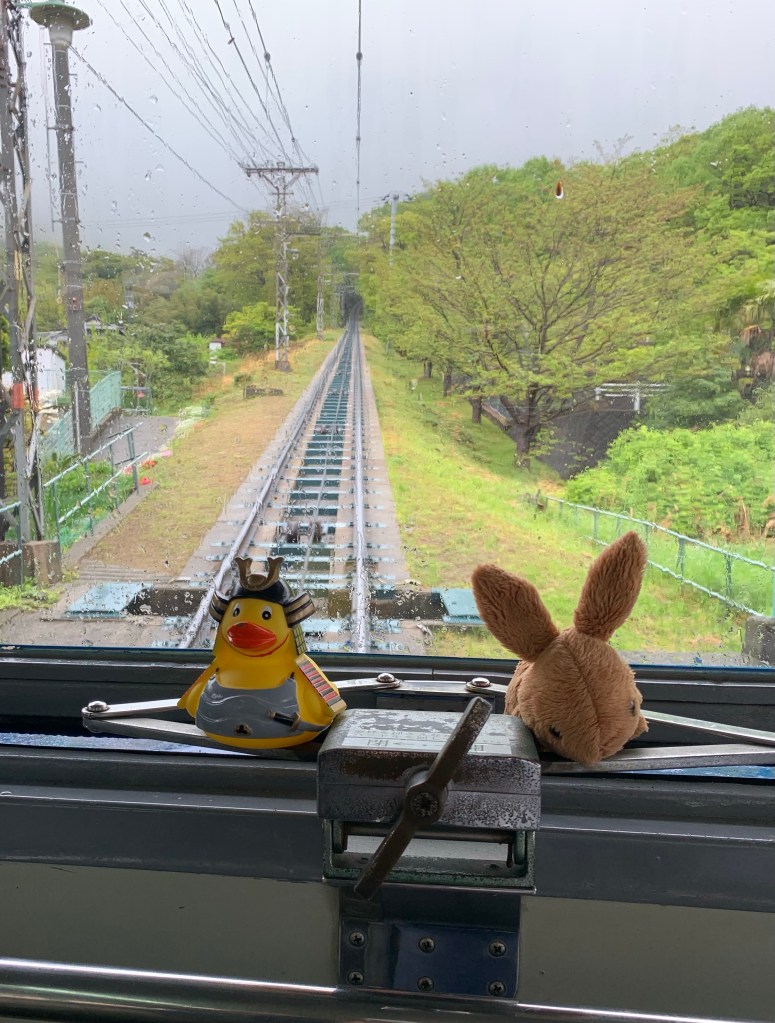
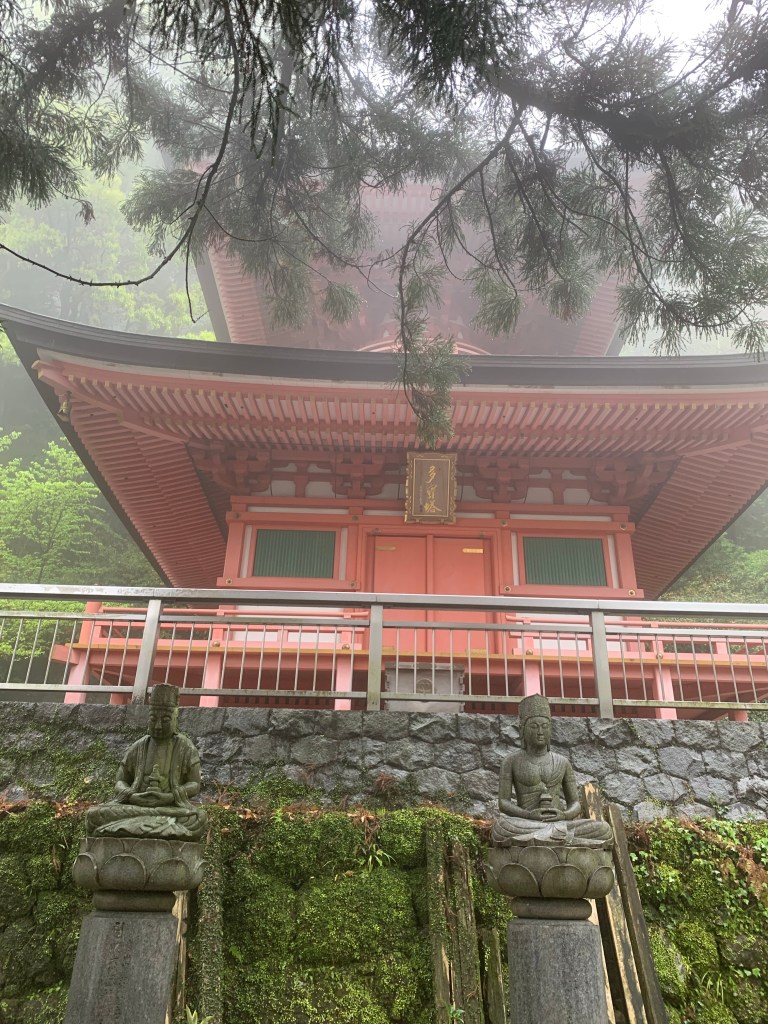
I then travelled to Temple 85 (Yakuriji) which has a cable car and the temple was in the clouds. This is where I met up with Samurai Duck! Samurai Duck wanted to join Usagi-chan and me in Shikoku and he was only able to join us for today.
Temple 85 (Yakuriji)
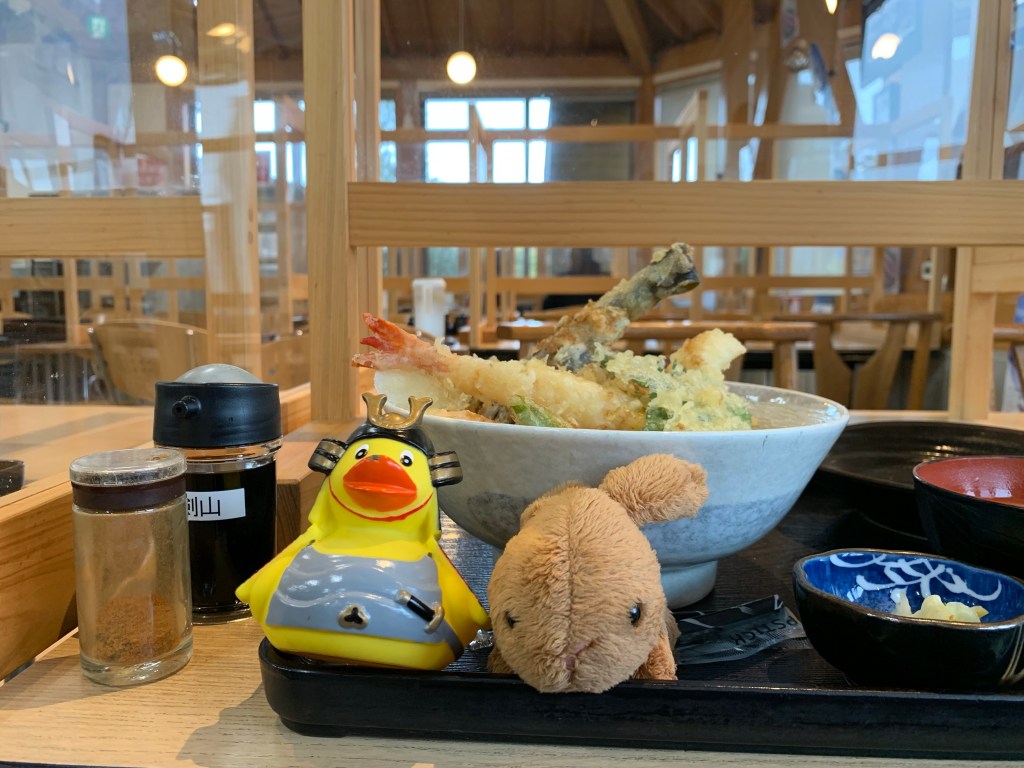
After Yakuriji we went for lunch and both got a giant Tempura rice bowl each… neither of us were able to finish the food. (Samurai Duck rented a car so we were able to travel very quickly!)
Lunchtime
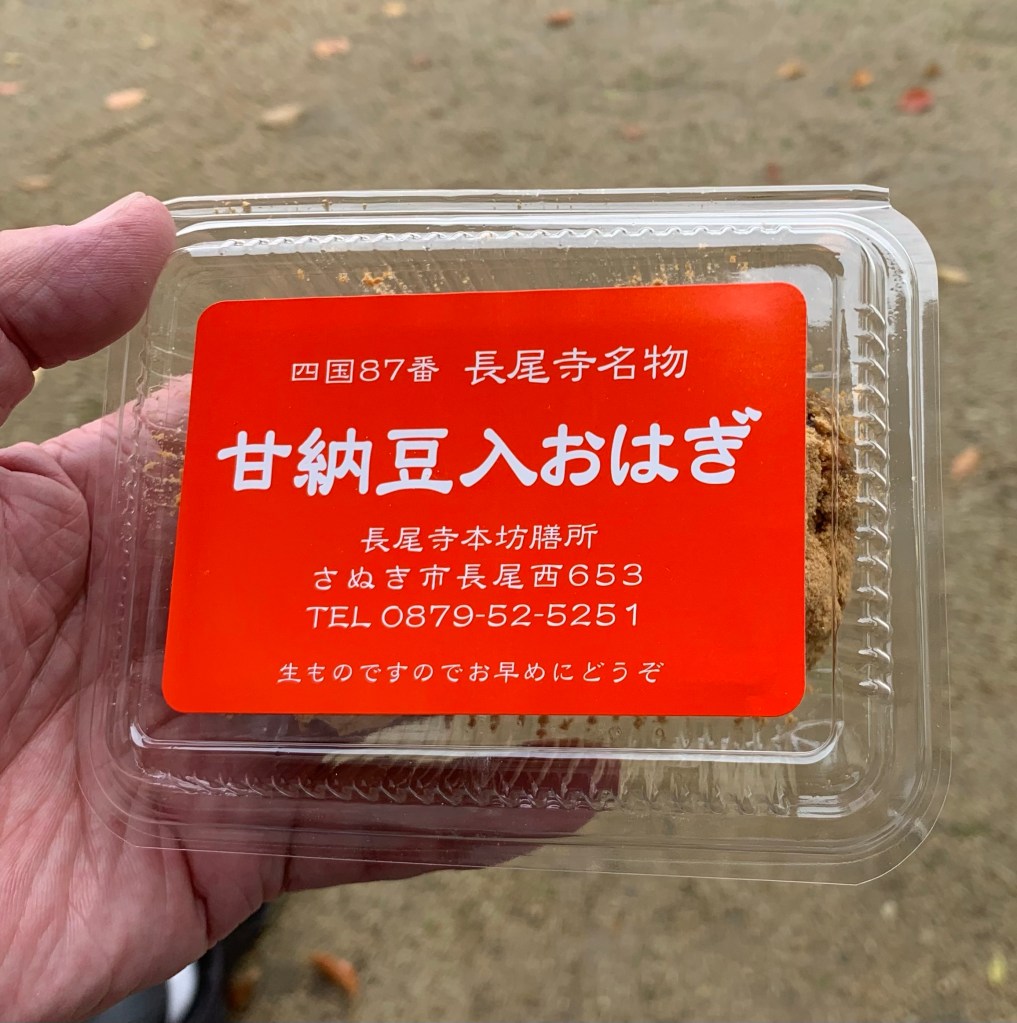
We got to Temple 87 (Nagaoji) and met a woman from Ehime who is also doing the pilgrimage (this is her 4th time). She told us that a certain treat made by the monk’s wife from Nagaoji is very famous and is usually hard to get as it sells out quickly. Samurai Duck and I were able to get some.
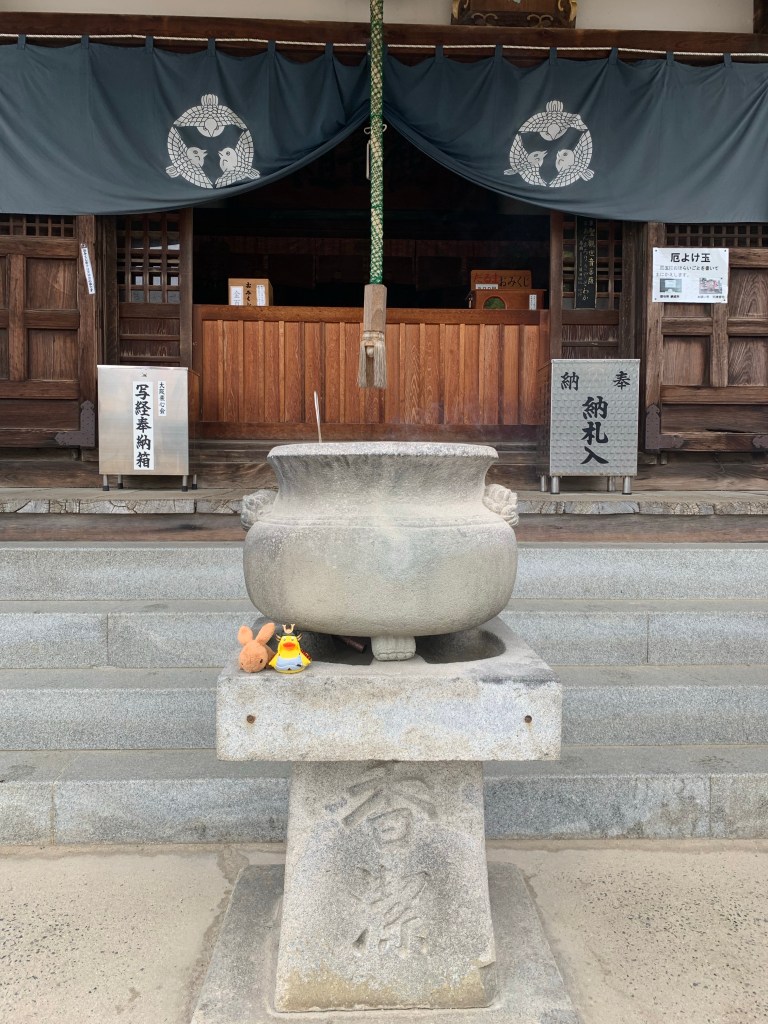
Temple 87 (Nagaoji)
This is where I said goodbye to Samurai Duck as I am staying in a guesthouse recommended by Kyoko-san: Inn Tek Tek and Samurai Duck had to make a 6 hour journey home! Thank you Samurai Duck!
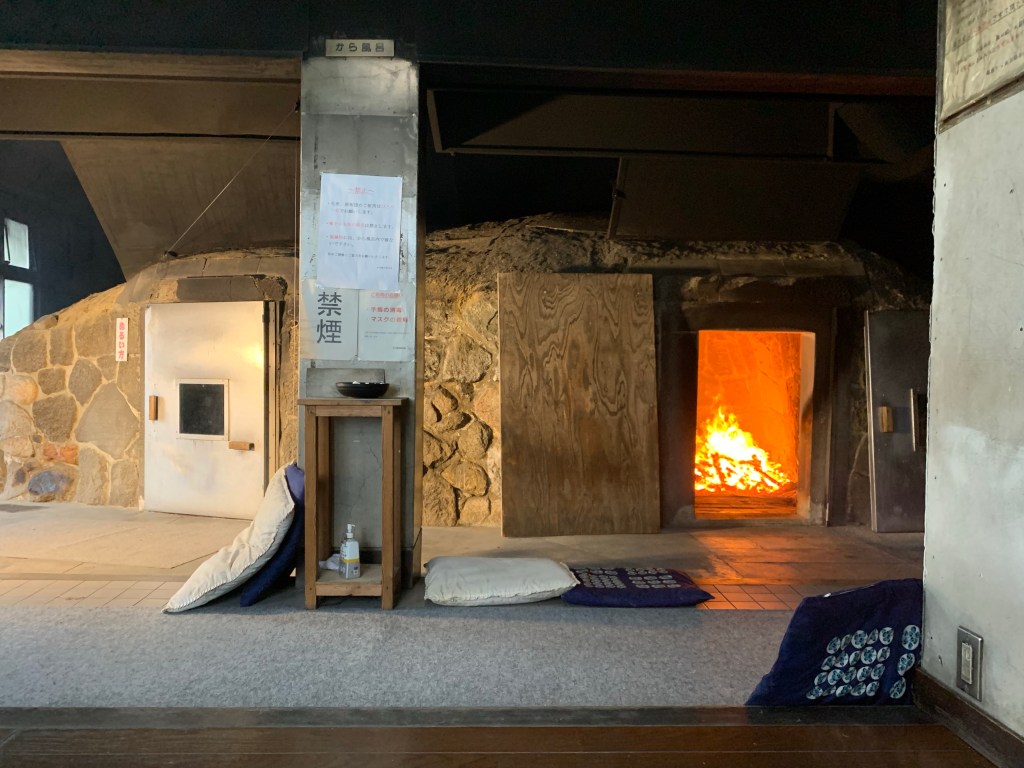
In this area there is a famous sauna bath (the last of its kind) called Kara-furo. It was a popular way of bathing for people in the Nara period. CE 710 – 794. The ofuro (bath) culture in Japan didn’t take off until the Edo period 1603 – 1867. This sauna bathing was popular in areas around Nara and Shikoku where Onsen (natural hot springs) were not easily available.
Sauna bath. One enters a cave like room (the metal door on the left side of the picture). The temperature can get up to 115*C.
Weather: Sunny in the morning with a yellow haze of sand from China, afternoon cloudy, evening rain.
High speed ferry
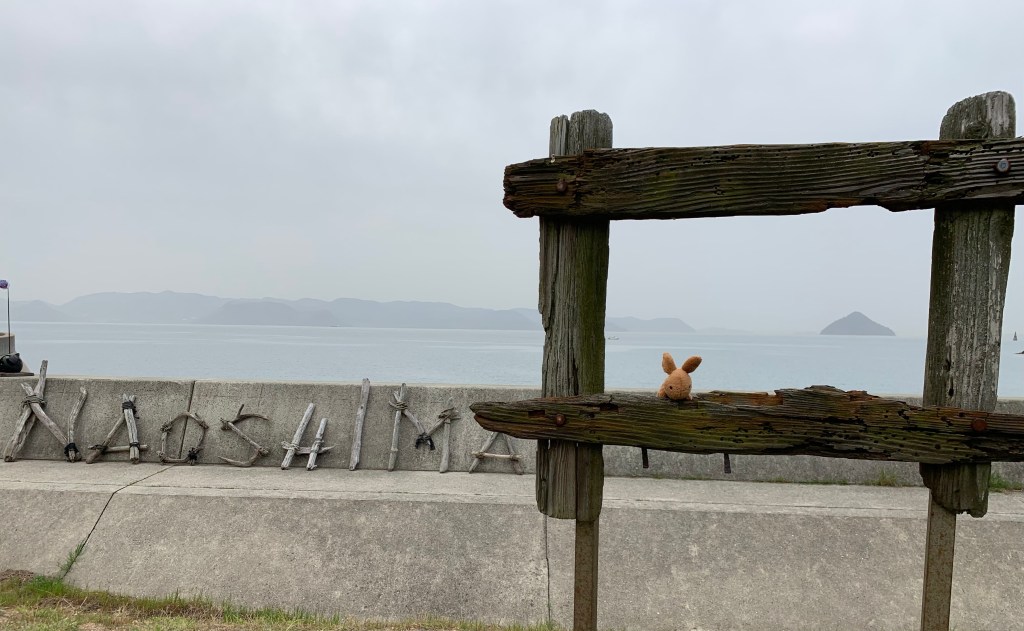
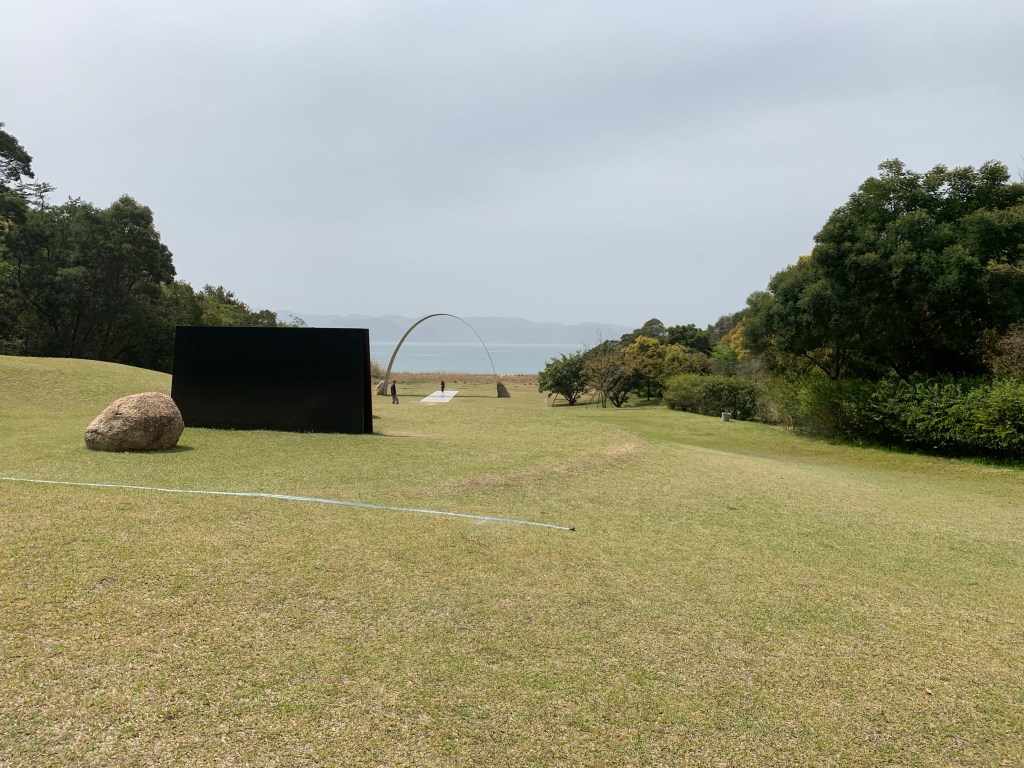
This morning I got on a high speed ferry (30 minutes) to Naoshima. An “art” island. There are many open air art pieces on this island (most notably pumpkins by Yayoi Kusama) and there are also a number of galleries.
Yayoi Kusama’s “Red Pumpkin”
When I got to the island I rented an electric bicycle. Wow, can that thing go! I should have done the pilgrimage by electric bike. It flies up hills!
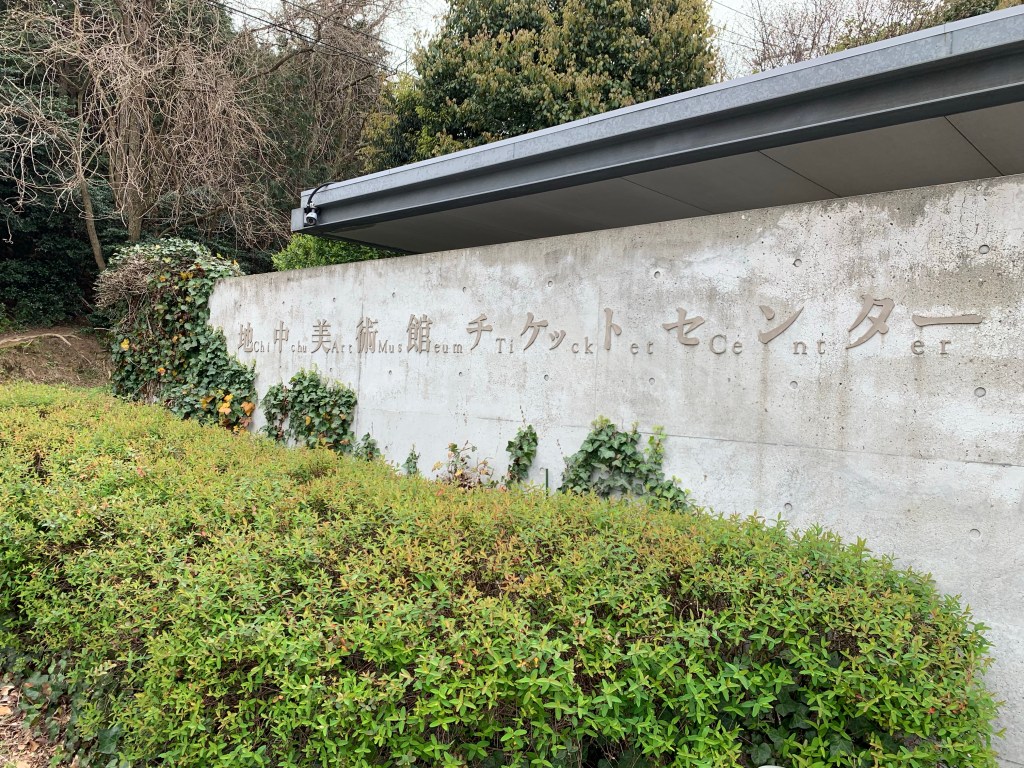
I didn’t go to every gallery because by 2:30pm I was overwhelmed by all the art and by all the foreigners (mostly French, but I did go round a few of the galleries with a couple from Finland). As well I was going over my budget. Most galleries charge admission (¥520 – ¥2,100). The Chichu Art Museum was the most expensive and they wouldn’t let you take ANY photos (not even of the building). Note: if you do go to Chichu or Hitoshi Sugimoto Gallery you need to make a reservation. You can do it on the day, but you might have to wait a couple of hours for your allotted time.
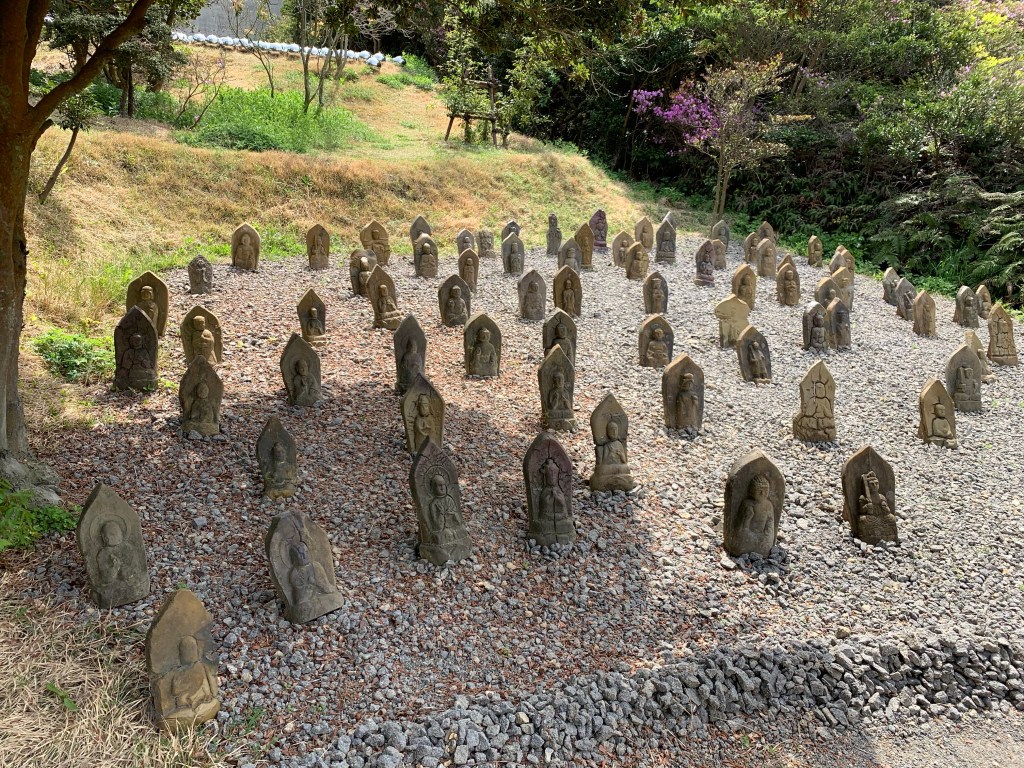
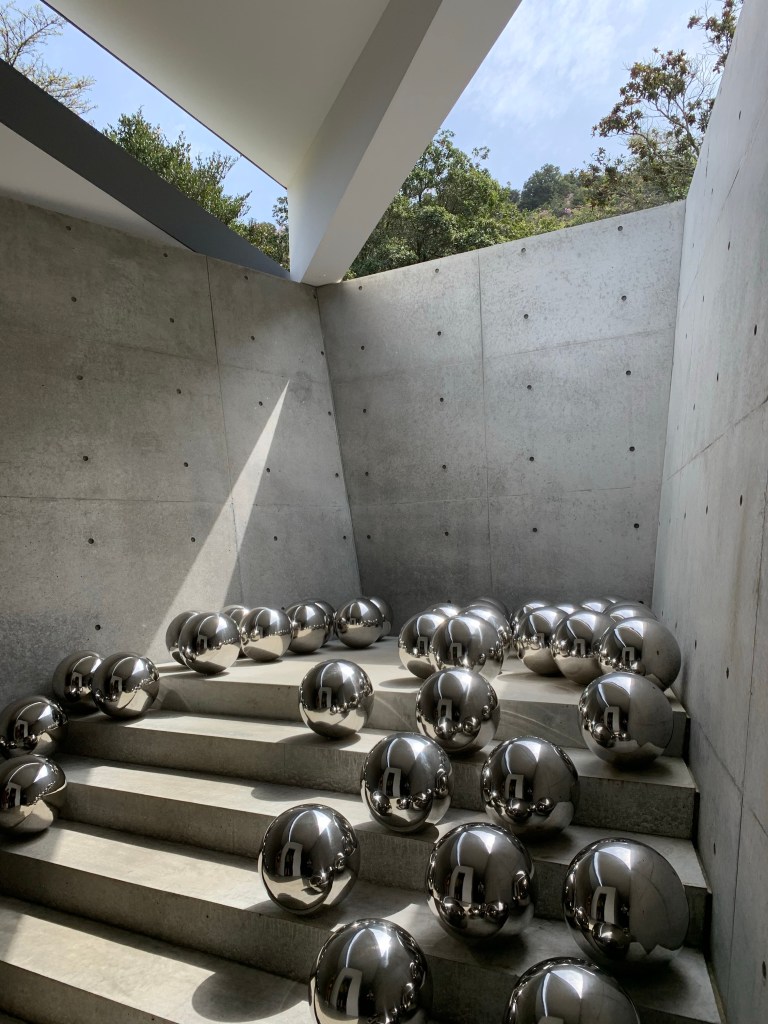
Naoshima’s Buddhist pilgrimage. (There are 88 statues) I was not allowed to take a video of this.. the balls move around on the water and make a clicking sound when they bump into each other.I couldn’t take a photo of the museum, but I could take a photo of the ticket centre.
I returned to Takamatsu by slow ferry (1 hour). No photos. I fell asleep… must have been the rocking motion of the boat.
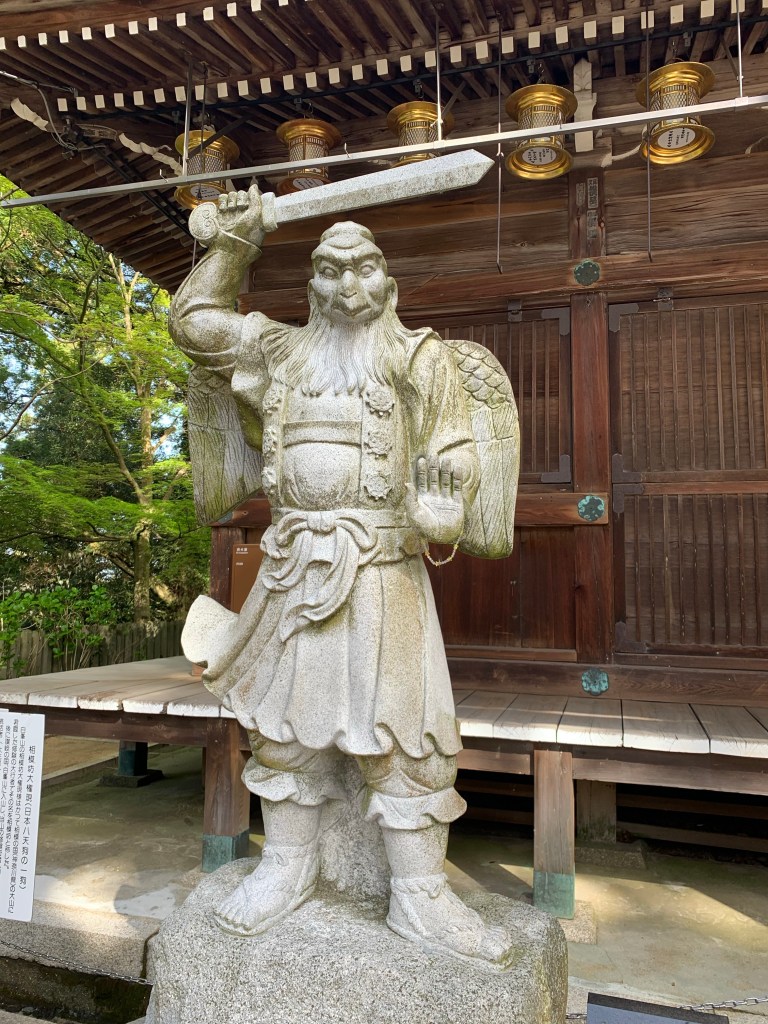
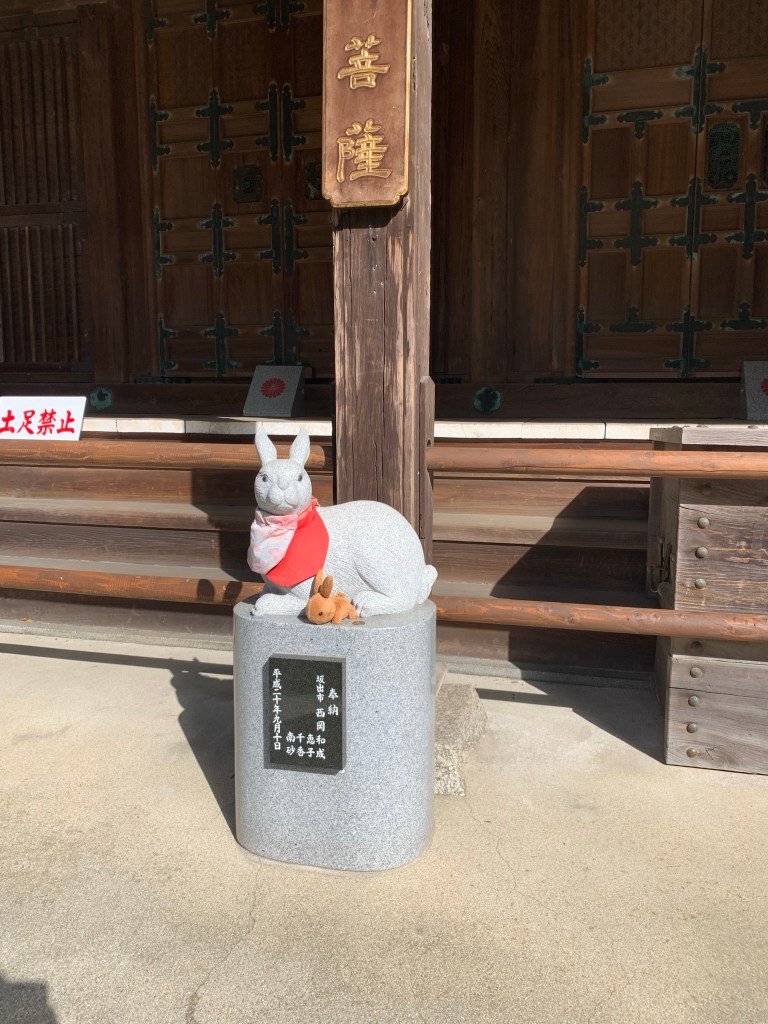
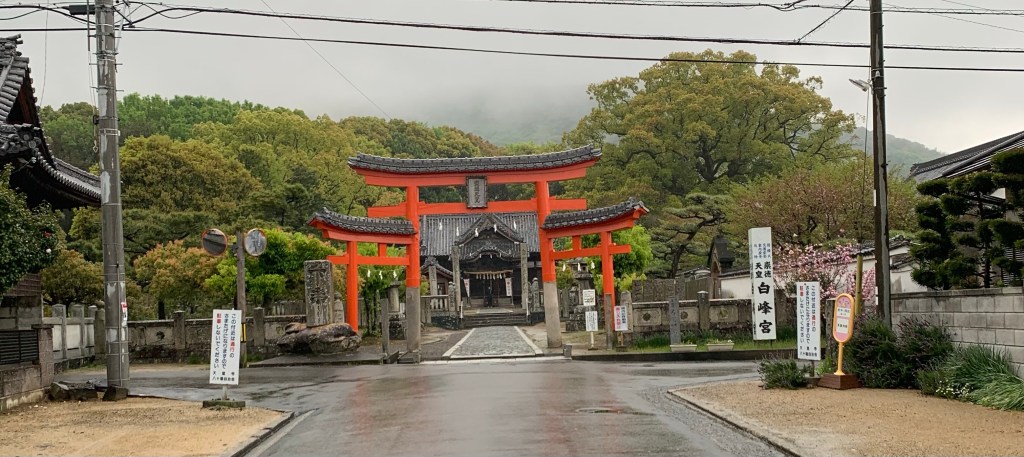
Started the day going to Temple 81 (Shiromineji) which was on the top of one mountain and had a statue of a Tengu. (Also the resting place of Emperor Sutoku 1119-1164). It also had different stone carvings of the animals for Chinese years.
Statue of TenguStone carving of rabbit
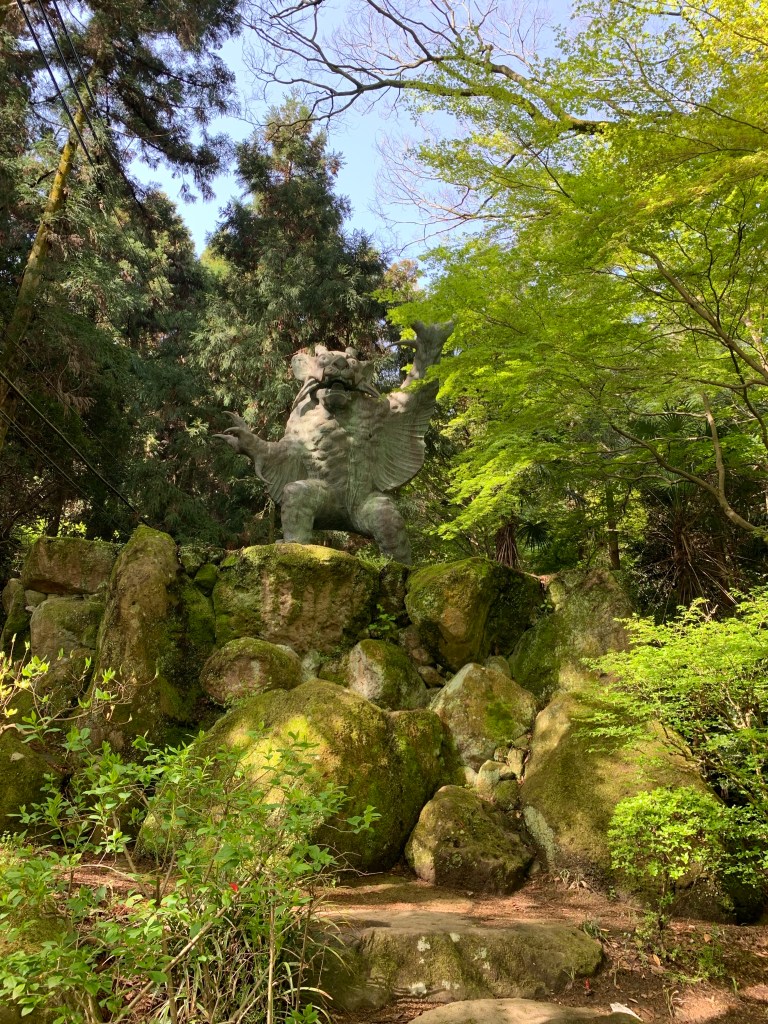
I then went to temple 82 (Negoroji) which was up another mountain and where they had a statue of an ushi-oni (devil cow) which looks like something out of the stories of Cthulhu.
Ishiteji-oni from Temple 82 (Negoroji)
I then went to Temple 80 (Kokubunji) which was tame.. no mythical beasties.
Temple 80 (Kokubunji)
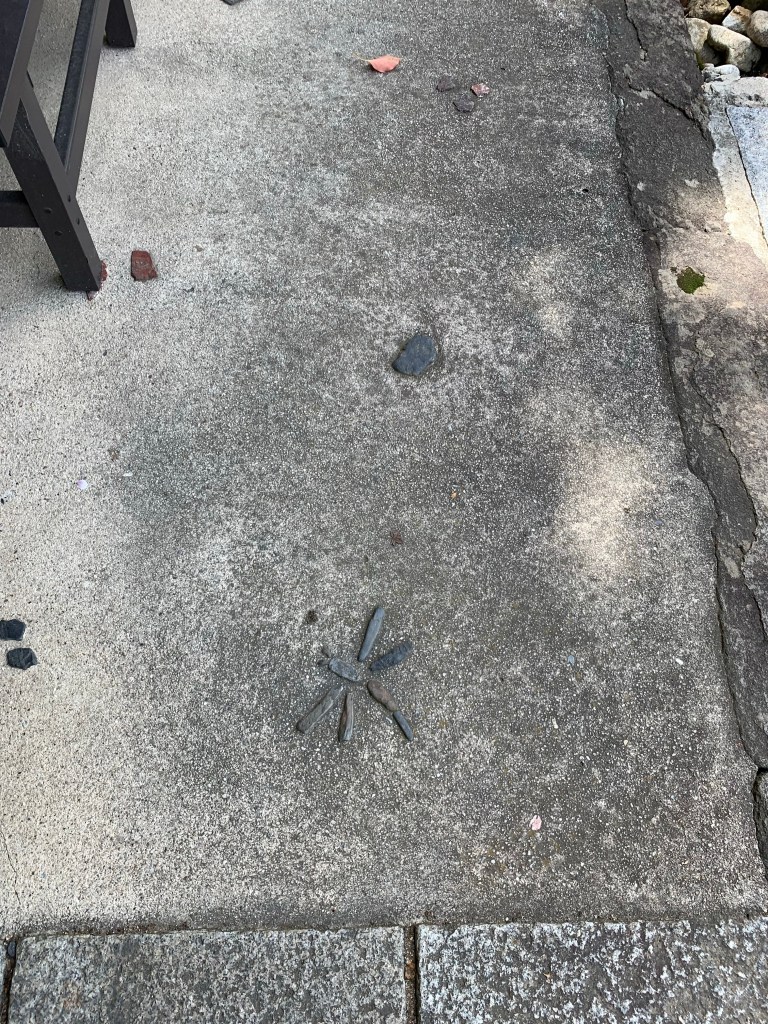
Temple 73 (Ichinomiya) was next. it was a short walk from the train station (10 minutes) and it had cute dragonfly designs in the concrete by the gate.
Dragonfly design in concrete temple 83 (Ichinomiya)
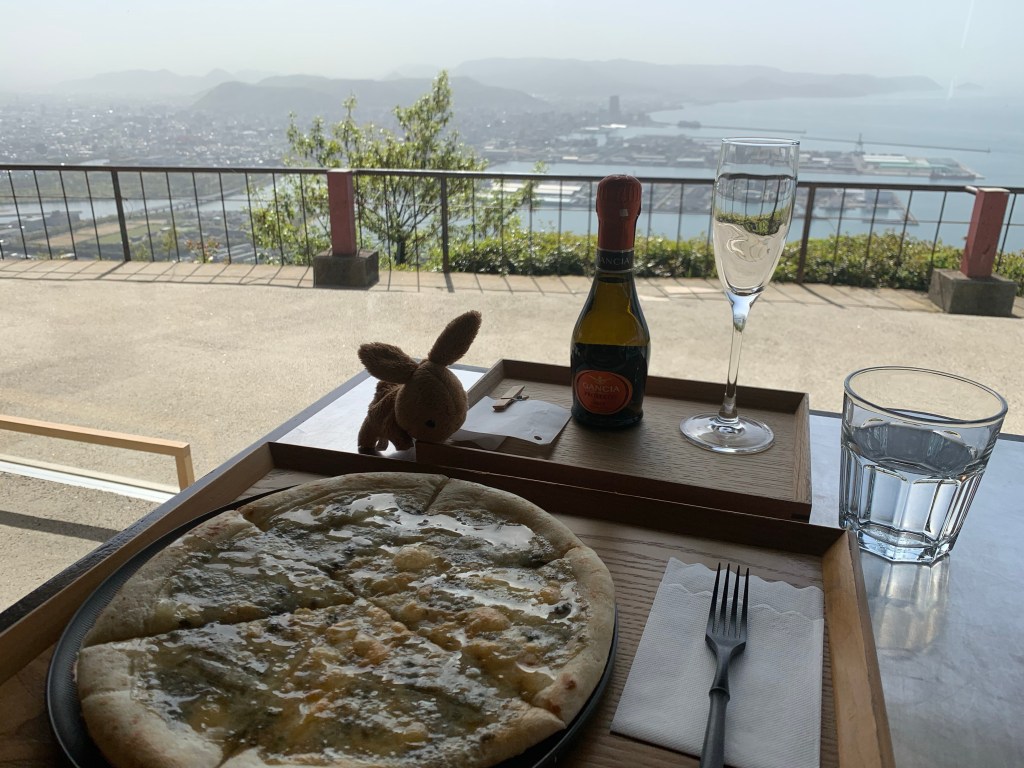
I finished the temples faster than expected so I decided to go to Temple 84 (Yashimaji) which was easy to get to by train and bus. It was at the top of another mountain and I finished with a sparkling wine and Gorgonzola pizza with honey.
Today I finished the 70s. Tomorrow I will tackle 80 – 82 (81 and 82 are in the mountains).
Got to temple 76 (Konzoji) at 7:00am and the rain started. The weather app said it would rain until noon and then be cloudy until 3 pm when the sun would come out. It was spot on!!! I was impressed!
I was the first henro at Konzoji and when I arrived there were a group of people doing morning stretches in the temple grounds.
Temple 76 (Konzoji)
Temple 77 (Doryuji) I was joined by a group of pushy bus henro. Their tour conductor rushed past me while I was getting my Nokyocho out to get her group’s Nokyocho done first (there where quite a lot) and the monk looked unperturbed at the action. I had run out of incense sticks so I went to buy them at the gift shop… that is when the henro group started trying to push me away from the cashier to get their souvenirs. That is when I said: Wait. Your. Turn. (sternly and in English) they looked sheepishly and stopped… not sure they understood the words but they understood the meaning. They were the first rude Henro group I have come across this whole trip.
Temple 77 (Doryuji)… you can make out some of the rude henro group in the background.
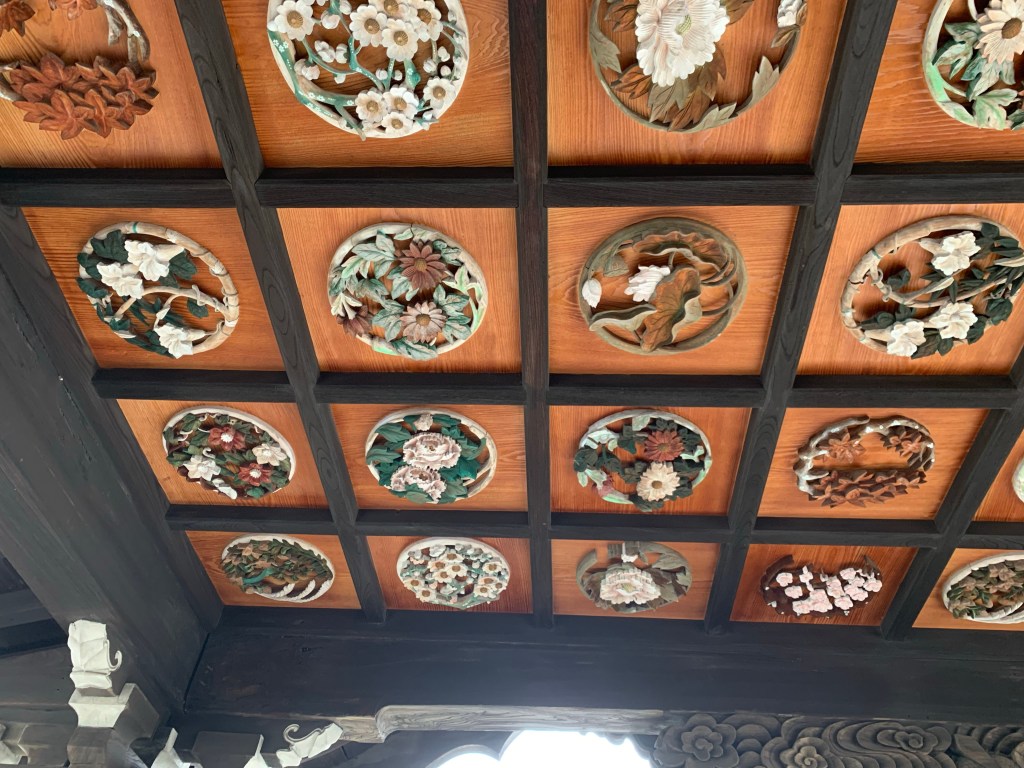
Temple 78 (Goshoji) was much better. No rude henro group. They were travelling by bus so they probably already left this temple by the time I got there. Thank Buddha! This temple had beautiful wood reliefs in the ceiling of the awning of the temple.
Temple 78 (Goshoji)
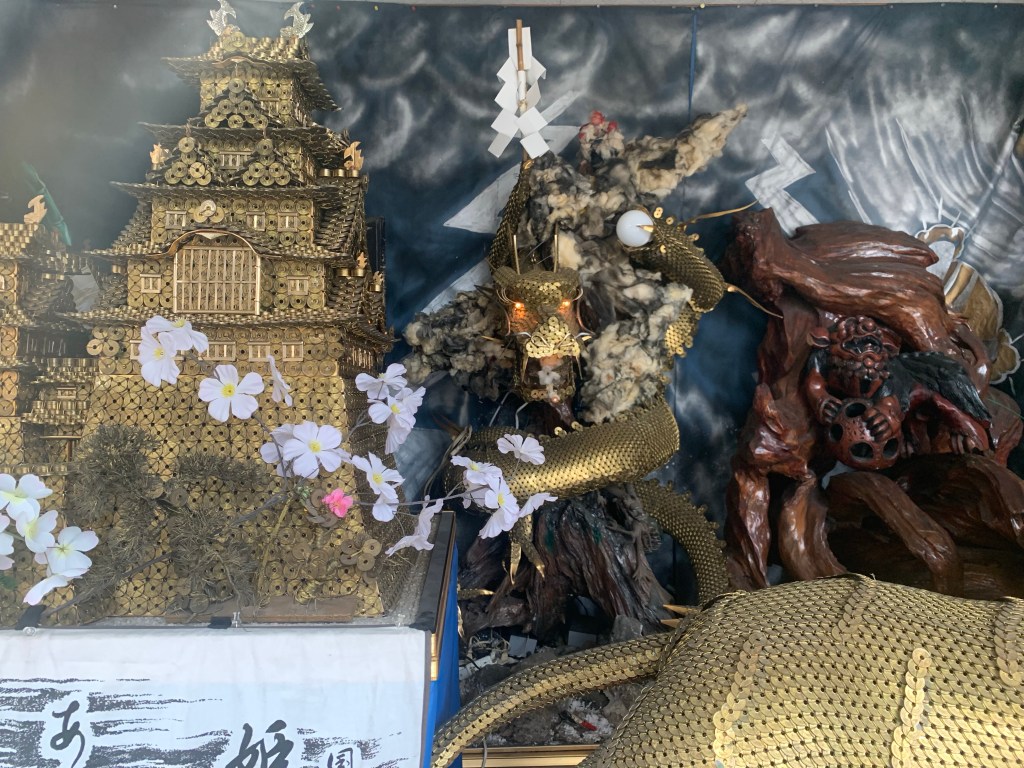
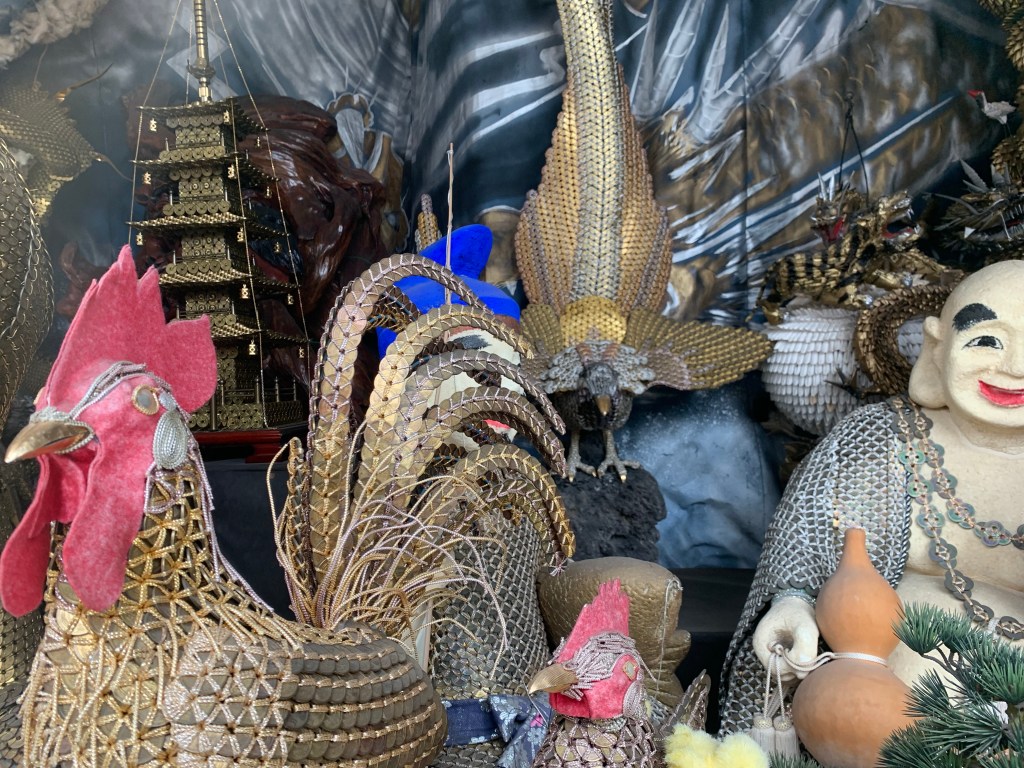
There was also a shop? window filled with items made with 5 yen coins on the way to Goshoin.
Items made with 5 yen coins
The last temple of the day was Temple 79 (Tennoji). The rain stopped but it was still cloudy. This temple has both a temple and a shrine. (There was a period when temples and shrines were worshiped together in the same location, but with the separation ordinance of Buddhism and Shintoism in 1868 many shrines/ temples were relocated).
Temple 79 (Tennoji) – it is almost impossible to take a photo in Japan without telephone wires.
Started the day with Temple 68(Jinnein) and 69 (Kannonji). They are literally right next to each other. I only had to go to one temple office to get the stamps in my book.
Telomeres 68 (Jinnein) and Temple 69 (Kannonji)
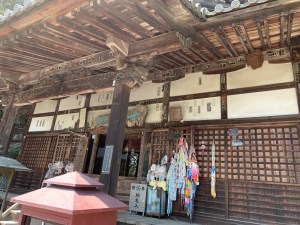
Then went to Temple 70 (Motoyamaji) which Ahmad an impressive pagoda and cut frogs under the rain water basin. The woman monk at the Nokyocho office gave me a scone as osettai. It was much appreciated. Motoyamaji’s main statue is of Bato Kannonji Bosatsu (a being with a horse head that eats worldly desires as a horse eats fodder). As per usual, the main deity cannot be seen and when one can see them, photos are not allowed.
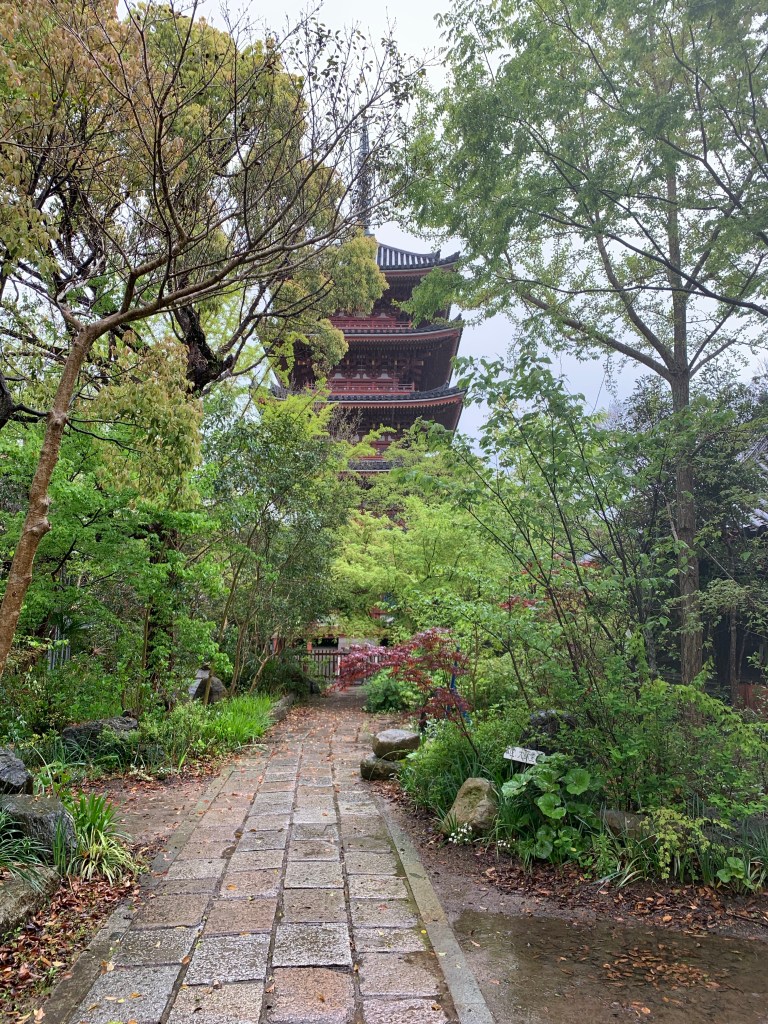
Pagoda at Temple 70 (Motoyamaji)Frogs under the rain basin
From Motoyamaji I took a bus, but the bus driver said that the place I wanted to get off does not have a connecting bus…so I ended up at the last stop of the line in Niocho Nio. There is a beach there that has total ponds that people like taking sunset photo at called Chichibugahama. I wasn’t there at sunset nor did I have time as I caught another bus that brought me closer to Temple 71 (Iyadaniji).
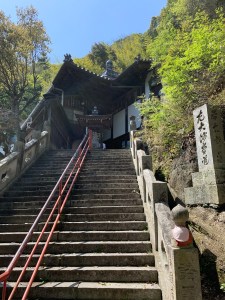
Iyadanijiis a crazy stair temple. One has to climb stairs to get to the landing where you turn right to go up more stairs to get to the main temple. Then one had to go back down to the landing area to go up another set of stairs to get to the Daishi temple and Nokyocho office. One woman forgot her walking stick at the main temple and had to do those sets of stairs again!! I felt sorry for her. -you even have to take a separate set of stairs to go to the toilet! NOT a temple for people with mobility issues.
StairsStairsAnd more stairsI don’t think the monks like taking the stairs that much either (that big brown thing in the top right corner is the remains of a bee/wasp? nest. It was huge!)Temple 71 (Iyadaniji)
I then went to Temple 73 (Shusshakaji) where Usagi-chan got stuck in a tree. The female monk at this Temple gave me ¥200 yen to buy a cold drink from the vending machine… I guess my face must have been red from the heat?
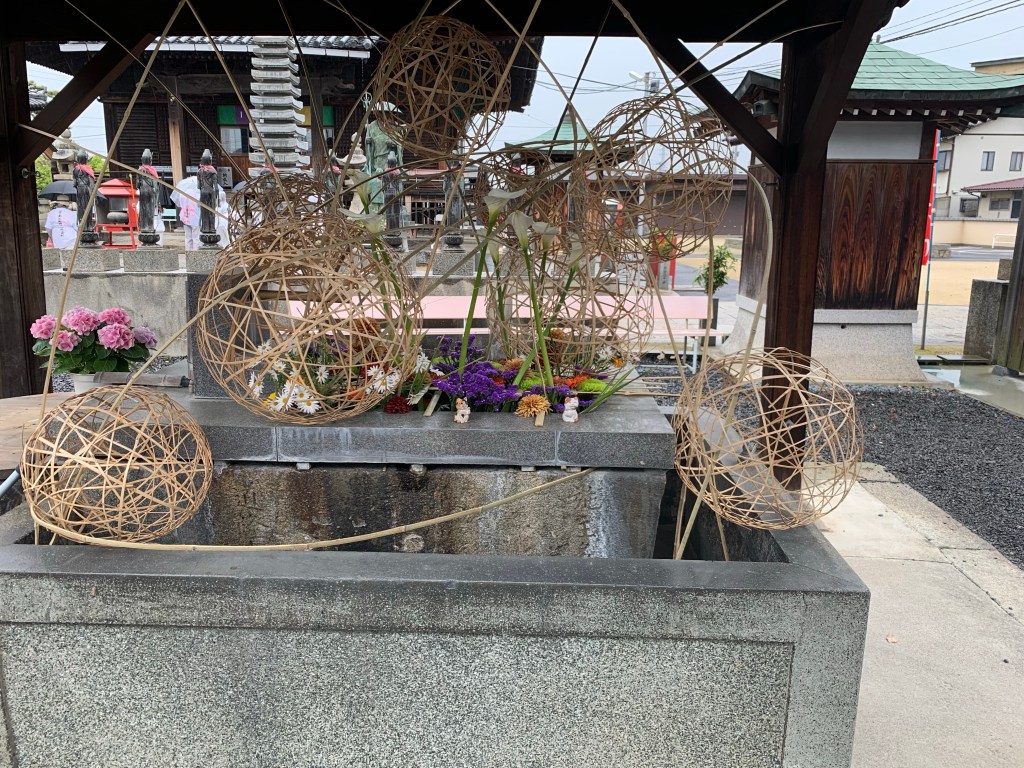
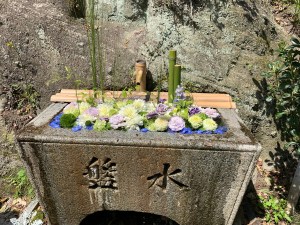
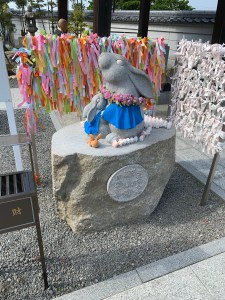
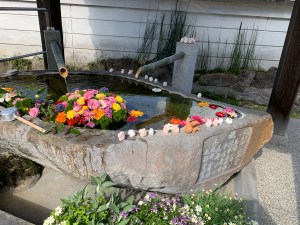
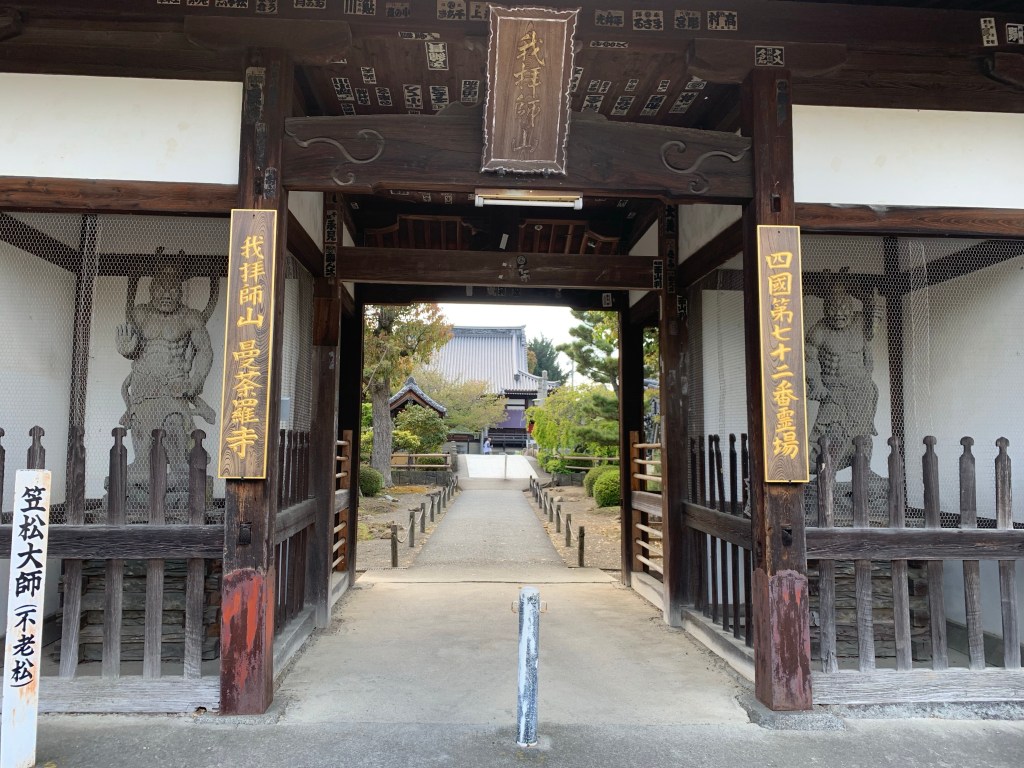
There is some kind of campaign where Temples 71 – 77 put flowers in the water fountain area and display rabbits around the temple… I don’t think Temple 72 (Mandalaji) got the message.
Flowers in water area temple 71Rabbits at Temple 74Rabbits and flowers at Temple 73Temple 72 (Mandalaji)
I nearly walked past Temple 74 (Koyamaji) it was so close. It had many rabbits.
Temple 75 (Zentsuji), the birthplace of Kukai, was impossible to miss. The pagoda at this location is even bigger than the one at Temple 70! And the compound is so large one cannot take a photo of the whole grounds unless it is an aerial shot.
PagodaMain templeLooking at Daishi templeLooking from the entrance of Daishi Temple complex toward the main templeMain entrance to Temple 75 (Zentsuji)
Zentsuji was one of the few temples where one can visit if one has mobility issues.
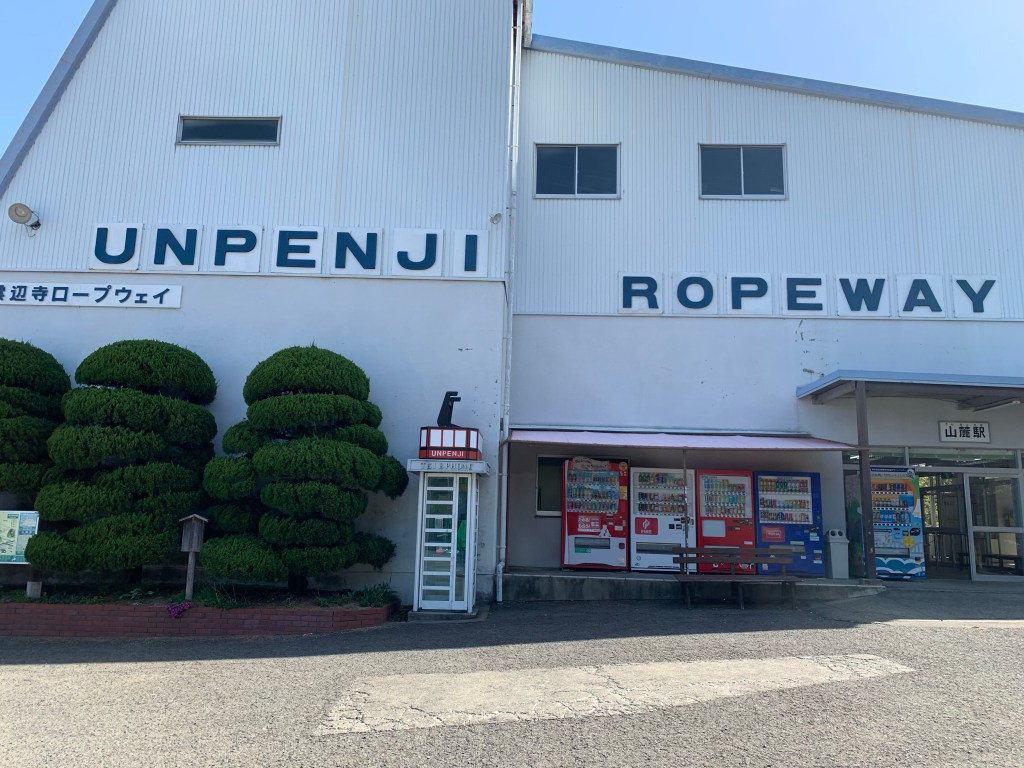
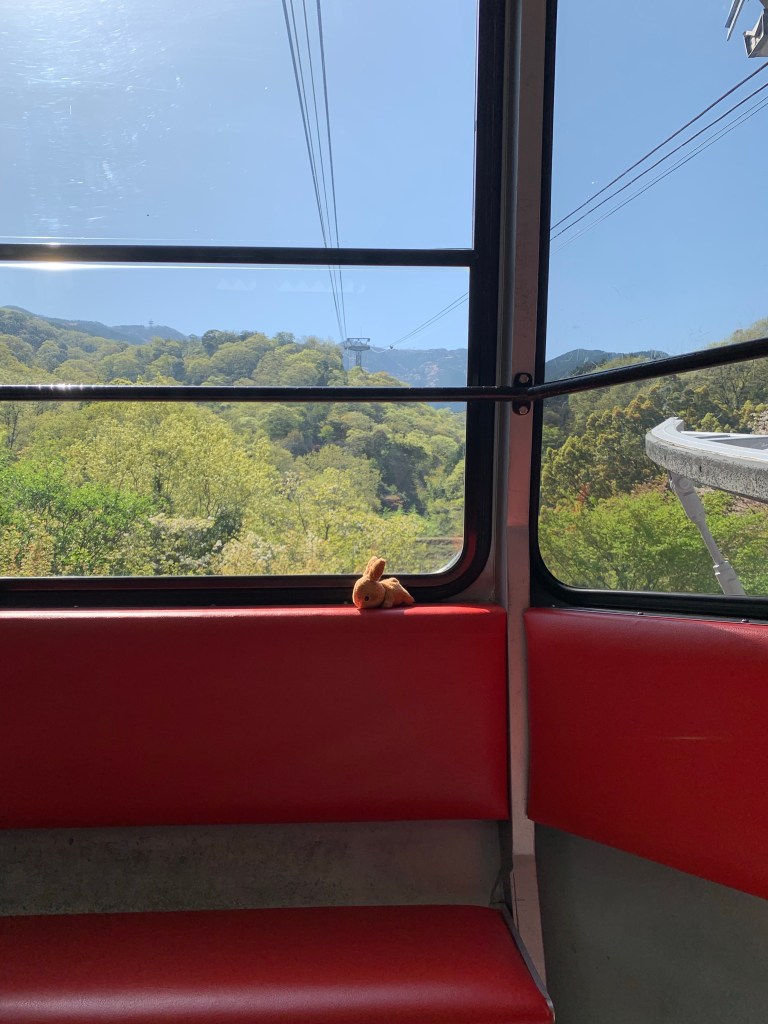
Started the day going to Unpenji Ropeway to get to Temple 66 (Unpenji) -the last temple in Ehime. Luckily, today was a clear day so I got to see the view.
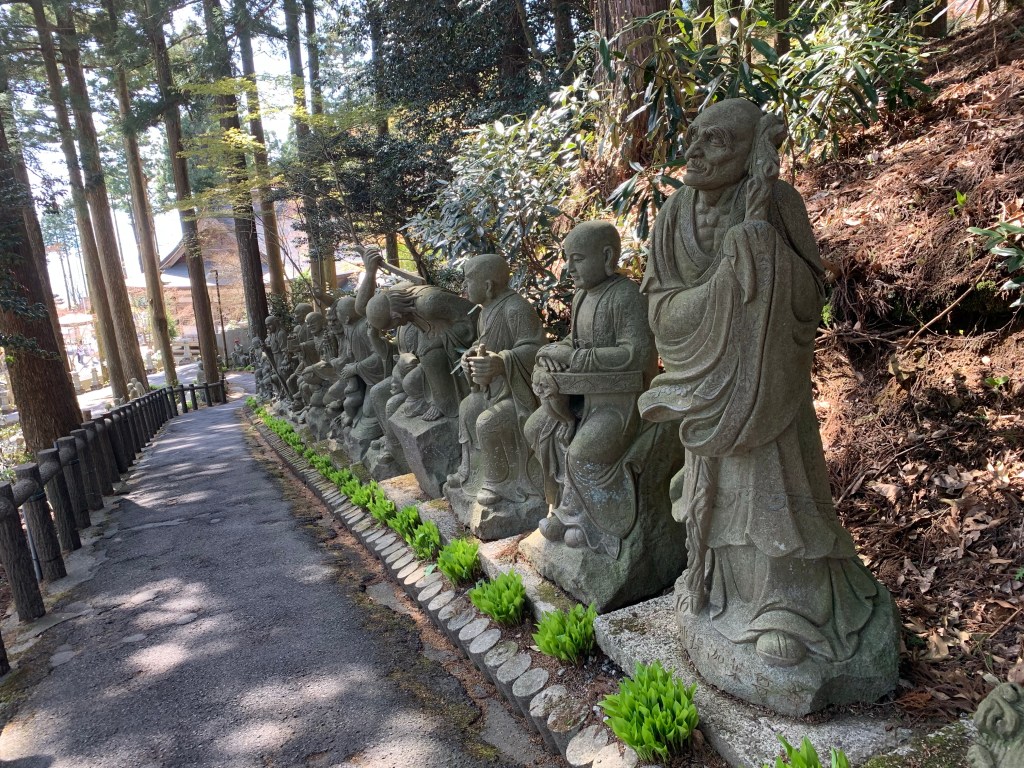
There were many statues of unhappy or slightly unhinged men along the path to Unpenji. Not sure their significance, the write up about this temple in the guidebook says it was a place of learning.
These ones were the “nicer” looking statues.
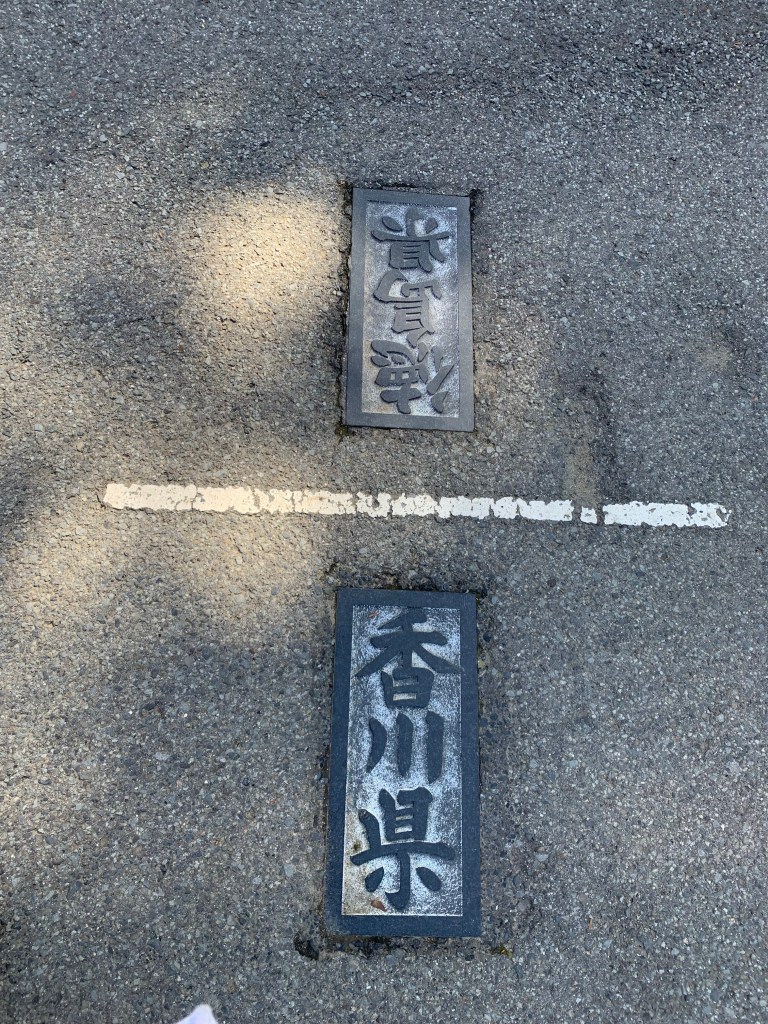
Before heading back down there was a line marking the boundaries and I was about the start the Nirvana stage of the pilgrimage. Usagi-chan also found some more friends.
I’m not sure if it is because I know I’m now heading toward the end of this pilgrimage or if I actually got to a state of Nirvana, but the walk to Temple 67 (Daikoji) was peaceful and beautiful. Unfortunately, none of the photos I took show the beauty.
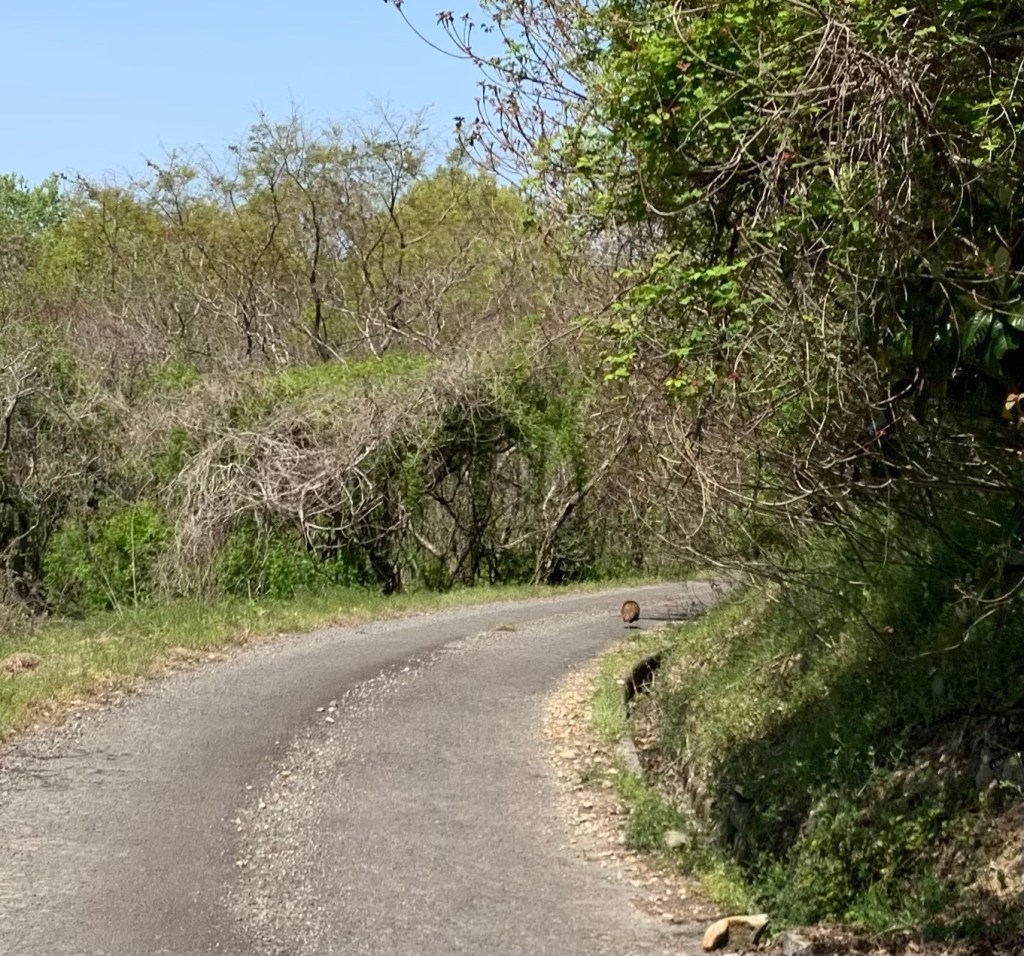
The brown thing on the road is a Tanuki running away
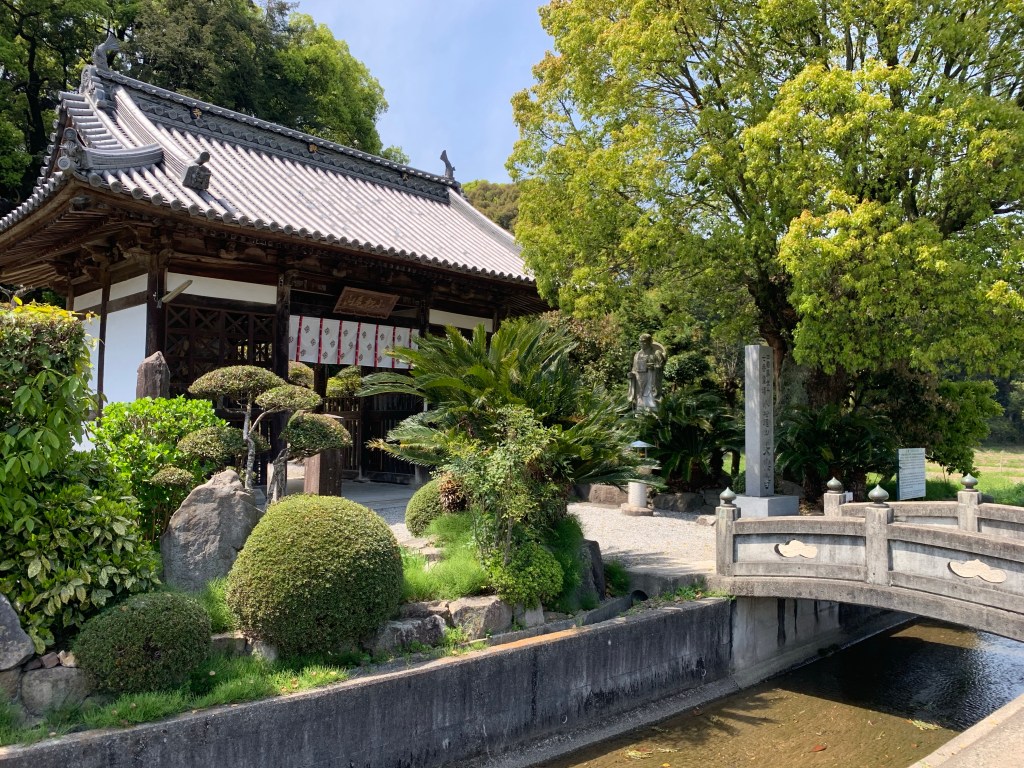
At Daikoji, the monk said that my prayer was well done, which surprised me. I’ve gotten really fast at doing the prayer as I have said it 67 x 2 = 134 times . Multiplied by 2 because it is said at the main temple and again at the Daishi temple.
The city I stayed in last night, Saijo, is listed as one of the 100 best spring waters in Japan and there is a drinking fountain in front of Ito-Saijo where one can sample it.
Usagi-chan drinking the the spring water at Ito-Saijo
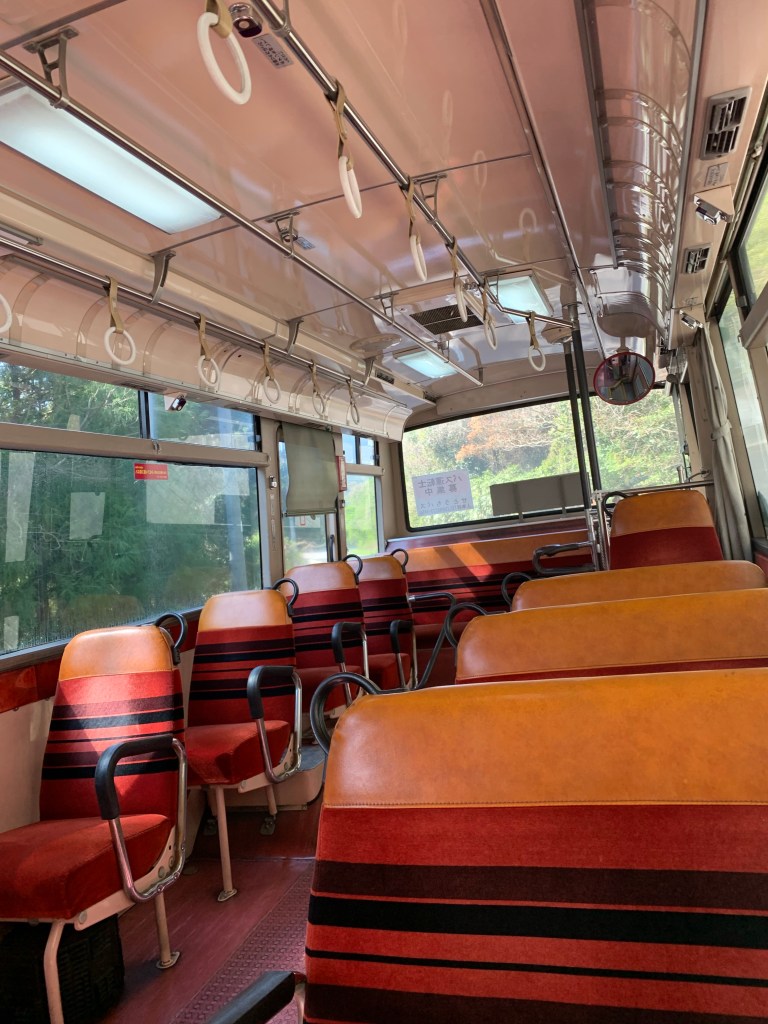
It took two buses 1 hour to get to the top of the mountain where Temple 60 (Yokomineji) is located. The first bus was a retro city bus and it dropped me off at a bus stop and I had to walk less then 200 meters to get the second bus station. The second bus was a minibus (the type I’ve been seeing small groups of Ohenro using). I paid for the return ticket (¥1800) at the bus station and didn’t have to wait for a minibus (it waits for passengers). The driver drove me to the top. Waited for me. AND brought me back to the city bus stop. The drivers also radio a toll both and each other to let them know where they are on the route and how many cars they passed as a heads up for each other. I thought that was a great system they had.. very considerate.
Retro city bus (on the way back down the mountain)Minibus pulling away.
When I was on the JET Programme (20 years ago) I spent one of my holidays on a organized bus tour to a couple of temples in Shikoku. Yokomineji was one of those temples.
Temple 60 (Yokomineji)
The next temple on my journey was Temple 65 (Sankakuji). On the bus journey to Sankakui-guchi bus stop (2.8km away from the temple – again on a mountain) I noticed a smell. At first, I thought it was the older woman sitting near me, but the smell lasted a LONG time and I didn’t think the older woman could have THAT much hot air in her! Was it me!? I then remembered reading in the guidebook that the city close to Sankakuji has a lot of paper-manufacturing companies…sorry for thinking the worst older lady. 🙇🏻♀️
Temple 65 (Sankakuji)
Usagi-Chan also found a friend on our way down from Sankakuji and heading to our hotel.
This morning was a bit more expensive than I was planning for. I decided to take a bus that would stop close to Temple 57 (Eifukuji). When the bus arrived it wasn’t an ordinary city bus, but rather a highway coach used as a city bus! I was so surprised I left my walking poles by the bus stop. Instead of waiting an hour for a bus to go back to the station I called a cab and returned to the station, picked up my walking poles and had the cab drive me to Eifukuji. I didn’t want to waste time as I was trying to get to Temple 64 (skipping temple 60) today.
After I paid the cab fare, the driver gave me bottled tea, osembei, and some kind of puffed treats as osettai. (Osettai is a gift or help that someone gives a pilgrim to bring the giver good luck and lets the giver participate in the pilgrimage.)
I gave one puffed treat as an offering to Kobo Daishi to say “Thank you” and another to a fellow pilgrim who looked like they needed it more than me.
There was construction between Eifukuji and Temple 58 (Senyuji) so pilgrims who are walking have to take a detour. In all the excitement I only remembered to take a picture after I left Eifukuji.
Temple 57 (Eifukuji)
On my way up to Senyuji, I was offered a ride as another osettai. The driver turned out to be a ceramist and there was a group of them setting up their goods before the Opera concert was to take place at Senyuji. It would have been nice to have stayed and take in the opera but it started at 2 pm and I was there at 8:45 am.
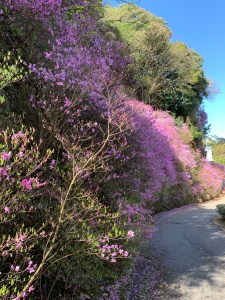
Senyuji always has some kind of flower in bloom throughout the year. The cherry trees are now mostly in leaf and the flowers in bloom are the mountain azaleas.
View from SenyujiTemple 58 (Senyuji)
After Senyuji, it is a 6.2km walk to Temple 59 (Kokubunji).
There are 3 men I keep bumping into. One is a guy from the Netherlands, who likes to travel by himself and walks really quickly, and the other two are a Japanese man travelling with a Canadian guy from British Columbia. I have no idea what their names are. It is a bit weird, the first question people ask is, “Where are you from?” And they rarely ask after the person’s name. I have fallen into doing the same.
The reason I bring this up is because from Temple 57 to 59 I was kind of walking with Netherland man, but he would walk really fast and then wait for me at a sign he couldn’t understand and then take off again until the next sign. Definitely felt like the tortoise and the hare kinda situation.
At Kokubunji, Netherland man and I bumped into the Japanese guy and the Canadian guy. Kokubunji was the last temple for them today (even though it was only 12pm). They are going in order and Temple 60 is a hard one to get to.
Kokubunji had a life size Kobo Daishi where if one makes a wish and shake his hand, the wish is said to come true. But of course I didn’t take a photo of that…instead I took a picture of this guy:
Temple 59 (Kokubunji)
I left the international guys and hopped on a train to Temple 61 (Koonji); walked to Temple 62 (Hojuji); and continued walking to Temple 63 (Kichijoji). By the time I left Kichijoji my feet were sore from walking on paved roads. I took a bus to Temple 64 (Maegamiji) and got my nyokasho stamped by 4pm (temples close at 5pm). As I was leaving I bumped into a guy I hadn’t seen since Temple 19. (Again no idea of his name only that he is from Israel). He told me that it is next to impossible to get a place to stay between temple 65 and 68… so now I’m going to have to try and figure out where to stay and how to get to these temples.
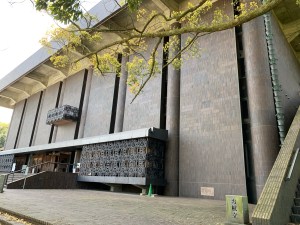
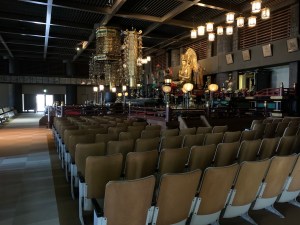
Temple 61(Koonji) at first I thought I was at the wrong place. Inside Koonji (It was like a concert hall)Temple 62 (Hojuji)Temple 63 (Kichijoji)Temple 64 (Maegamiji)
Before I forget: I hope you all have a good Easter long weekend (if you celebrate and/or are in a country that has the Friday and Monday off.)
First temple was Temple 52 (Taisanji). It was pretty easy to get to by tram, train, and then bus. The bus literally stops in front of the gate. One does have to walk further up a hill, but not too taxing a climb.
Note: Carrying wet pilgrims gear on a crowded tram and then a crowded train is not fun for me, nor the other passengers.
Temple 52 (Taisanji). I am standing in front of the bus. It is the last stop on this bus route.
After that it is a short 2.6km walk to Temple 53 (Enmyoji). However, the walk was when the rain was at its heaviest today. I was soaking and cold by the time I got to Enmyoji, but a hot coffee from the vending machine at the train station fixed that… as well as putting on more layers of clothing. One of the bad things about the Hakui (the white pilgrim’s top) is that it is made of cotton and when it gets wet it stays wet and clings to other clothing and the body making it hard to stay warm.
Train station where I got my coffee. No picture of Temple 53 (Enmyoji) I think I was too cold
After Enmyoji I took a train and bus to Temple 54 (Enmeiji). One of the things I learned about the Henro.org site and the public transport option is to play around with the departure times, for example, make the departure time a little later.
I ended up getting off at an obscure train station and waiting for a bus in the rain by the windy and cold seaside. The bus was scheduled to arrive an hour later and there was no shelter. Luckily, my fingers were numb and I accidentally erased the route it had suggested. So I requested the directions again and lo and behold the next train would take me to a bus connection that wasn’t such a long wait and bonus: away from the blustering ocean.
Temple 54 (Enmeiji)
By the time I got to Enmeiji the rain was more of a drizzle. The next temple I went to was Temple 56 (Taisanji).
Temple 56 (Taisanji)
Nope, I didn’t forget Temple 55! I am staying in Imabari City tonight and Temple 55 (Nankobo) is closer to where I’m staying. It was faster for me to walk to Taisanji than it would have been to walk to Nankobo and back to Taisanji.
Temple 55 (Nankobo). There is a narrow road that runs through the temple grounds. You can see a car on said road.
After Nankobo I went to my hotel and took a long hot bath! I also used their laundry and dryer.
Note: most places offer the use of a washing machine, and some even have dryers! All the places have soap and shampoo as well as bath towels (no need to carry these with you), but not all offer conditioner and some bath towels are small. (Camping is different. No washing machines, hot baths, soap, shampoo, or towels).
Today Usagi-chan and I did some sightseeing. We started at the Tourist Information centre near Dogo Onsen where we got a pamphlet for museums which gave us a discount for going to different museums/galleries. One gets stamps at the different places and if one gets enough stamps one can get a free gift. The gift varies depending on where you claim the it. I showed it at the Museum of Art and they were going to give me a beautiful and expensive looking art book… but it also looked like it weighed a lot, so I had to turn it down.
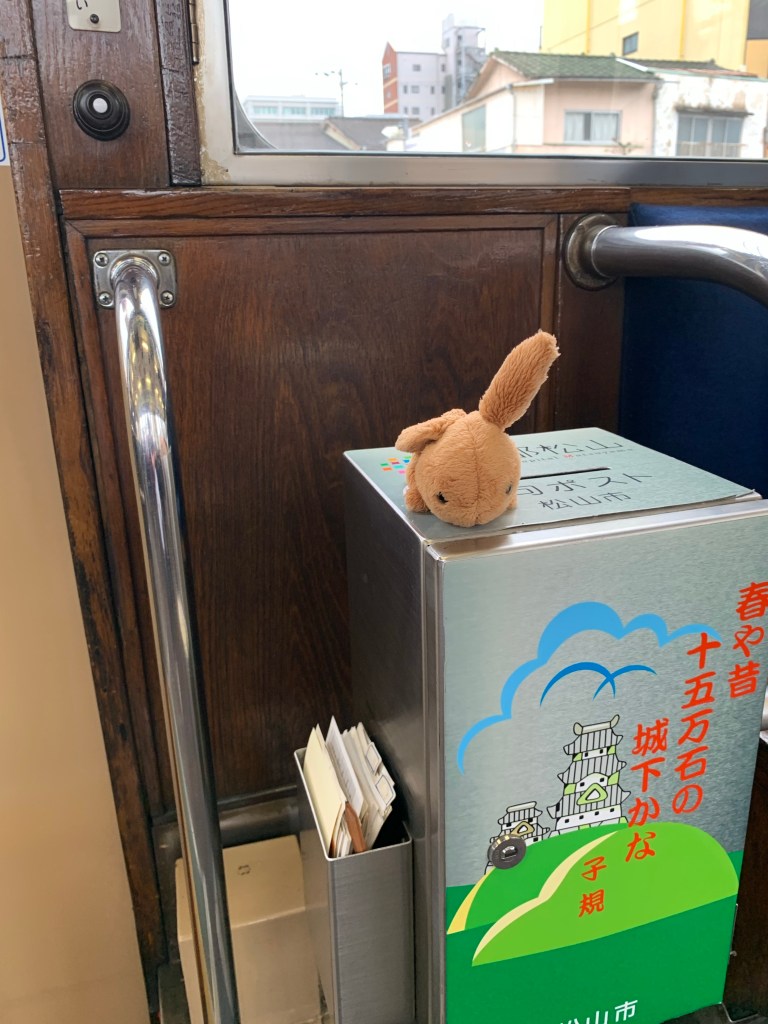
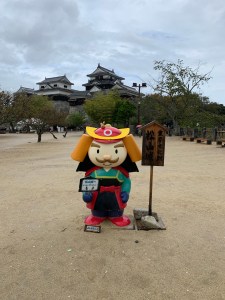
Usagi-chan and I boarded a streetcar and headed to Matsuyama Castle. Apparently Matsuyama is big on haiku…maybe it is all of Ehime as there have been a couple of temples where one can submit one’s own Haiku. I mention this because apparently one can also submit one’s haiku masterpiece on the streetcar.
Haiku submission box on the streetcar
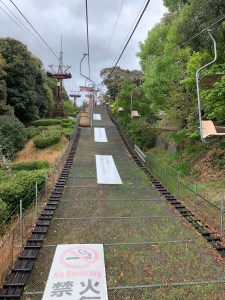
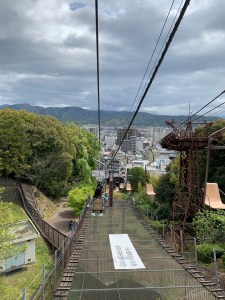
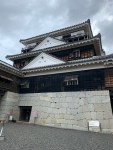
Matsuyama Castle is on top of a hill in the middle of the city. One can get to the top by walking, taking a cable car or a chair lift. Regardless of the rain I chose the chairlift because CHAIRLIFT!!!
Chairlift up to castle Chairlift down from castle
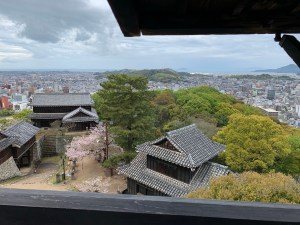
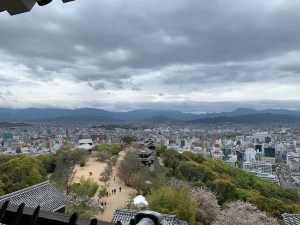
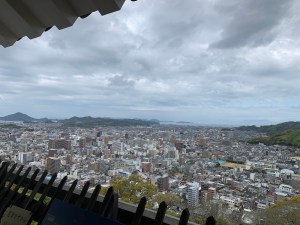
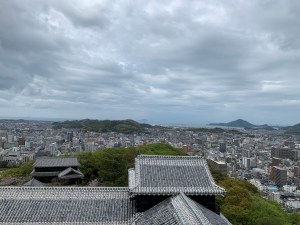
The Castle was pretty impressive and the view despite the rain was spectacular.
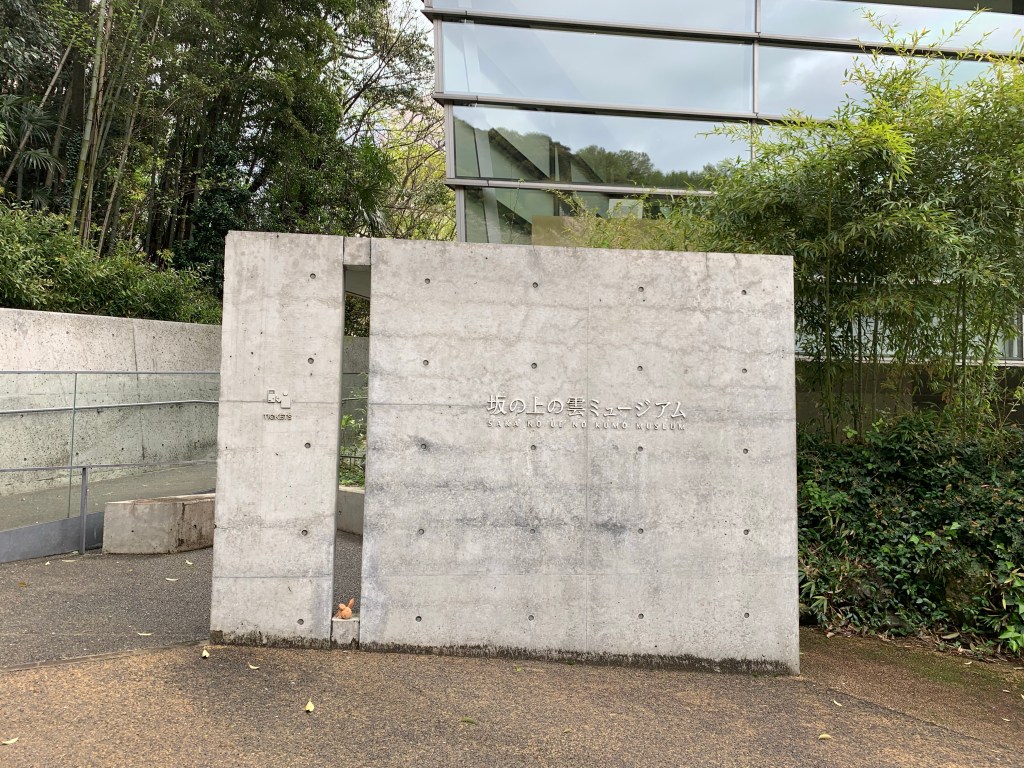
Next Usagi-chan and I went to the Saka No Ue No Kumo Museum because the English write up said that it showed the Meiji Period lives of three brothers… I got an English pamphlet explaining the museum… but EVERYTHING in the Museum was in Japanese….apparently these brothers were famous writers and intellectuals.. so LOTS of written things not many visual things and again let me emphasize that EVERYTHING was in Japanese. Very glad I got a discount for the ticket. The building was interesting.
Outside Saka No Ue No Kumo Muesum
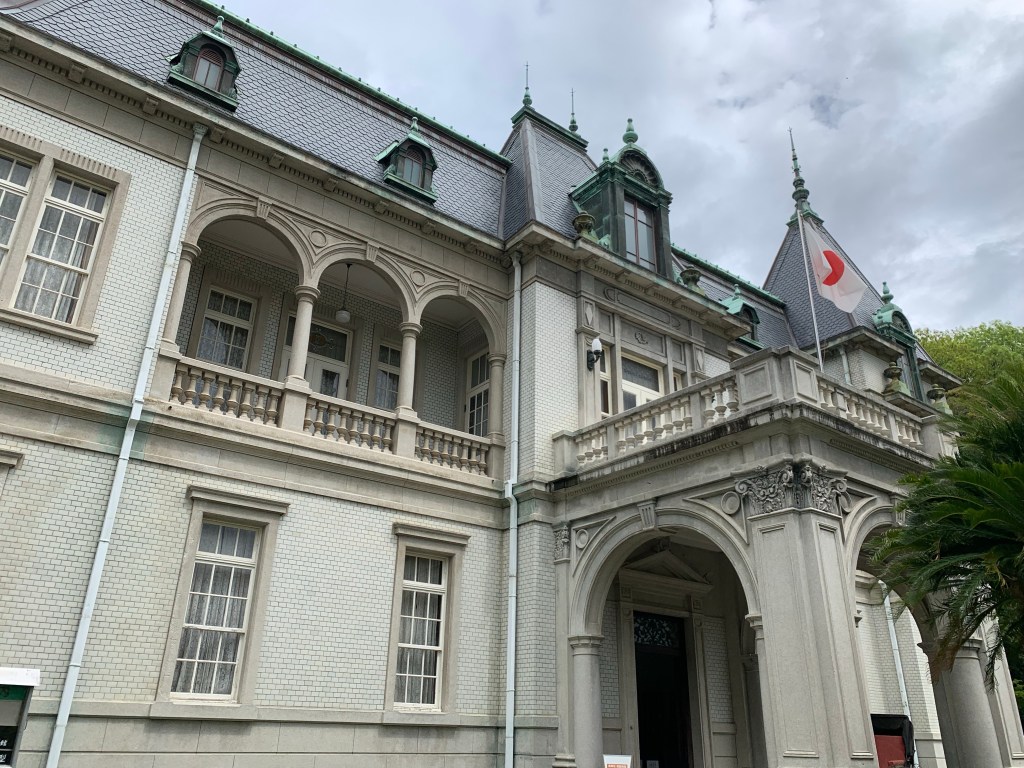
Next was a visit to Bansuisou. This is the second house of Sadakoto Hisamatsu, the lord of Matsuyama in 1922. It was built in a Western style and the stained glass is supposed to be spectacular.
Bansuisou
After that went to the Museum of Art. No photos. But I was surprised at how low they hung the paintings… I had to stoop to look at them properly and I’m not very tall. Not sure if they did that on purpose so it would be inclusive of children and Usagi-chan.
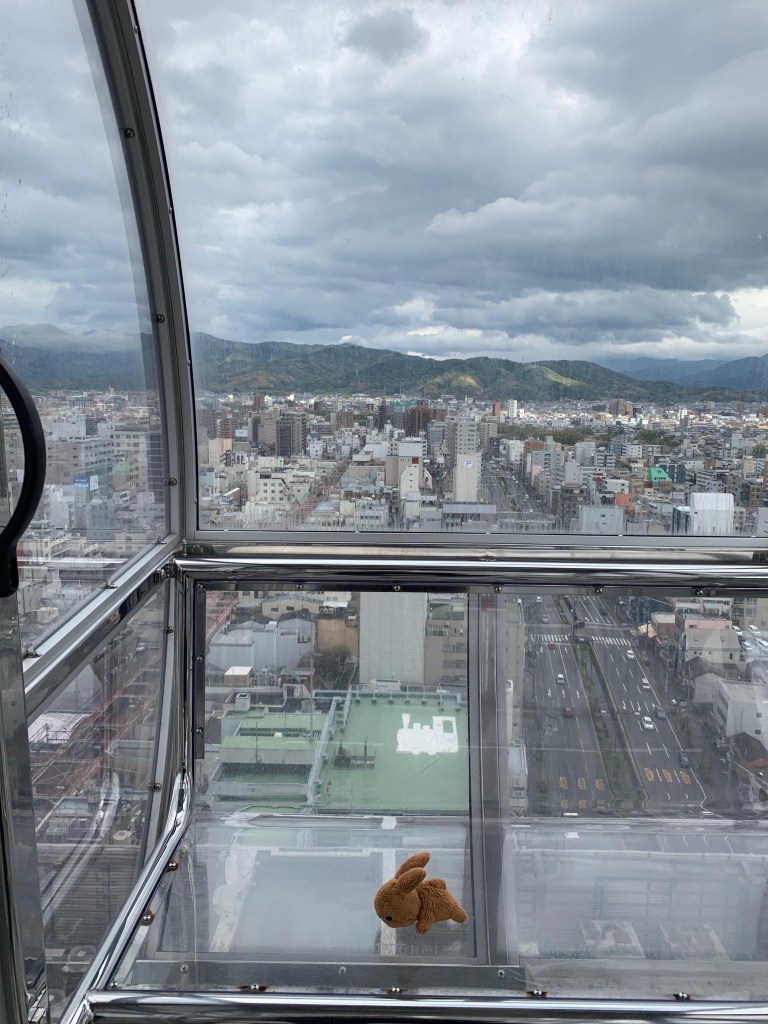
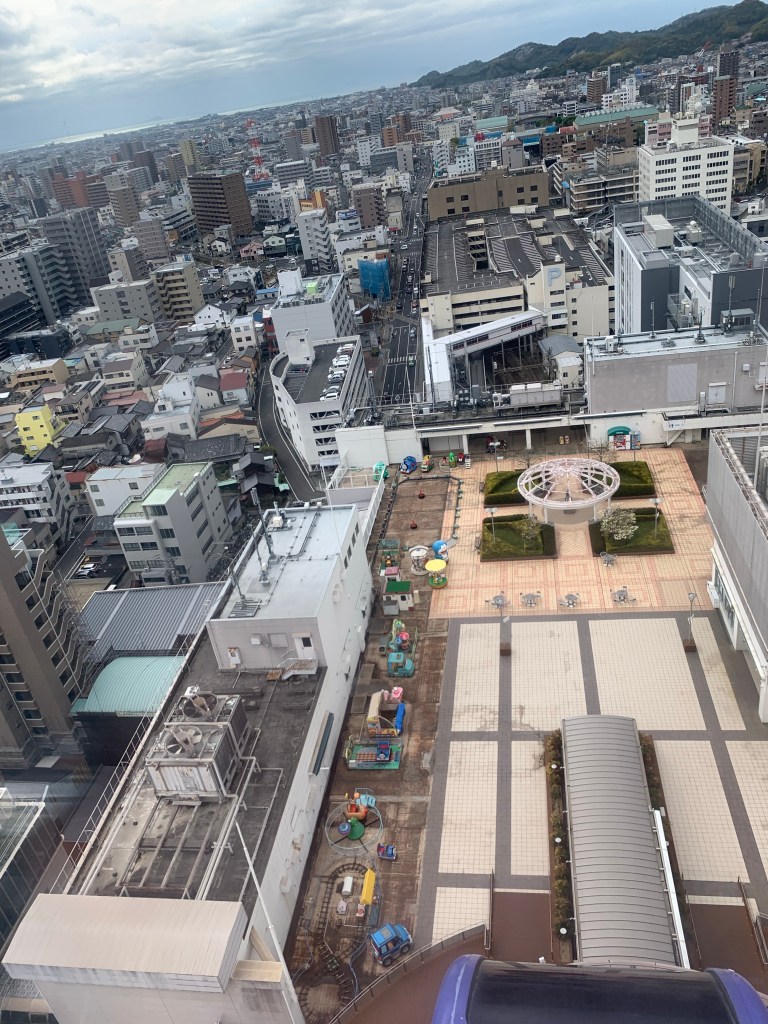
We then went to Iyotetsu department store and to the roof where there is a Ferris wheel. I didn’t understand the ticket machine and ended up buying a ticket for the clear car on the wheel… it was windy and besides Usagi-chan, I was the only one in the car. Not going to lie: it was a bit freaky.
Clear car on a Ferris wheel on top of a department store.
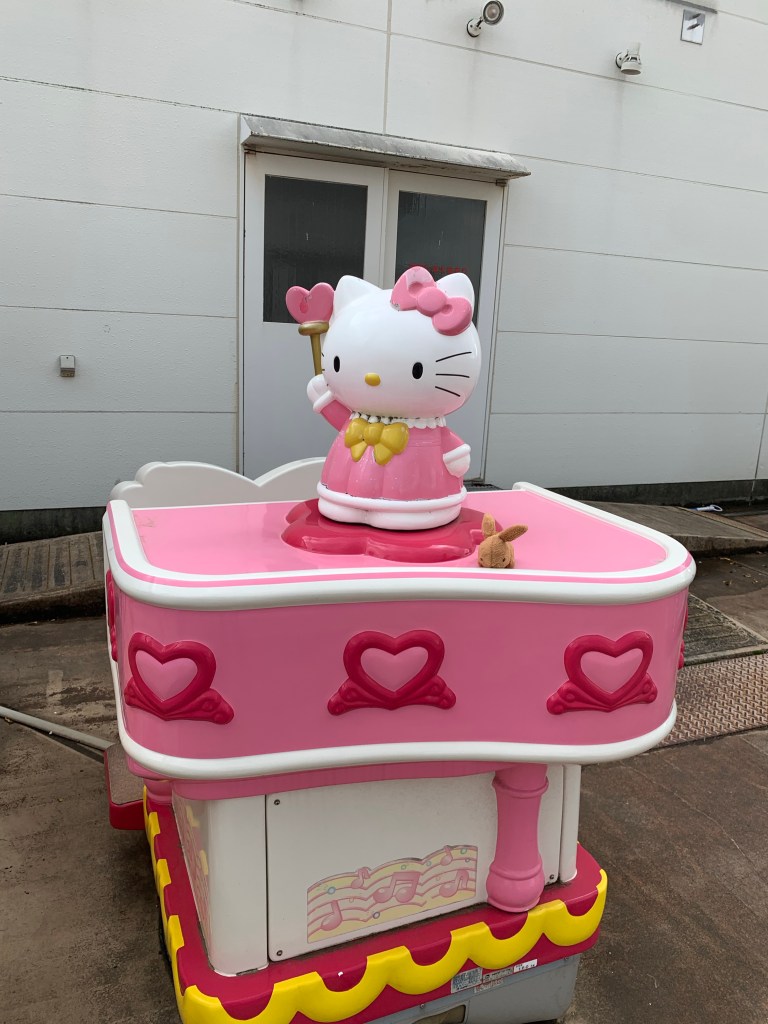
I did see, from the Ferris wheel, a kids ride section on the roof of the department store. None of the rides were operating, but there are often kids rides on the top of department store roofs (or at least there used to be).


















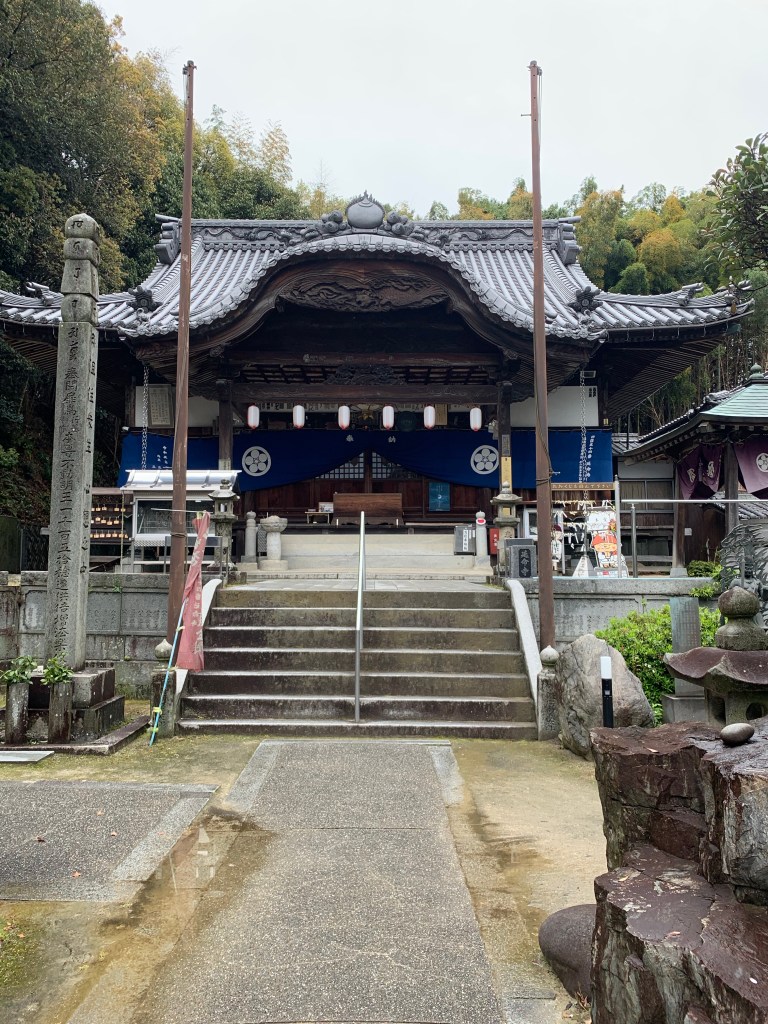
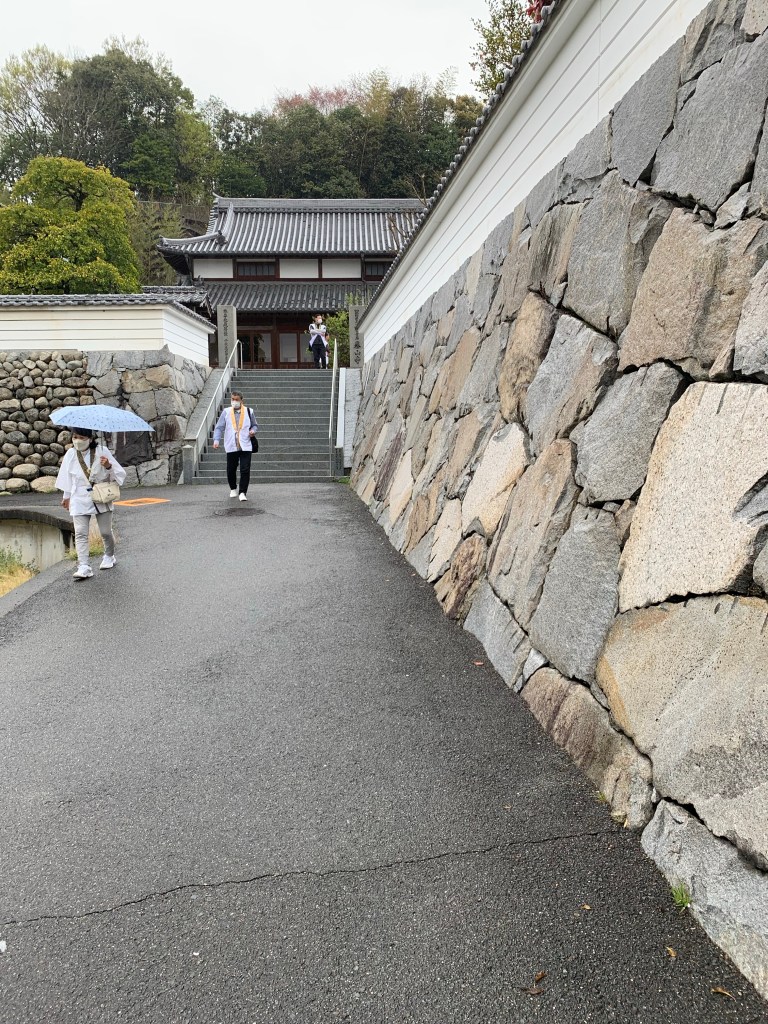
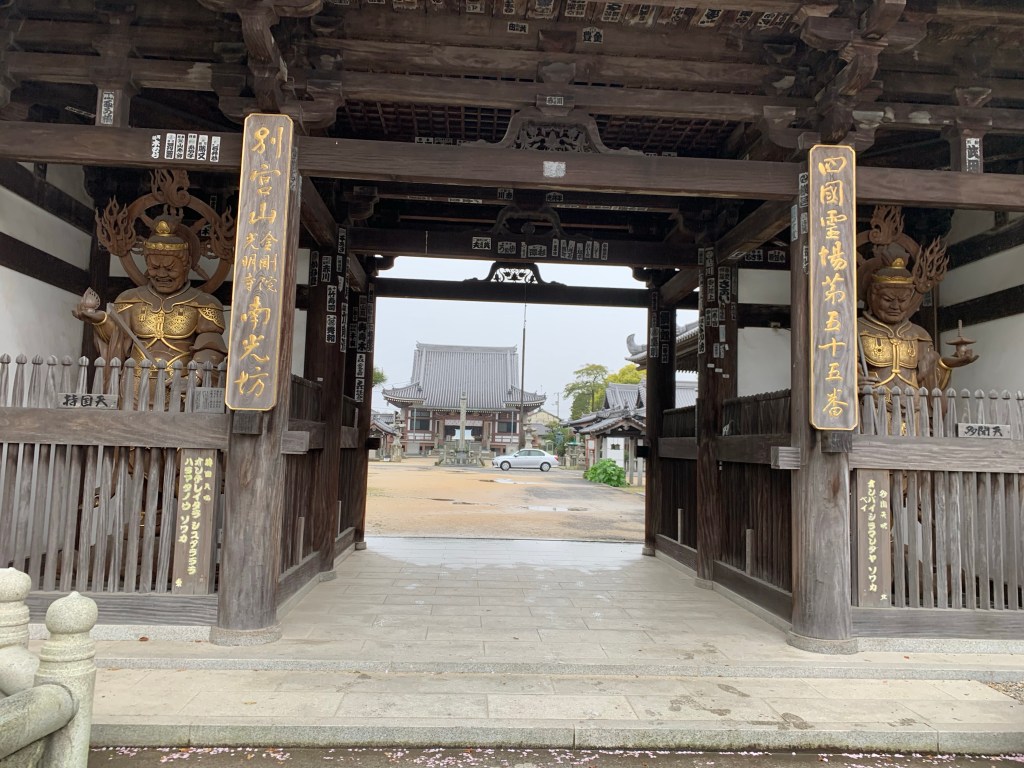



 KotsuKotsuLife